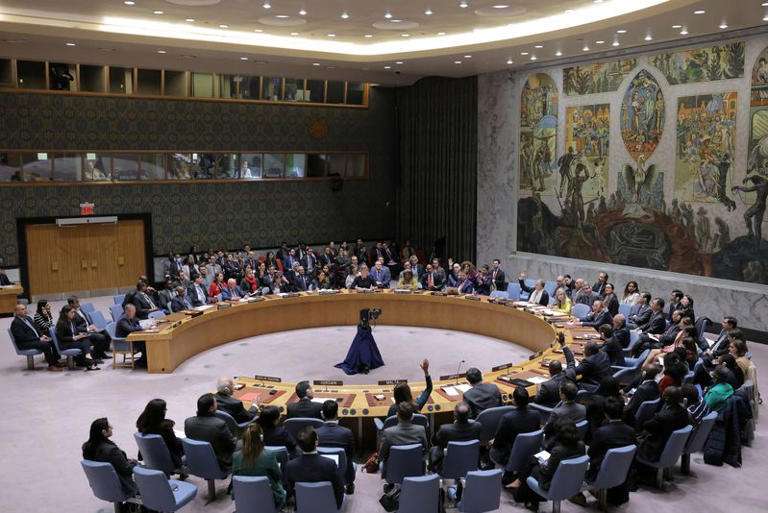
Lebanon has filed a complaint with the United Nations about repeated Israeli violations of a November 2024 ceasefire, calling on the Security Council to push Israel to end its attacks and fully withdraw from the country.
The complaint, submitted by Lebanon’s Ministry of Foreign Affairs and Emigrants, accuses Israel of undermining both Lebanese sovereignty and international law through repeated military actions.
The Lebanese Ministry of Foreign Affairs and Emigrants said the complaint stressed that Israeli abuses are a “clear” violation of UN Security Council Resolution 1701, which ended a war between Israel and Hezbollah in 2006.
The ministry said that it called on the 15-member body to compel Israel to “completely withdraw to beyond the internationally recognised borders,” end its repeated violations of Lebanon’s sovereignty and release Lebanese prisoners it is holding.
The complaint provides detailed documentation to support Lebanon’s claims. According to the ministry, it includes three tables outlining alleged Israeli violations recorded on a daily basis over a three-month period at the end of 2025.
“The complaint included three tables detailing Israeli violations of Lebanese sovereignty on a daily basis during the months of October, November and December 2025. The number of these violations amounted to 542, 691 and 803 respectively, totaling 2,036 violations.”
The Lebanese Ministry of Foreign Affairs and Emigrants
The complaint was made a day after Israel launched a wave of air strikes across Lebanon, killing at least two people. Despite the 2024 ceasefire, the Israeli military has been launching near-daily attacks in Lebanon, which have killed hundreds of people. In November last year, the UN put the number of civilians killed in Israeli attacks at at least 127.


Israel also continues to occupy five points within Lebanese territory as it blocks the reconstruction of several border villages that it levelled to the ground, preventing tens of thousands of displaced people from returning to their homes.
Meanwhile, Israel is estimated to be holding more than a dozen Lebanese prisoners, including Hezbollah fighters and civilians who were taken from border villages in 2024. Israel has resisted calls to submit a list of the Lebanese citizens it is holding, leaving the fate of many missing people in southern Lebanon in limbo.
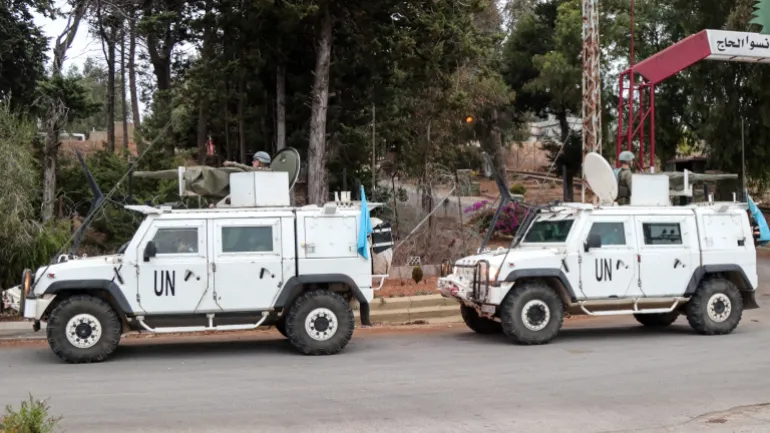
Israeli forces have also repeatedly opened fire at peacekeepers in the UN Interim Force in Lebanon (UNIFIL) in southern Lebanon. The Foreign Ministry in Beirut said on today that “it called for pressure to be exerted on Israel to stop its attacks on UNIFIL, which continues to make the ultimate sacrifices to bring security and stability to the region.”
Israel’s campaign has helped it establish a new balance of power and allowed it to launch regular assaults in Lebanon without a response. Meanwhile, the Lebanese government has been pushing to disarm Hezbollah.
This month, Beirut said that it had completed the removal of the group’s weapons south of the Litani River, 28km (17 miles) from the Israeli border. Despite that announcement, Israeli air strikes have continued both south and north of the Litani.
Hezbollah has tacitly agreed to disarmament south of the Litani in accordance with UN Resolution 1701, but it has warned that it will not completely give up its weapons, arguing that they are necessary to stop Israel’s expansionism.
The next phase of the Lebanese government’s plan to remove Hezbollah’s weapons will target the region about 40km (25 miles) north of the Litani River to the Awali River.
Persistent Israeli Attacks Despite Complaints To UN
Lebanon has filed similar complaints to the UN in the past, but Israeli attacks have not relented.
Nonetheless, Lebanon’s decision to formally raise the issue at the United Nations underscores its reliance on diplomatic and multilateral channels to address security concerns with Israel.
Rather than framing the matter solely as a bilateral dispute, the complaint situates the alleged violations within the broader context of international obligations and UN oversight. By invoking Resolution 1701, Beirut is effectively reminding the Security Council of its own role in maintaining stability along the volatile border.
For the Security Council, Lebanon’s filing presents a familiar but sensitive challenge. Calls for enforcement of Resolution 1701 have surfaced repeatedly since 2006, often amid renewed tensions or isolated incidents along the border. However, the scale of the figures cited in the complaint, spanning daily incidents over several months, may add urgency to Lebanon’s appeal for action.
As tensions persist along the border, the complaint reflects Lebanon’s insistence that long-standing UN resolutions and recent ceasefire agreements must be respected in practice.
READ ALSO: Examine How ASM Contributes to Revenues – Expert Urges Gov’t