The Minister for Energy and Green Transition, Dr. John Abdulai Jinapor, says recent reductions in fuel prices demonstrate the real-life impact of government reforms on the ordinary Ghanaian.
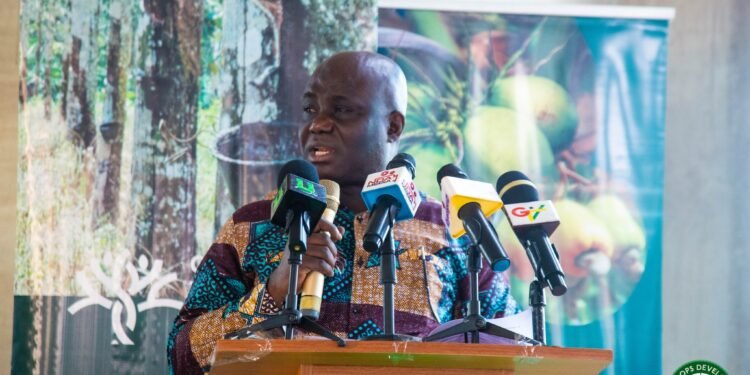
Speaking while briefing Vice President Prof. Jane Naana Opoku-Agyemang during a working visit to the Ministry of Energy, the minister contrasted current pump prices with those under the previous administration. “The ordinary Ghanaian wants to feel it in the pockets,” Dr. Jinapor said.
“Those of you who used to buy fuel during the NPP time in office, fuel price went as much as 23 cedis per litre.
“Today, in your administration, Madam, in the administration of President John Dramani Mahama, you buy the same quantity for a little over 9 cedis. And that is the difference.”
Dr. John Abdulai Jinapor, Minister for Energy and Green Transition
His remarks come amid a second round of fuel price reductions this month, reinforcing signs of easing pressure on consumers.

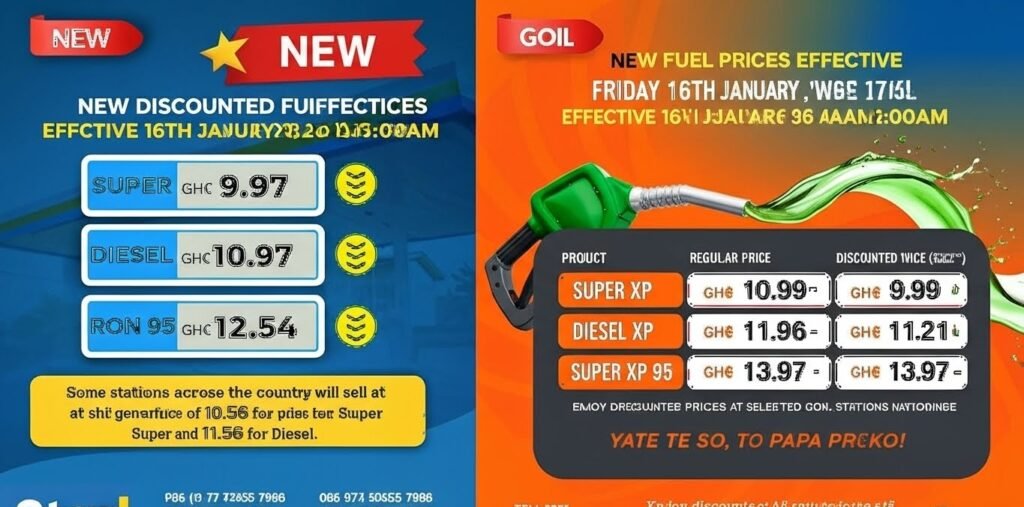
The latest round of reductions has been led by GOIL, the second-largest player in Ghana’s downstream petroleum sector. The state-owned marketer cut the price of petrol from GH¢10.99 to GH¢9.99 per litre, while diesel prices were reduced from GH¢11.96 to GH¢11.21 per litre across its service stations.
Market leader Star Oil followed suit, announcing comparable cuts. Petrol at Star Oil outlets is now expected to sell at GH¢9.97 per litre, with diesel priced at GH¢10.97 per litre.


The moves by the two dominant players effectively set a new benchmark for pump prices nationwide, putting pressure on smaller operators to adjust their prices accordingly.
This marks the second time in the month that petroleum product prices have declined, a trend industry watchers attribute to currency stability and improved supply conditions.
Currency Stability and Policy Reforms in Focus
Dr. Jinapor attributed the easing of pump prices to a combination of currency stability, fiscal discipline, and targeted reforms within the energy and petroleum sectors.
According to him, the strengthening of the Ghanaian cedi against the US dollar has played a critical role, given that petroleum imports are largely dollar-denominated.
“The reforms and the general benefits from the stability of the currency, from the reforms that we are pursuing and the policy interventions, the question to the ordinary Ghanaian is, what does it mean?”
Dr. John Abdulai Jinapor, Minister for Energy and Green Transition
He argued that while macroeconomic indicators and policy frameworks are important, their real value lies in how they translate into lower living costs, reduced transport fares, and cheaper goods and services for households.
Fuel prices remain a key driver of inflation and household expenditure in Ghana, influencing transportation costs, food prices, and the overall cost of doing business.
Analysts say sustained reductions at the pumps could ease inflationary pressures and support economic recovery, particularly for low- and middle-income households.
Transport operators, commercial drivers, and logistics companies are among the sectors expected to benefit most directly. If the price trend holds, consumers could also see gradual reductions in transport fares and commodity prices, although such adjustments often lag behind fuel price changes.
For government, the price cuts offer political and economic capital, reinforcing claims that current policies are delivering measurable benefits compared to previous periods of high fuel costs.
Downstream Competition and Market Signals
The synchronized price reductions by GOIL and Star Oil also highlight intensifying competition within Ghana’s downstream petroleum market.
This competitive dynamic, according to energy sector observers, could strengthen confidence in Ghana’s deregulated pricing regime, where oil marketing companies are expected to reflect cost movements rather than maintain rigid pricing structures.
At the same time, the repeated price cuts have renewed debate about the balance between regulation and market flexibility, especially in the context of recent discussions around price floors and consumer protection.
Dr. Jinapor’s remarks drew a sharp contrast between current fuel prices and those recorded during previous administrations, particularly at the height of economic challenges when prices reportedly climbed as high as GH¢23 per litre.
By framing the issue in comparative terms, the Minister sought to underscore what he described as a clear difference in economic outcomes under the current administration of President John Dramani Mahama.
As motorists adjust to the new prices, attention is turning to whether further reductions are possible in the coming weeks. Much will depend on movements in global crude oil prices, exchange rate trends, and the pricing strategies of bulk importers and oil marketing companies.
For now, the latest cuts offer a measure of relief and a rare moment of optimism for consumers long accustomed to fuel price hikes. As Dr. Jinapor put it, the ultimate test of policy is not technical detail but lived experience, what it means for the ordinary Ghanaian at the pump.