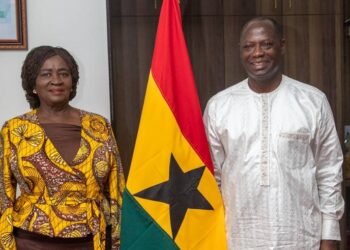
Vice President Prof. Jane Naana Opoku-Agyemang has lauded the Ministry of Energy and Green Transition for what she described as tangible progress in stabilising Ghana’s energy sector, crediting strategic interventions, efficiency gains, and long-term planning for easing pressures inherited at the start of the administration.
Speaking during a working visit to the Ministry, the Vice President commended the leadership and staff for delivering results that benefit the general public, sector agencies, and consumers, while assuring them of the government’s full backing.
“This is a good story, and the benefit goes to everybody, the general public first, all your system agencies, the directors, and the consumers,” she said, expressing gratitude for what she called sustained effort across the sector.
Prof. Opoku-Agyemang emphasised that the visit was not only to acknowledge successes, but also to reaffirm solidarity in addressing ongoing challenges within the energy sector.
“We are here to congratulate you, we are here to encourage you, and we are here to let you know that we have your back.
“We are here not only to know the successes, but even in the challenges… we are in this together.”
Vice President Jane Naana Opoku-Agyemang
Her remarks underscored the administration’s commitment to collective problem-solving, particularly in a sector that has historically posed fiscal and operational risks to the economy.
Reflecting on Inherited Energy Sector Pressures



The Vice President recalled the intense pressures facing the government when it assumed office, noting that early briefings revealed a fragile energy sector burdened by debt and looming supply risks.
According to her, the Ministry’s leadership, particularly the sector minister, played a critical role in confronting those challenges head-on, earning the confidence of the presidency and the wider government. “Mr Minister, in your direct case, you’ve done very well. You’ve made all of us proud,” she added.
Prof. Opoku-Agyemang highlighted improvements in debt management and payment discipline as key achievements that have restored confidence among power producers and other energy sector service providers.
“We are very, very grateful, especially for the efficiency you have brought in, in ensuring that we are responding to our debts,” she said, noting that timely payments help assure suppliers that their investments and inputs remain worthwhile.
She recalled that at the start of the administration, Ghana faced the real threat of power cuts, describing the situation as “not an amusing one at all,” and credited recent interventions for preventing a return to widespread outages.
The Vice President also used the occasion to commend President John Dramani Mahama for his openness to expert advice and willingness to support difficult but necessary reforms in the energy sector.
She stressed that while improving welfare remains the government’s primary responsibility, strong presidential leadership has been central to driving reform momentum.
Focus on Energy Mix and Renewable Options
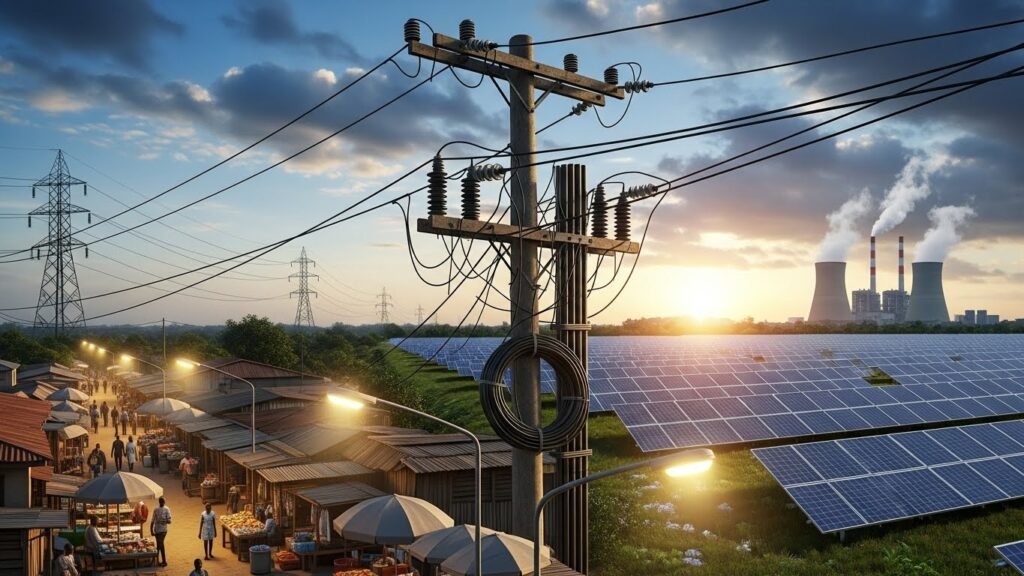
Turning to the future, Prof. Opoku-Agyemang welcomed renewed attention to diversifying Ghana’s energy mix, particularly through solar power and other renewable sources.
Referring to past renewable initiatives that fell short of expectations, she said the current phase offers an opportunity to reassess earlier approaches.
“This gives us the opportunity to review what we did in the past, what didn’t work, and why we think it should work better now.”
Vice President Jane Naana Opoku-Agyemang
She emphasised the importance of learning lessons and adapting strategies rather than clinging rigidly to outdated plans.
A recurring theme in the Vice President’s address was the need for disciplined, long-term planning in the energy sector.
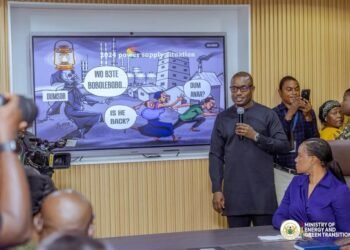
“You showed the setting slide showing what we need to do this year, next year, and so on. And for me, the importance of long-term planning is very, very important.”
Vice President Jane Naana Opoku-Agyemang
She warned against what she described as “fanciful” approaches, stressing that solid, realistic planning remains essential to solving Ghana’s structural challenges effectively.
In a lighter but practical reflection, Prof. Opoku-Agyemang raised questions about improving household access to cooking gas, particularly in urban and gated communities.
She wondered whether gas could eventually be piped directly to homes, similar to electricity, to reduce reliance on cylinders and refilling stations. The comment highlighted the broader need to rethink household energy delivery models as part of long-term reforms.
Commitment to Continuous Review

The Vice President encouraged sector leaders not to fear evaluation and course correction. “Not to be afraid to evaluate, not to be afraid to review, and not to be afraid to re-strategize if we think something is not working,” she said, stressing that adaptability is key to progress.
She congratulated all contributors to what she described as a gradual but visible turnaround in the energy sector, noting that “the smiles are returning slowly but surely to our faces.”
The Vice President’s visit underscored growing confidence in Ghana’s energy sector reforms, highlighting improved debt management, stronger planning, and renewed focus on sustainability.
While challenges remain, the government’s commitment to collaboration, long-term strategy, and continuous review signals a determined effort to secure reliable energy supply and lasting benefits for households, businesses, and the broader economy.
READ ALSO: India, EU Reach Free Trade Agreement