
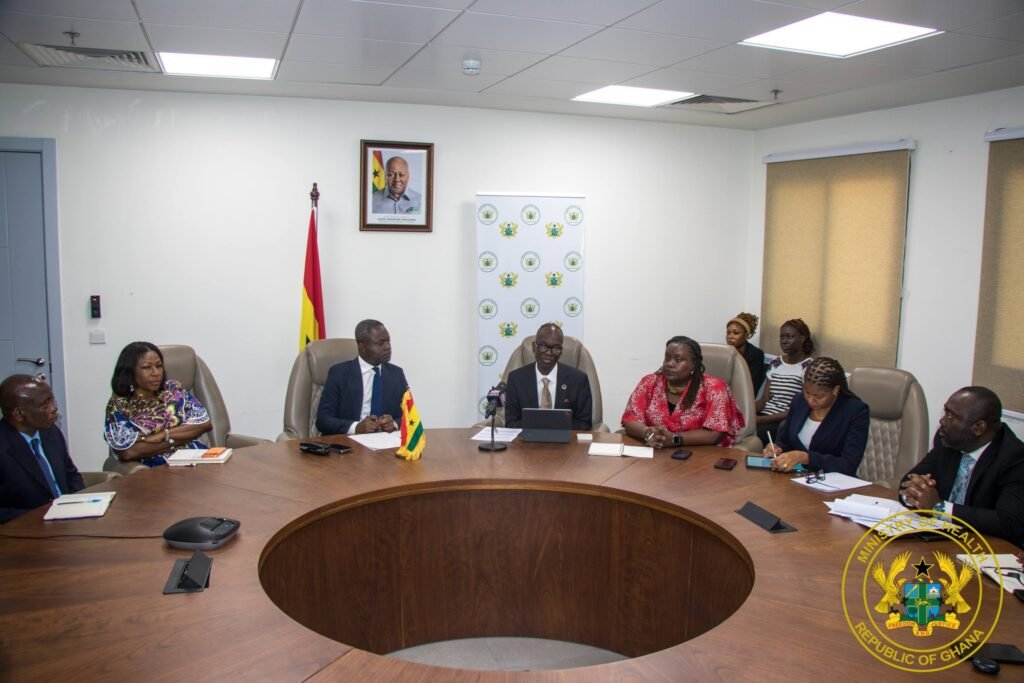
A high-level delegation from the World Health Organization (WHO), led by its Regional Director for Africa, Professor Mohamed Janabi, has paid a courtesy call on Ghana’s Minister for Health, Hon Kwabena Mintah Akandoh, to deepen collaboration on priority health interventions and reaffirm support for the country’s ongoing health sector reforms.
The engagement focused on strengthening Ghana’s healthcare system and advancing efforts toward Universal Health Coverage through sustainable partnerships. During the discussions, Professor Janabi commended the Government of Ghana for placing health at the centre of its national development agenda.
He described recent policy decisions as bold and forward-looking, noting that they reflect a strong political commitment to ensuring that all citizens have access to essential health services without financial hardship.
According to the WHO Regional Director, such leadership is critical at a time when many countries across the continent are grappling with rising healthcare costs and growing disease burdens.
He singled out the uncapping of the National Health Insurance Scheme as a particularly significant reform, noting that it addresses long standing financing constraints that limited access to care. By removing spending caps, Ghana has created room for improved service delivery and more predictable funding for health facilities.
Professor Janabi also praised the establishment of the Medical Trust Fund and the rollout of the Free Primary Healthcare program, describing them as practical interventions that can significantly reduce the impact of non-communicable diseases on households.


Demand for Action on NCDs
Drawing on lessons from other countries, including Mauritius, Professor Janabi warned that non-communicable diseases such as cardiovascular illnesses and diabetes are emerging as a major public health threat across Africa.
He stressed that the rising prevalence of these conditions requires a shift in health systems from a largely curative approach to one that prioritises prevention and early detection.
In his view, strong primary healthcare structures remain the most effective way to identify risk factors early and manage chronic conditions before they become life threatening.
The WHO Regional Director emphasised that early detection must be supported by well functioning referral systems to ensure continuity of care. He noted that community based healthcare platforms are particularly important in reaching underserved populations and reducing disparities in access.
Integrating non communicable disease prevention and management into these platforms, he said, would help countries make meaningful progress toward Universal Health Coverage. Professor Janabi reaffirmed the commitment of WHO Africa to support Ghana through policy guidance and technical assistance.
He indicated that the organisation stands ready to collaborate on strengthening health financing mechanisms, improving data systems, and building the capacity of health workers to respond to emerging health challenges.
According to him, Ghana’s reform agenda aligns closely with World Health Organization priorities for the region, making the partnership both timely and strategic.

Ghana’s Commitment to Universal Healthcare
In his response, Health Minister Kwabena Mintah Akandoh welcomed the delegation and expressed appreciation for WHO’s continued support. He acknowledged the organisation’s role as a trusted partner in Ghana’s health sector, noting that its technical expertise has been instrumental in shaping key policies and programmes.
The Minister highlighted the active involvement of President John Dramani Mahama in driving the current wave of health reforms, describing it as a reflection of leadership at the highest level.
Hon Akandoh reiterated Ghana’s commitment to health sovereignty, stressing that while partnerships are essential, the country is focused on building resilient systems that can withstand shocks and respond effectively to the needs of its population.
He explained that the government’s approach is grounded in the belief that strong national ownership, combined with strategic collaboration, offers the most sustainable path to improved health outcomes.
The Minister noted that initiatives such as the Medical Trust Fund are designed not only to support individuals facing catastrophic health expenses but also to strengthen public confidence in the healthcare system.
He said the Free Primary Healthcare programme is central to the government’s vision of preventive care, as it brings essential services closer to communities and reduces the pressure on tertiary facilities.
Hon Akandoh further indicated that Ghana intends to lead by example within the region by demonstrating that comprehensive health reforms are achievable even in resource constrained settings.

He expressed hope that the country’s experience would inspire other African nations to adopt similar models, particularly in addressing the growing burden of non communicable diseases.
Both parties agreed that sustained dialogue and coordinated action will be necessary to translate policy commitments into measurable improvements in health outcomes.
The meeting concluded with a shared understanding that Ghana’s progress toward Universal Health Coverage depends on continuous investment in primary healthcare, effective financing, and strong partnerships anchored in mutual respect and shared goals.
As Ghana advances its health reform agenda, the reaffirmed support from WHO Africa signals confidence in the country’s direction and underscores the importance of collaborative approaches in building resilient health systems across the continent.
READ ALSO: Energy Ministry Makes “Very Significant Progress” – Dr. Jinapor