Ghana concluded its 2025 fiscal year with a historic $31.1 billion in total export earnings, a staggering leap from the $19.1 billion recorded in 2024.
This record-breaking performance was spearheaded by the gold sector, which saw its export value nearly double to approximately $20 billion over the twelve-month period.
According to the Summary of Economic and Financial Data released by the Bank of Ghana, this surge underscores the mineral’s revitalized role as the primary anchor of the nation’s macroeconomic stability and external sector strength.
“The Ghana Gold Board surpassed its 2025 small-scale gold export target of 100 tons, generating over US$10 billion in foreign exchange for the country. This outcome underscores the viability of GoldBod’s mandate to sanitise and formalise gold trading in Ghana.”
Ghana Gold Board

The exponential growth in bullion revenues, jumping from $10.3 billion in 2024 to $20 billion in 2025, stems from a combination of aggressive value chain reforms and favorable global market conditions.
These results were further bolstered by the strategic formalization of gold flows and enhanced state oversight managed through the newly established Ghana Gold Board (GoldBod).
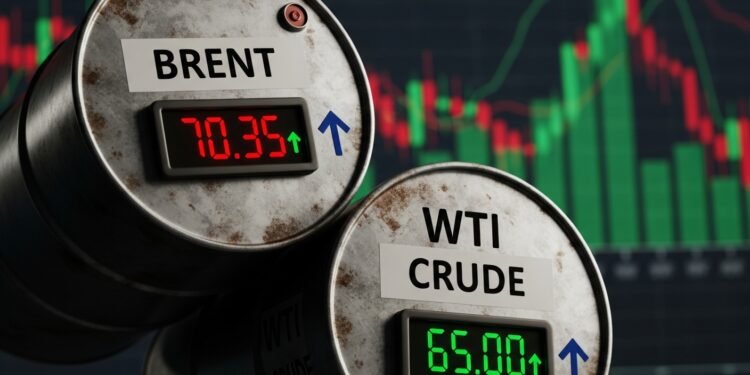
While gold dominated the trade balance, cocoa also showed recovery, doubling its earnings to $3.8 billion, though oil exports saw a contraction to $2.6 billion due to softening international crude prices.


Macroeconomic Resilience and Trade Surpluses

The 103 percent spike in gold revenues has fundamentally altered Ghana’s fiscal landscape, pushing the trade balance to a massive surplus of $13.6 billion.
This “strong outturn” has allowed gross international reserves to climb to a record $13.8 billion, providing the Bank of Ghana with significant ammunition to defend the cedi and maintain currency stability.
With the current account balance now exceeding $9.0 billion, a vast improvement from the $1.5 billion recorded just a year prior, the data suggests that gold has become the “strategic pillar of economic resilience” in a nominal economy valued at $1.4 trillion.
Extractive Reforms and Value Retention

Expert analysis suggests that the doubling of earnings is not merely a product of price fluctuations but a result of “improved value retention through GoldBod.”
By implementing stricter traceability systems and formalizing artisanal and small-scale mining (ASM) sectors, the state has successfully channeled earnings into the formal economy that were previously lost to smuggling.
The shift toward local refining exemplified by the operationalization of the Gold Coast Refinery is expected to further “maximize export proceeds” by capturing refining fees and valuation uplifts that were historically captured by foreign entities in Dubai and India.
Implications for the Mining Industry

These figures signal a “defining milestone” that could trigger a new wave of capital investment.
The massive revenue jump provides a buffer against the high operational costs faced by mature mines, while the primary surplus of 1.9% of GDP reflects a government better positioned to invest in mining infrastructure.
Industry stakeholders view this performance as a testament to the “structured and transparent mechanisms” now governing the sector, which not only reinforce Ghana’s position as Africa’s top gold producer but also set a regional benchmark for mineral resource management.