The Minister for Trade, Agribusiness and Industry, Hon. Elizabeth Ofosu-Adjare, has announced that the Government of Ghana will establish three new large-scale factories in the Bono East, Central, and Eastern Regions this year to generate 27,000 decent jobs for Ghanaians.
Following a high-level meeting with the United Nations Industrial Development Organization (UNIDO), Hon. Ofosu-Adjare detailed the strategic industrial expansion.
She revealed that these facilities, which focus heavily on the garments and textiles sub-sector, are engineered to operate on a 24-hour production cycle, aligning with the national agenda to maximize industrial output and satisfy both domestic and international demand.
“The outlook for 2026 is promising. The government will support private investors to set up three major garment factories, aiming to provide jobs for 27,000 people.
“Garment factories employ many people, and the advantage is that workers do not need months of training to start contributing. This initiative will not only provide jobs but also strengthen Ghana’s industrial base”
Hon. Elizabeth Ofosu-Adjare, Minister for Trade, Agribusiness and Industry
The initiative represents a central pillar of the “Feed the Industry,” Programme, which seeks to secure sustainable raw material supply chains for local manufacturers.

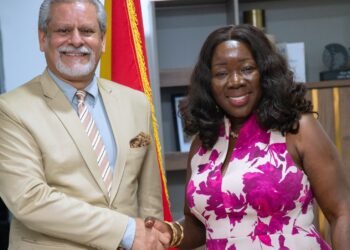
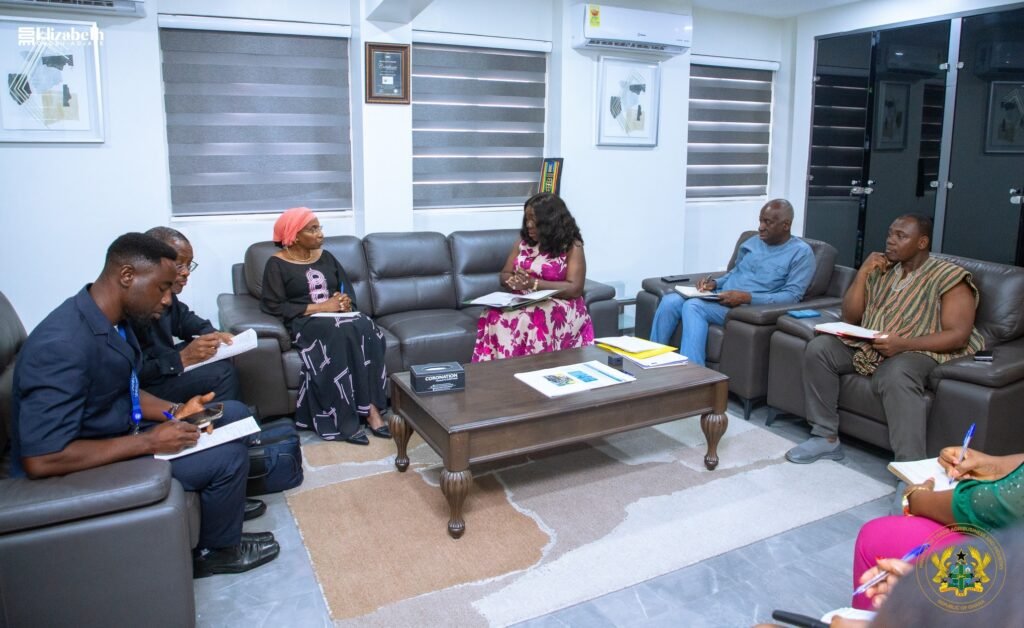
During the meeting with Ms. Fatou Haidara, UNIDO’s Deputy Director General for Global Partnerships, Hon. Ofosu-Adjare emphasized that the government is prioritizing value addition over the export of primary commodities.
To this end, “a strict ban on the export of non-ferrous metals remains in force,” to ensure that essential scrap materials are retained for domestic steel and machinery fabrication.


Strategic Partnership
The Ministry of Trade, Agribusiness and Industry (MoTAI) noted that the collaboration with UNIDO is expected to provide the technical expertise and multidisciplinary assistance required to scale these industrial projects.
Through the Programme for Country Partnership (PCP), UNIDO will support the Ministry in strengthening Small and Medium-sized Enterprises (SMEs) to make them “export-ready” for the African Continental Free Trade Area (AfCFTA).
Minister Ofosu-Adjare specifically urged UNIDO to increase its physical presence and staffing in Ghana to better facilitate the harmonization of industrial standards and accelerate the development of the textiles value chain.
UNIDO’s leadership noted that Ghana’s strategic approach to the “Feed the Industry,” Programme is a viable model for skills development and regional economic resilience as the partnership aims to ensure that Ghanaian-made products meet global quality benchmarks, allowing local firms to compete effectively on the continent.

“UNIDO will deliver on the Programme for Country Partnership. Ghana has demonstrated a clear vision for inclusive industrialization, and our role is to help bridge the gaps in technical capacity and market access”
Ms. Fatou Haidara, UNIDO’s Deputy Director General for Global Partnerships
Industrializing Three Regions
Hon. Ofosu-Adjare added that the selection of the Bono East, Central, and Eastern Regions for the new factories is a tactical move to decentralize industrial growth and tap into localized labor pools. According to the Minister, these regions have been identified as having the necessary land banks and proximity to raw material sources to support large-scale manufacturing.
By operating three shifts daily, the factories will not only triple the employment capacity of traditional single-shift units but also provide the continuous supply of uniforms and apparel required by state institutions and the security services.
The Minister highlighted that the government is also working to revitalize upstream production, particularly cotton, to reduce the textile industry’s dependence on imported fabrics. This “closed-loop,” industrial strategy is expected to significantly reduce pressure on the national foreign exchange reserves.
“We are supporting the diversification of fabric production, including school uniforms, medical scrubs, and protective wear, to ensure local companies can meet domestic demand reliably and at scale”
Hon. Elizabeth Ofosu-Adjare, Minister for Trade, Agribusiness and Industry
A critical component of the 2026 industrial strategy, the Minister reiterated, is the enforcement of restrictions on raw material exports. By halting the outflow of non-ferrous metals and raw rubber, the Ministry is ensuring that local processing plants – many of which currently operate below capacity due to material shortages – can ramp up production.
Hon. Ofosu-Adjare noted that these measures are essential for “wealth generation,” ensuring that the value added to Ghana’s natural resources stays within the country’s borders.
READ ALSO: Government Completes 3 Major Coastal Protection Projects Nationwide