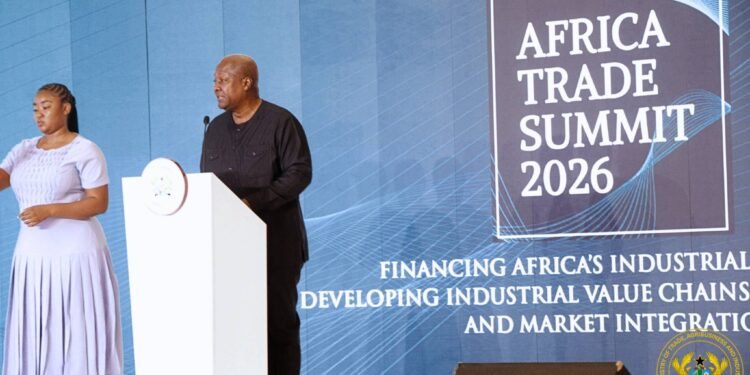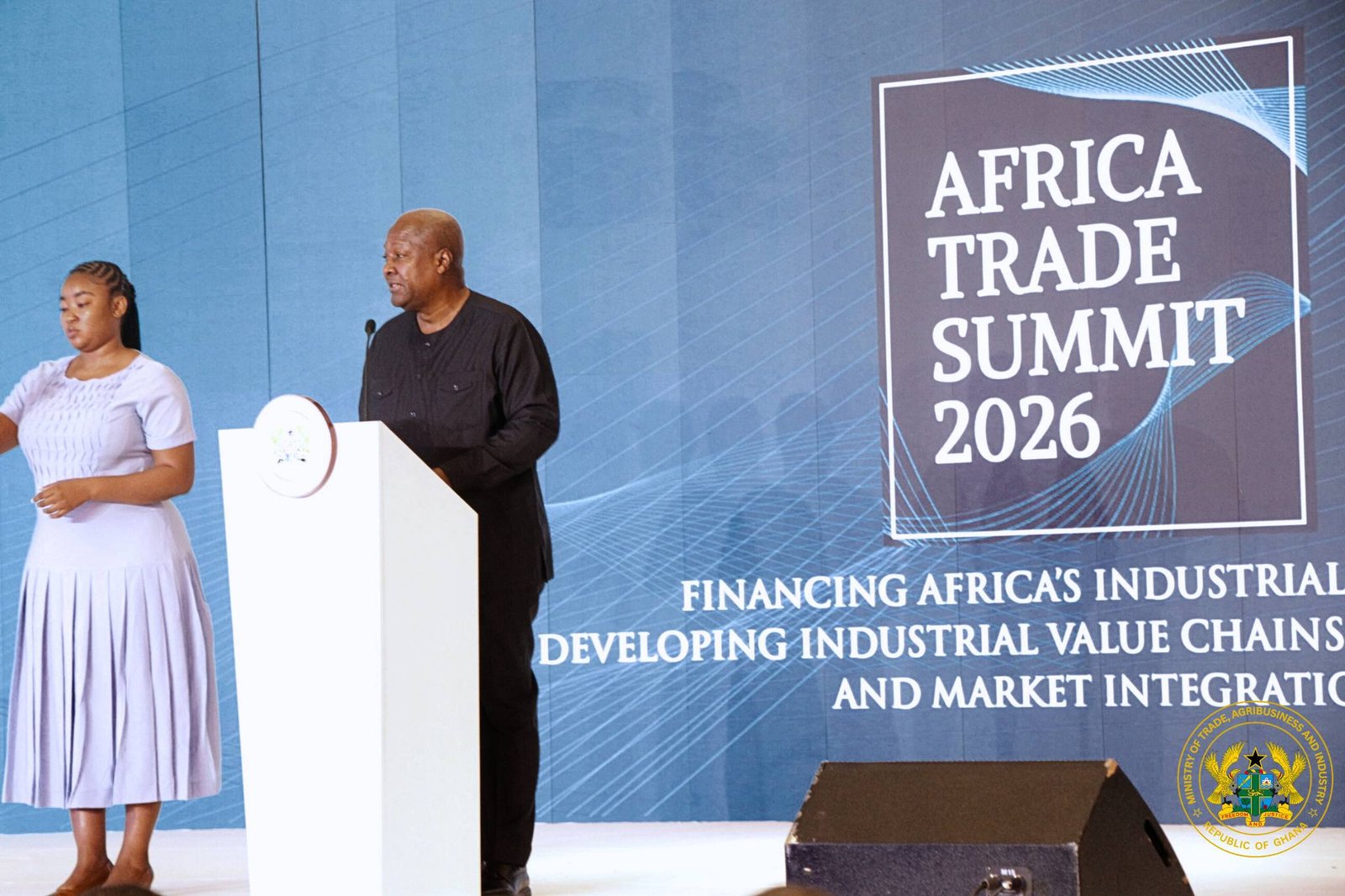
President John Dramani Mahama has called for a decisive shift in Africa’s economic architecture, urging the mobilization of domestic capital to end the continent’s long-standing reliance on raw material exports while delivering the keynote address at the maiden Africa Trade Summit 2026 in Accra.
Under the theme “Financing Africa’s Industrialisation: Developing Industrial Value Chains, Beneficiation and Market Integration,” the summit convened Heads of State, global investors, and multilateral institutions to address the persistent $2.5 trillion financing gap that hampers the continent’s manufacturing potential.
The President warned that political independence remains an incomplete project without a corresponding industrial revolution.
“Africa stands at a historic turning point. We can no longer sustain an economic model that exports our wealth in its rawest form only to import it back as expensive finished goods. Industrialization is no longer optional; it is the shield that protects our economies from global shocks and the sword that will carve out jobs for our teeming youth. We must be bold enough to finance our own future”
President John Dramani Mahama
Africa currently accounts for less than two percent of global manufacturing output, a statistic President Mahama described as an “unacceptable ceiling” on the aspirations of the continent’s youth.
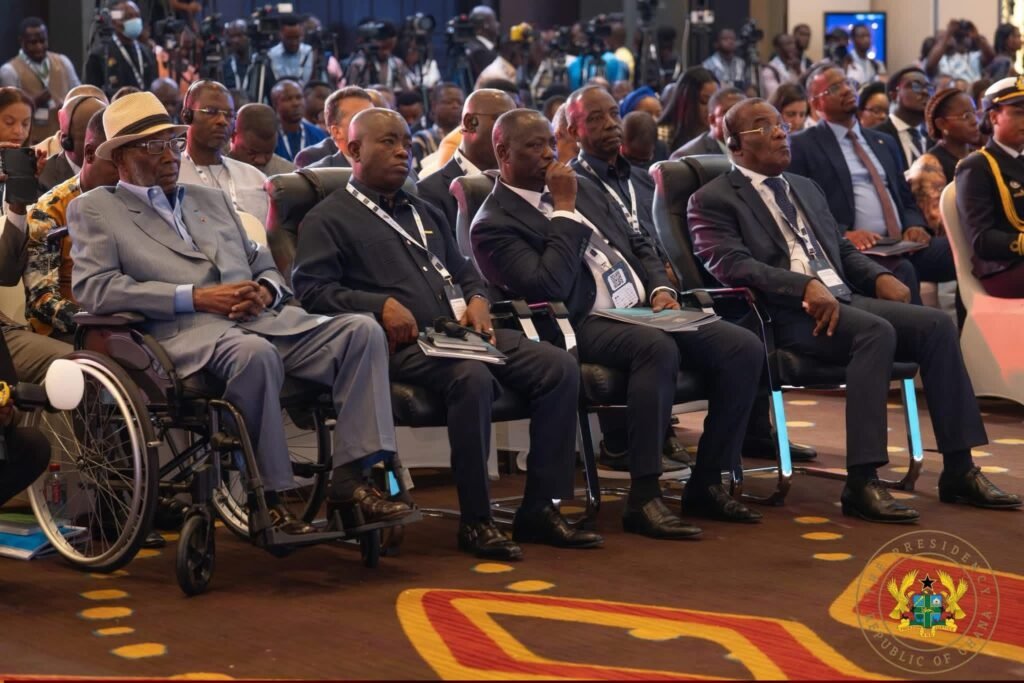
To break this cycle, he proposed a “bold financing model that prioritizes the deployment of Africa’s own institutional capital,” including pension funds and sovereign wealth funds, alongside blended finance instruments designed to de-risk large-scale industrial projects.
He emphasized that the African Continental Free Trade Area (AfCFTA) would only succeed if it served as a platform for integrated manufacturing rather than a conduit for foreign-made finished goods.


US$100 Million Yield
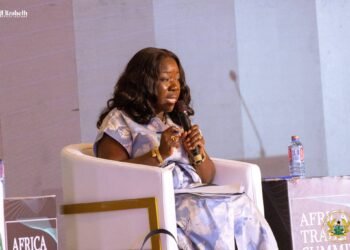
Echoing the President’s call for structural change, the Minister for Trade, Agribusiness and Industry, Hon. Elizabeth Ofosu-Adjare, detailed Ghana’s transition toward a “sector-focused” industrial policy.
Moving away from generic interventions, the Ministry of Trade, Agribusiness and Industry (MoTAI) has targeted textiles, pharmaceuticals, and automotive components as high-growth pillars. The Minister revealed that the Ghana Automotive Development Policy has already attracted over US$100 million in direct investment, positioning the country as a burgeoning regional hub for vehicle assembly and component manufacturing.
This industrial push is further supported by the synchronization of agricultural output with factory demand. By securing the domestic supply of raw materials, Ghana aims to insulate its manufacturers from the volatility of global supply chains.
“The US$100 million invested in our automotive sector is proof that when the policy environment is stable and the incentives are targeted, capital will flow. Africa’s industrialization is not an act of charity; it is the single greatest business opportunity of the 21st century”
Hon. Elizabeth Ofosu-Adjare, Minister for Trade, Agribusiness and Industry
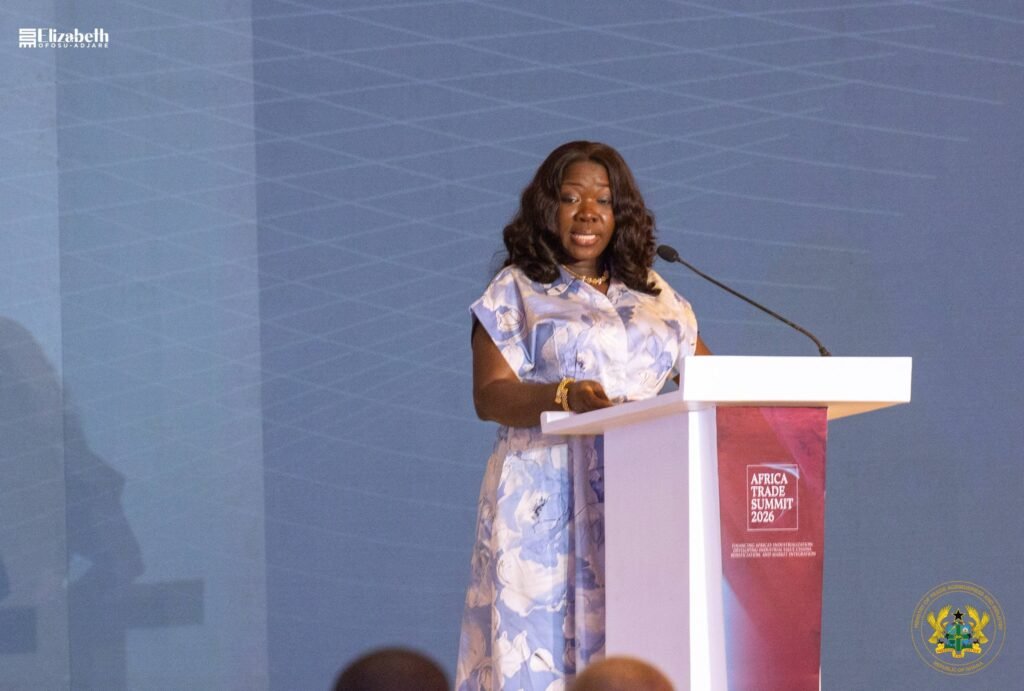
Hon. Ofosu-Adjare stressed that the return of global industrial policy – driven by a worldwide push for strategic autonomy – means Africa must act with “unapologetic self-interest,” to secure its own productive capacity.
Production Execution
The summit also featured a sobering assessment from the United Nations Industrial Development Organization (UNIDO). Deputy Director-General H.E. Fatou Haidara warned that while Africa’s vision is clear, the “pace and scale,” of implementation remain insufficient.
She urged a shift from “national silos,” to regional specialization, where countries coordinate production to achieve economies of scale. This sentiment was supported by the Chairman of the African Trade Chamber Advisory Board, Sir Sam Jonah, who described industrialization as Africa’s “fortress” in a world increasingly defined by trade wars and protectionism.
One of the most significant milestones cited during the summit was the reform of the mining sector. President Mahama noted that following the establishment of the Ghana Gold Board (GoldBod), small-scale gold exports reached a historic 104 tonnes in 2025, generating over US$10 billion in foreign exchange.
“What Africa needs is a shift from policy to production. The AfCFTA is not just a trade agreement; it is a manufacturing blueprint. If we do not produce what we consume, we are effectively exporting our jobs and importing poverty. The success of the Gold Board in formalizing exports and securing revenue is the kind of institutional boldness required across every sector of our economy.
“The African Trade Summit was established to move us from endless debates about potential to decisive action. We hold 30 percent of the world’s mineral resources, yet we contribute less than five percent to global manufacturing. This is an organizational failure, not a resource one. Our mission is to ensure that African capital and African enterprises are ready to lead this transformation”
President John Dramani Mahama
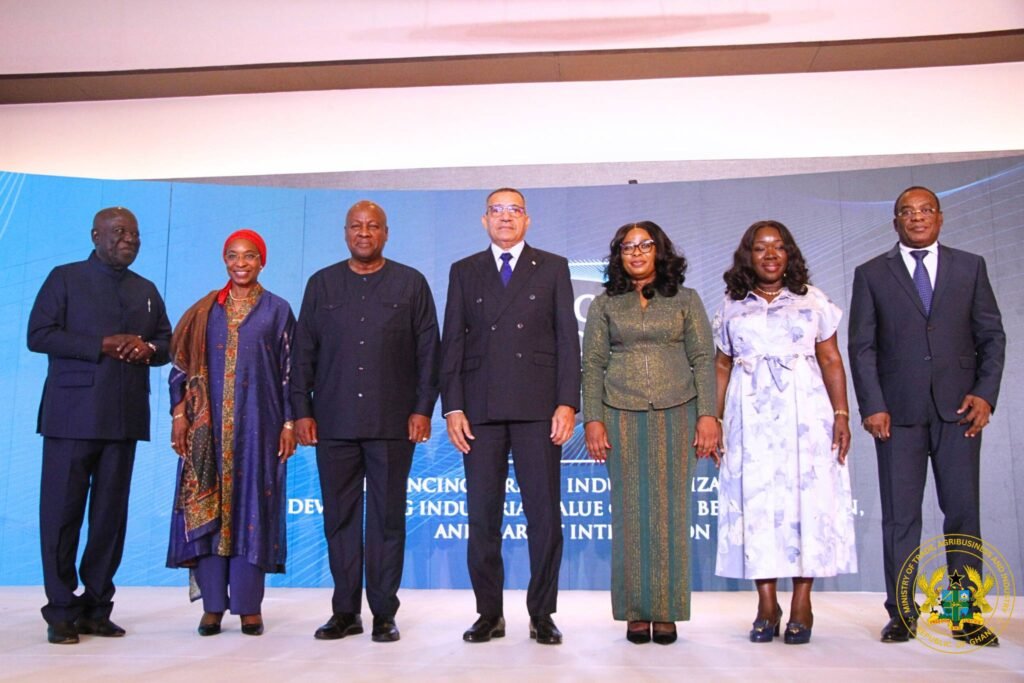
As the three-day summit progresses, the focus has shifted toward the role of Small and Medium-sized Enterprises (SMEs) in the industrial value chain. Mrs. Benedicta Lasi, Executive Chair of the African Trade Chamber, noted that the Chamber’s newly formed Industry Councils are preparing local firms to scale their operations to meet the demands of a 1.3 billion-person market.
The consensus among delegates is that while African governments provide the framework, the private sector must lead the “climb” up the value chain.
READ ALSO: Global Oil Prices Surge to Four-Month High