China has announced a ban on hidden car door handles, a design feature popularised by Tesla, marking a world first regulatory move targeting the controversial technology.
The policy applies to all vehicles sold in China and is aimed at addressing growing safety concerns linked to the use of flush mounted electronic door handles, especially during emergencies.
The ban comes at a sensitive time for Tesla, which is grappling with declining global sales and intensifying competition in China, its second largest market. While the new rules do not single out any company, Tesla remains the automaker most closely associated with the design, which has also been adopted by several Chinese electric vehicle manufacturers.
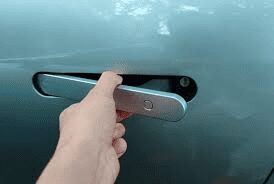
What Are Hidden Door Handles
Hidden door handles sit flush with the vehicle’s body, contributing to a sleek exterior design and improved aerodynamics. To open the door from the outside, users typically press part of the handle to release a lever. Inside the vehicle, doors are often opened by pressing a button rather than pulling a traditional handle.
Although Tesla popularised the feature, other electric vehicle makers in China, including Xiaomi and Aion, have incorporated similar designs into some of their models. Over the years, however, the design has attracted criticism over usability and safety, particularly in situations involving accidents, fires or power failures.
New Rules Demand Mechanical Releases
Under the new policy, all cars sold in China must be equipped with mechanical release features for both interior and exterior door handles. The Ministry of Industry and Information Technology said the regulation was necessary due to “the inconvenience with operating the exterior door handles and their inability to open after an accident.”
In its statement released Monday, the ministry also outlined specific requirements for how the handles should function. Exterior door handles must provide enough space for a hand to operate the mechanical release from any angle. Interior handles, meanwhile, should be “clearly visible from the corresponding occupant’s position.”
These requirements are intended to ensure that vehicle occupants and rescuers can easily open doors during emergencies, regardless of the vehicle’s power state or structural damage.

The new rules will come into effect on January 1, 2027, giving automakers time to redesign existing models and adjust future production plans. While the transition period provides some breathing space, manufacturers selling vehicles in China will need to ensure full compliance to continue operating in the market.
China’s move could also influence global automotive standards, particularly as safety regulators in other regions continue to scrutinise advanced vehicle designs introduced by electric vehicle makers.
Tesla’s Safety Challenges Resurface
The ban follows years of scrutiny directed at Tesla’s door handle design. Last September, Tesla said it was looking into redesigning the way to open its car doors in an emergency after several accidents where passengers were reportedly killed or severely injured in burning vehicles because rescuers could not open them.
In the United States, Tesla owners have also reported incidents where they were locked out of their vehicles. According to an investigation by the US National Highway Traffic Safety Administration, some owners said they had to break their own car windows after buckling their children in and then being unable to get back into the vehicle.
A separate investigation by Bloomberg found 140 incidents of people being trapped in their Teslas due to problems with the door handles, including several cases that resulted in horrific injuries. Although Tesla vehicles do include a manual door release inside the cabin for use when electronic systems fail, critics argue that the mechanism is not always intuitive or easily accessible.
Similar Concerns Emerge In China
Safety concerns related to door access are not limited to Tesla. In China, similar issues have surfaced among domestic manufacturers. Xiaomi’s stock value tumbled last year after a fatal crash involving its sedan killed three people in March. Local media and government affiliated outlets reported that there had been issues unlocking the car door following the crash.
The incident added to regulatory pressure on automakers and prompted Chinese authorities to tighten rules around the marketing and testing of driver assistance features. The latest ban on hidden door handles reflects a broader push by regulators to prioritise safety over design novelty.
For automakers, the new regulation signals a clear shift in China’s approach to vehicle safety standards. Manufacturers will need to balance innovation with practicality, ensuring that futuristic designs do not compromise basic safety functions.
For consumers, the rule could lead to more intuitive and reliable vehicle designs, particularly in emergency situations. While flush door handles may offer aesthetic and aerodynamic benefits, regulators appear increasingly unwilling to accept designs that could delay rescue efforts or endanger occupants.
As China takes the lead on this issue, the global automotive industry will be watching closely to see whether other countries follow suit.
READ ALSO: IMF Exit-Risks Could Shake Cedi Stability