Ing. Wisdom Gomashie, a Mining Consultant and policy analyst, has raised a red flag over the recent depletion of Ghana’s gold reserves, asserting that a decline in gold prices even if anticipated cannot justify what he describes as the “reckless sale” of the nation’s bullion.
Speaking on the heels of the Bank of Ghana’s (BoG) decision to liquidate over 50% of its physical gold holdings within a single quarter, Gomashie questioned the timing and logic of the move.
He noted that with global gold prices hovering at all-time highs, the sudden sell-off of nearly 20 tonnes of gold suggests either a severe liquidity crisis or a fundamental failure in the management of the nation’s foreign exchange (FX) buffers.
The controversy centers on the revelation that Ghana’s gold reserves plummeted from a historic peak of 38.04 tonnes in October 2025 to just 18.6 tonnes by the end of December.
This sharp reversal effectively wiped-out years of accumulation under the Domestic Gold Purchase Programme (DGPP).
Gomashie challenged the newly established Ghana Gold Board (GoldBod) and the Central Bank to provide transparency on whether the country is “broke” or if the institution has simply failed in its mandate to provide FX.
He argued that selling off half the nation’s strategic reserves in just three months is an unprecedented move for a leading gold producer, especially when the commodity remains a superior store of value in the current geopolitical climate.
“Fall in gold prices is not a justification for the reckless sale of Ghana’s Gold In Reserves. GoldBod isn’t providing FX again? Or Ghana is Broke? Which country has sold half of their reserves in 3 months? Gold Price still an all-time high.”
Ing. Wisdom Gomashie
BoG’s Defense: Strategic Rebalancing and Portfolio Diversification

In response to the mounting criticism, the Bank of Ghana has defended the liquidation as a “deliberate and prudent” reserve management strategy rather than a sign of economic distress.
Governor Dr. Johnson Asiama explained that by late 2025, gold had come to account for over 42% of Ghana’s total international reserves far exceeding the 20% to 25% benchmark observed among peer economies.
The Bank maintains that it “liquidated part of the gold portfolio into FX” to reduce concentration risk and improve liquidity, ensuring that the proceeds remain part of the Gross International Reserves (GIR), which stood at $13.83 billion at the end of 2025.
Expert Alarms and Civil Society Pushback
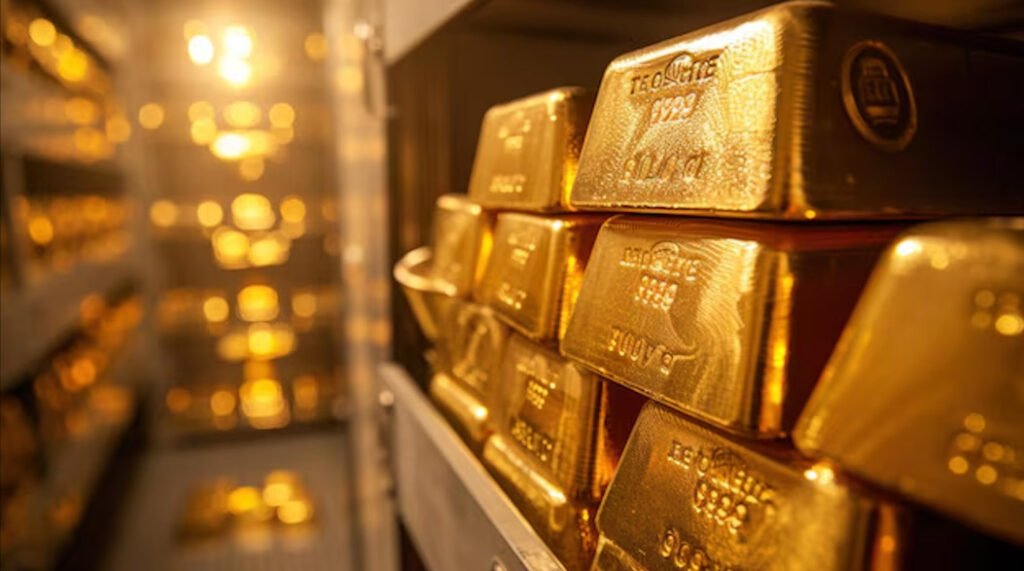
Despite the BoG’s technical justifications, Civil Society Organizations (CSOs) and independent experts remain “deeply concerned” about the speed and scale of the drawdown.
Dr. Frank Bannor, a Development Economist, argued that reducing gold exposure while global prices touch $5,300 per ounce is problematic, noting that other central banks are currently “increasing, not reducing” their gold holdings as a hedge against the US Dollar.
Similarly, policy think tanks like IMANI Africa and ACEP have highlighted a “lack of transparency” in the transition of operations to GoldBod, pointing to the $214 million in “quasi-fiscal losses” reported by the IMF as evidence that the gold programs have become a burden on the state’s balance sheet.
Implications for the 2026 Economic Outlook

The depletion of the physical gold buffer carries significant implications for Ghana’s financial sovereignty and its ability to manage future shocks.
While the monetization of gold provided a temporary “FX supply to the interbank market” to help stabilize the cedi and bring inflation down to 5.4% in December 2025, critics argue this is a “short-term firefighting” tactic.
As GoldBod prepares to assume “full operational control” in 2026, the primary concern for the extractive sector is whether the state can rebuild these reserves organically or if the nation has permanently traded its long-term insurance for immediate, transitory liquidity.