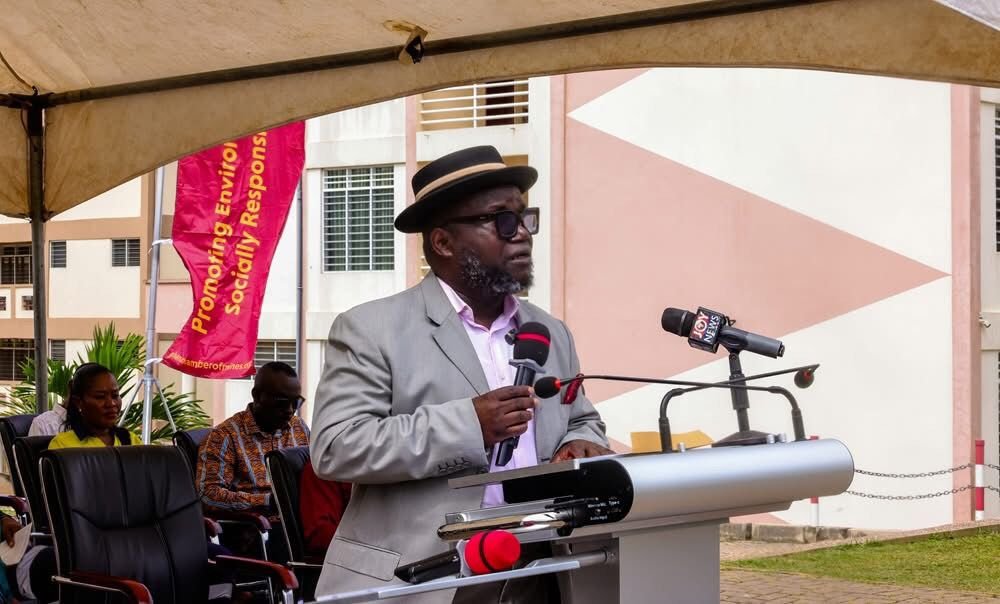
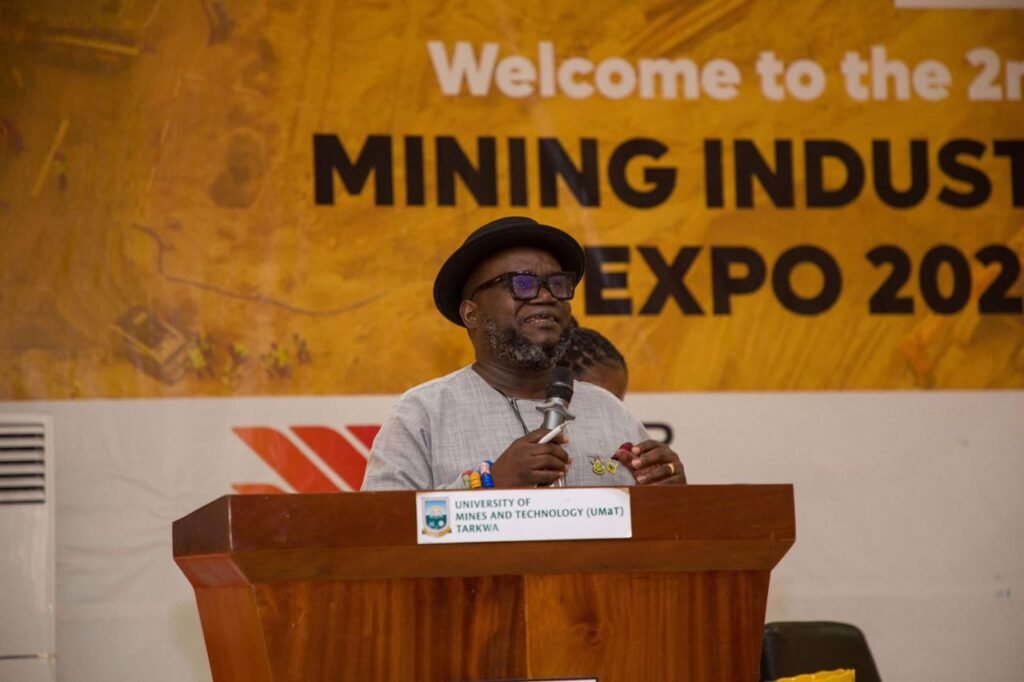
Ing Kenneth Ashigbey, Chief Executive Officer of the Ghana Chamber of Mines, has issued an urgent call for systemic innovation, technological transformation, and local value addition across the country’s mining sector.
He emphasized that modern resource extraction must move beyond traditional extraction models to adopt an agile, research-driven framework capable of driving sustainable national development.
“Innovation requires psychological permission. People need room to experiment intelligently. To test ideas. To question assumptions. To fail safely. And to learn. Africa must not simply supply the minerals that power the revolution. Africa must help lead the revolution. And Ghana’s mining industry provides us with an extraordinary platform from which to do so.”
Ing Kenneth Ashigbey,
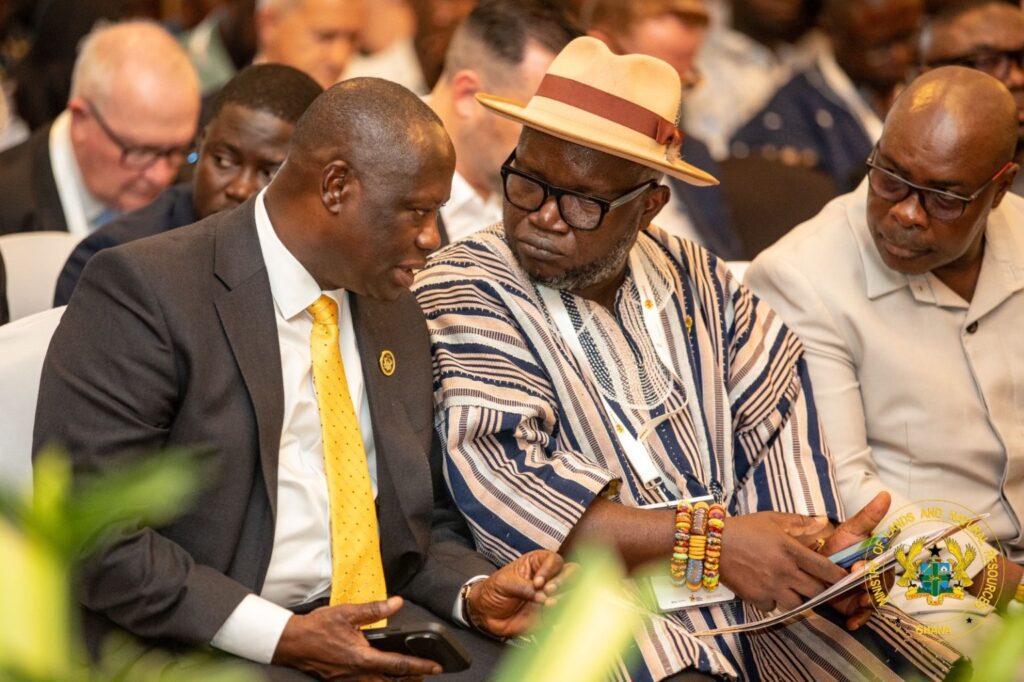
Expanding on his visionary perspective, Ken Ashigbey asserted that transforming Ghana’s extractive industry requires a fundamental mindset shift among industry players, policymakers, and local communities.
He noted that fostering sustainable growth requires a supportive ecosystem that encourages technological trial, critical evaluation, and local capacity building, ultimately positioning Ghana as a dynamic leader in global mineral processing rather than a passive supplier of raw materials.
The Imperative for Psychological Permission and Experimental Room
The modern extractive industry faces unprecedented pressures ranging from climate change mitigation and declining ore grades to complex environmental regulations.
Meeting these challenges demands that companies create organizational cultures where engineers, geologists, and operational staff feel empowered to introduce pioneering solutions.
Traditionally, high capital expenditure in mining has fostered risk aversion; however, as Ashigbey highlights, without “psychological permission,” local stakeholders cannot develop adaptive technologies or modern environmental management practices suited to African terrains.
Creating safe environments to test ideas enables local firms to discover efficient mineral recovery techniques and lower operational emissions without fearing career-ending repercussions when initial trials hit hurdles.
Leading the Global Technological Revolution Beyond Raw Extraction
For decades, African nations have remained anchored at the bottom of the international mineral value chain, exporting unprocessed gold, bauxite, manganese, and critical energy-transition minerals while importing expensive manufactured technology.
Ashigbey’s charge to “lead the revolution” underscores the urgent need for local refining, smelting, and technological integration within Ghana’s borders.
By shifting from mere resource extraction to local mineral processing, battery technology research, and specialized mining equipment manufacturing, Ghana can retain substantial economic value.
This strategic shift directly boosts domestic job creation, elevates industrial technology capabilities, and prevents economic leakage, ensuring national mineral reserves yield broad-based wealth.
Utilizing Ghana’s Extractive Platform for Sustainable Economic Legacy
Ghana’s established position as one of Africa’s premier mining hubs provides a solid foundation to spearhead continental resource modernization.
To leverage this platform effectively, strategic alignment is necessary between government incentives, academic research institutions, and private enterprise.

Modernizing the sector involves embedding artificial intelligence in resource mapping, deploying eco-friendly processing technologies, and instituting rigorous community-focused sustainability standards.
According to the Chamber of Mines chief, capitalizing on this structural foundation transforms finite underground riches into infinite human and technological capabilities.
Through local content empowerment and forward-thinking policy, Ghana can define the standard for responsible, high-value mining across the African continent.
READ ALSO: Chef Abbys Targets Fifty Thousand With Free Street Feast