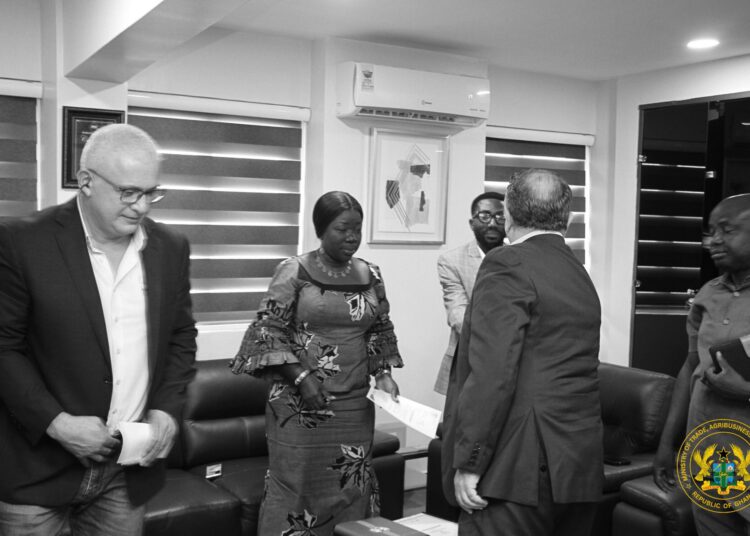
In a significant shift in government-to-business relations, the Minister for Trade, Agribusiness and Industry, Hon. Elizabeth Ofosu-Adjare, has declared that the Mahama administration views the private sector as strategic development partners rather than mere revenue sources.
During a series of high-level stakeholder meetings, the Minister emphasized that while taxes are necessary, the real value of industry lies in job creation and the strengthening of national value chains. The overarching message was clear: the government is moving to a “partnership first,” model to reset the economy.
The engagements brought together a heavy-hitting lineup of industry leaders, including Frédéric Feraille, Managing Director of Guinness Ghana Breweries PLC, the Freezones Enterprises Association, and the leadership of the Ghana Union of Traders Association (GUTA).
“We see you more as partners in building the economy than as taxpayers. The impact you make through employment, value chains and livelihoods goes far beyond the taxes you pay. The impact of industry is central to addressing unemployment, which is a national security issue”
Hon. Elizabeth Ofosu-Adjare, Minister for Trade, Agribusiness and Industry

The Minister’s first stop highlighted the success of local content in the beverage industry. Guinness Ghana revealed it currently sources between 25,000 and 30,000 tonnes of sorghum annually, creating a direct and indirect lifeline for over 40,000 smallholder farmers, primarily in the northern regions.
This model of “Industry patronizing local agriculture” is a key pillar of the 24-Hour Economy strategy, ensuring that manufacturing gains translate into rural wealth.
“Any industry that patronises local agriculture is directly strengthening the economy. That is why agribusiness remains high on our agenda,” Hon. Ofosu-Adjare said, pledging that the Ministry would work to resolve raw material bottlenecks, such as storage and climate-related supply shocks, to ensure this agribusiness success story scales even further in 2026.
Cutting Red Tape
The dialogue took a more technical turn with the Freezones Enterprises Association, where operators raised alarms over bureaucratic “escort,” requirements and overlapping regulatory hurdles that slow down container movements.

In an industry where “time is money,” the Association argued that duplicated processes were driving up the cost of doing business in Ghana’s Export Processing Zones.
While the Trade Minister was firm that oversight is necessary to prevent the minority of “bad actors” from diverting tax-free goods into the local market, she admitted that current bottlenecks are unacceptable.
Hon. Ofosu-Adjare noted that immediate steps are being taken to coordinate with the Commissioner-General of Customs and the Finance Ministry to streamline escort arrangements and potentially review Bank of Ghana advance payment thresholds for high-volume exporters.
The final leg of the engagement addressed the “Market Discipline” needed from the trading community.
With the recent appreciation of the Cedi, Hon. Ofosu-Adjare made a direct appeal to GUTA members to reflect these currency gains in their shelf prices. She warned that “fronting” – the practice where foreigners use Ghanaian proxies to dominate retail space – is being treated as a criminal offense under her tenure.

GUTA President Dr. Joseph Obeng and his team cited supply chain monopolies as a factor in pricing lag but signaled their willingness to cooperate. The Minister reaffirmed that her “open-door policy,” is not just for ceremonial visits but for active problem-solving that ensures Ghana’s trade ecosystem remains competitive and fair.
READ ALSO: Homan Announces Reduction Of ICE Officials In Minnesota