The United States and Azerbaijan have formalized a new phase in their bilateral relations with the signing of a Charter on Strategic Partnership, marking a significant step toward deeper and more durable cooperation.
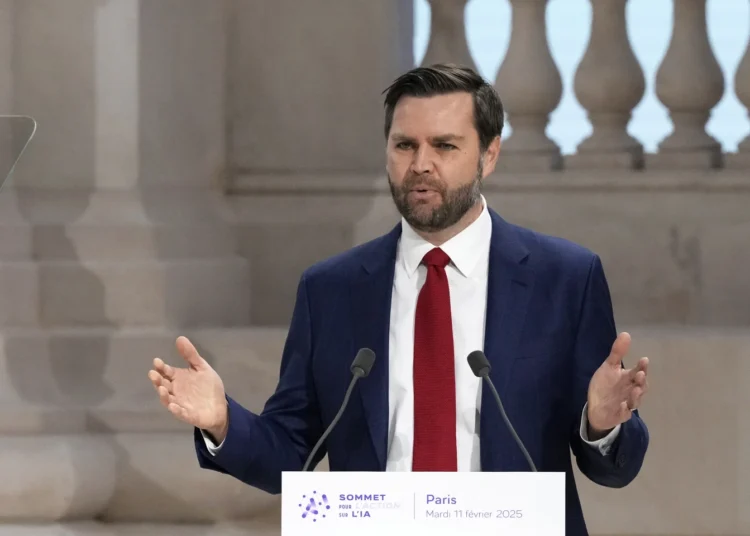
This follows after US Vice President JD Vance arrived in Azerbaijan’s capital, Baku, on today for an official visit, continuing his diplomatic tour of the South Caucasus. The visit follows Vance’s meetings in Armenia yesterday.
The agreement was signed by Vance and Azerbaijan’s President Ilham Aliyev during a ceremony attended by government officials.
The signing of the charter comes at a time when geopolitical alignments are under close scrutiny, and strategic partnerships are increasingly viewed as tools for navigating a complex international environment.
Following the signing, Vance and Aliyev held up the charter to applause from those present, signaling a moment of shared diplomatic affirmation.
The two leaders delivered brief remarks but did not take questions from journalists, keeping the focus squarely on the symbolism and intent of the agreement rather than on immediate policy details.
In his remarks, Vance emphasized the strategic value of ties between Washington and Baku, describing the relationship as an “underappreciated but very, very important partnership and friendship for the United States.”
His comments suggested that while the bilateral relationship may not always command widespread public attention, it plays a meaningful role in advancing US interests across multiple domains.
Vance added that the signing of the charter makes clear that the partnership is “one that will stick” and one that would “continue to produce great fruits for both of our peoples.”
The language used by the US Vice President reflected an effort to frame the agreement not as a short-term diplomatic gesture, but as a long-term commitment. By stressing continuity and mutual benefit, Vance signaled that the strategic partnership is intended to endure political changes and evolving global dynamics.
His remarks also highlighted the people-to-people dimension of the relationship, suggesting that the benefits of closer cooperation are expected to extend beyond governments to citizens in both countries.
Azerbaijan Welcomes Agreement As Gateway To Expanded Cooperation
President Ilham Aliyev, for his part, welcomed the agreement as a gateway to expanded cooperation with Washington. He said that the partnership opens new opportunities for Azerbaijan’s engagement with the United States, conveying a sense of optimism about the future trajectory of bilateral relations.
Aliyev also underscored the symbolic importance of the agreement from Azerbaijan’s perspective. “For us it’s a great honor to be a strategic partner to the most powerful country in the world,” he said.
The statement reflected both recognition of US global influence and Azerbaijan’s desire to position itself as a reliable and valued partner on the international stage. By emphasizing honor and partnership, Aliyev framed the charter as a milestone in Azerbaijan’s foreign policy.
For the United States, strengthening ties with Azerbaijan carries strategic implications given the country’s geographic location at the crossroads of Eastern Europe and Western Asia.
From Azerbaijan’s standpoint, the agreement reinforces its efforts to diversify international partnerships and deepen engagement with Western institutions and governments.
By entering into a strategic partnership with the United States, Baku signals its intention to maintain constructive relations with Washington while seeking avenues for economic and political cooperation.
Aliyev’s remarks suggested that Azerbaijan views the partnership not only as recognition of its international standing, but also as a practical opportunity to advance national interests.
While the long-term impact of the charter will depend on how it is implemented, the signing represents a clear statement of intent from both governments. For Washington, it is an affirmation of the value it places on its relationship with Azerbaijan. For Baku, it is a confirmation of its status as a strategic partner to a global power.
As both sides move forward under the framework of the new charter, expectations are likely to center on translating diplomatic language into tangible outcomes.
READ ALSO: ECOWAS Launches Women Empowerment Pilot In Benue State