The government has defended the use of single-sourcing in the Big Push infrastructure programme, stating that urgent national development needs justified the procurement approach used in a portion of road contracts.
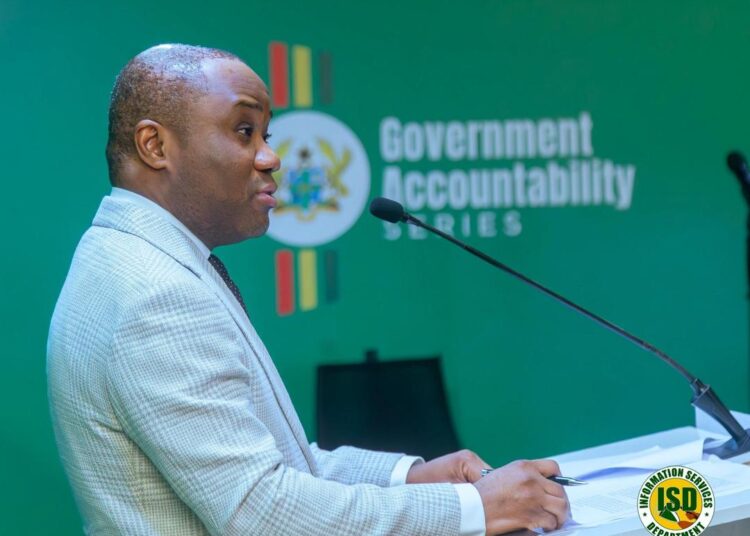
Minister for Government Communications and Presidential Spokesperson, Felix Kwakye Ofosu, made the disclosure at the Government Accountability Series, where he outlined findings from a comprehensive review into procurement practices under the Ministry of Roads and Highways.
The report was prepared following allegations raised in a publication by The Fourth Estate and a subsequent report by the Media Foundation for West Africa, which questioned the extent of single-sourcing in road contracts under the Big Bush initiative.
According to the Presidency, President John Dramani Mahama referred the matter for investigation on April 2, 2026, after receiving the initial report dated April 1, 2026. The Senior Presidential Advisor on Governmental Affairs, Dr Valerie Sawyer, was tasked to review the allegations and establish their validity.

The final 72-page report was submitted to the President on May 22, 2026, following responses from the Ministry of Roads and Highways and other relevant institutions.
Big Push Programme Designed for Accelerated Delivery
Hon Kwakye Ofosu explained that the Big Push programme, as outlined in the 2024 National Democratic Congress manifesto and subsequent policy statements, was designed as an accelerated infrastructure initiative.
He noted that the programme was intended to address severe road network challenges, create employment opportunities, and stimulate economic growth through rapid delivery of critical infrastructure.
According to him, the nature of the programme required a departure from conventional procurement timelines in order to respond to urgent national development demands.
Breakdown of Procurement Structure
The report reviewed a total of 1,441 road contracts awarded by the Ministry of Roads and Highways under the current administration. It found that 1,301 contracts, representing 90.28 percent, were awarded through open competitive tendering processes.
These contracts were publicly advertised and followed standard procurement procedures. The remaining contracts formed part of the Big Push programme, which accounted for 140 projects.
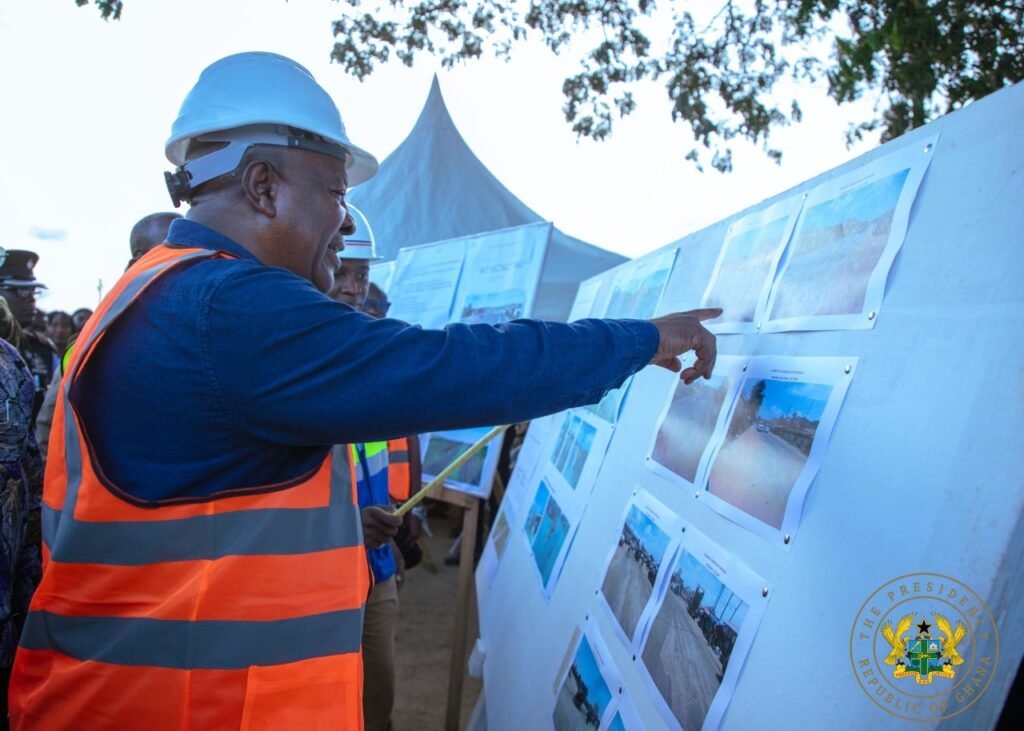
Out of these, 66 were awarded through single-sourcing, 51 through restrictive tendering, while 23 were legacy projects inherited from previous administrations and already executed under single-source arrangements.
Overall, single-sourcing represented 4.58 percent of all road contracts reviewed.
Justification for Single-Sourcing Under Big Push
The report further examined the rationale behind the use of single-sourcing in 47.14 percent of Big Push contracts. It stated that the decision was driven by urgent and compelling national considerations, including the need for accelerated infrastructure delivery, procurement efficiency, and comparative timeline constraints.
The findings indicated that alternative competitive bidding processes would have significantly delayed project execution, worsening the condition of already deteriorating road networks and increasing hardship in affected communities.
The report also cited concerns from public and national security agencies regarding the strategic importance of certain road corridors, which required urgent intervention.
Another key factor identified was fiscal risk mitigation, particularly the need to prevent cost escalation associated with inflation and delays in project execution.
Legal and Policy Compliance Confirmed
The report concluded that the procurement processes used for the Big Push programme complied with the Public Procurement Act, 2003 (Act 663) as amended.

It stated that approvals were obtained from the Public Procurement Authority Board for the relevant projects, and that implementing agencies, including the Ghana Highways Authority, the Department of Urban Roads, and the Department of Feeder Roads, followed the required procedures.
According to the findings, there was no breach of procurement laws in the use of single-sourcing for the identified contracts. The report also rejected claims that the Ministry of Roads and Highways had disregarded directives on fiscal discipline or misapplied procurement procedures.
Government Rejects Allegations of Abuse
Hon Kwakye Ofosu stated that the evidence does not support claims that the Ministry of Roads and Highways operated a system dominated by single-sourcing. He noted that competitive tendering remained the dominant procurement method, with more than 90 percent of contracts awarded through open competition.
He added that the use of single-sourcing within the Big Push programme was limited, targeted, and justified by exceptional circumstances rather than routine practice. The Presidency maintained that the findings provide a factual basis for understanding procurement decisions within the Big Push programme.
It said the report reinforces the position that infrastructure delivery under the current framework is guided by legal compliance, urgency, and national development priorities. The full 72 page report is expected to be released publicly as part of the government’s transparency commitment.
READ ALSO: Cape Verde Hold Spain to a Goalless Draw on World Cup Debut