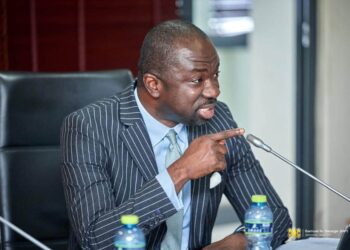

Deputy Attorney General and Minister for Justice, Dr Justice Srem Sai, has confirmed that no plea agreement has been reached in the case involving New Patriotic Party Ashanti Regional Chairman Bernard Antwi-Boasiako, popularly known as Chairman Wontumi, ahead of the expiry of the statutory window set aside for such negotiations.
In a brief statement, Dr Srem Sai revealed that the 30-day period allowed under law for concluding a plea bargain in The Republic v Bernard Antwi-Boasiako and 2 Others, widely referred to as the EXIM Bank trial, will elapse next week without an agreement in place.
“The statutory 30-day period for concluding the plea bargain in The Republic v Bernard Antwi-Boasiako and 2 Others will end next week. I can confirm that we have not reached a plea agreement yet”.
Deputy Attorney General and Minister for Justice, Dr Justice Srem Sai
A Loan Scheme Built on an Agricultural Project That Never Existed
The case centres on allegations that Wontumi, alongside Thomas Antwi-Boasiako and Wontumi Farms Limited, orchestrated an alleged fraudulent loan scheme targeting the Ghana Export-Import Bank between 2018 and 2022.
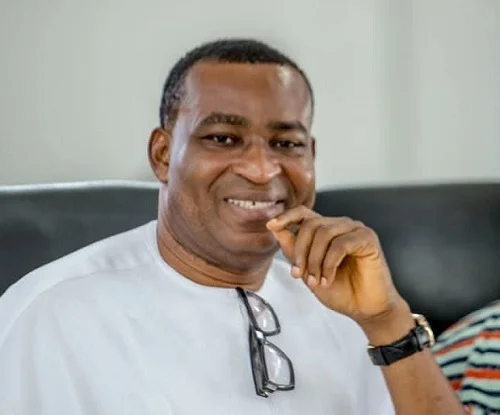
Prosecutors allege that the accused fraudulently obtained GH¢14.3 million from the bank for an agricultural project that, according to the state, never existed beyond the paperwork submitted to secure the funds.
The scheme did not stop at the initial loan. According to the prosecution, Wontumi later submitted a forged receipt to EXIM Bank officials in an attempt to falsely secure an additional GH¢4 million facility, compounding the scale of the alleged fraud against the state bank.
The state contends that the combined effect of unpaid principal and accumulated interest on the fraudulent transaction has resulted in a total financial loss exceeding GH¢30 million to the Ghana Export-Import Bank.
This figure reflects not just the original sums allegedly obtained under false pretences, but the compounding cost of a debt the prosecution says was never intended to be repaid through a legitimate project.
From Civil Debt to Criminal Prosecution
What might ordinarily have been treated as a civil matter involving loan default has instead evolved into a criminal prosecution, driven by allegations of deliberate deception at the heart of the transaction.
The state has brought multiple criminal counts against the accused, reflecting the seriousness with which prosecutors view the alleged conduct. The charges include defrauding by false pretences, uttering a forged document, money laundering, and intentionally causing financial loss to a public body.

Together, these charges paint a picture of a scheme prosecutors allege was designed from the outset to extract funds from a state institution under false pretences, rather than a legitimate business venture that simply failed to deliver results.
The Role of Plea Bargaining in Ghana’s Justice System
Plea bargaining allows an accused person to negotiate an agreement with the state, often involving an admission of guilt to some or all charges in exchange for a reduced sentence or other considerations.
Ghana’s legal framework permits such negotiations within a defined statutory period, offering both the prosecution and defence an opportunity to resolve a case without proceeding through a full trial.
In this instance, that window is set to close next week without an agreement in place, according to Srem Sai’s confirmation. The failure to reach a plea deal within the statutory period suggests that the case may now proceed toward full trial proceedings, absent any last-minute resolution before the deadline expires.
A High-Profile Case Within a Broader Pattern
The Wontumi case forms part of a broader pattern of high-profile prosecutions currently unfolding under the current administration, several of which have drawn intense political scrutiny and public debate.
Alongside this case, other prominent figures have faced arrest, investigation and prosecution over allegations of financial impropriety involving public institutions, drawing sustained criticism from opposition figures who argue that such prosecutions reflect political targeting rather than impartial law enforcement.
Government and state investigators have consistently rejected these characterisations, insisting that their work remains grounded strictly in the evidence gathered during investigations, independent of any political considerations.
The EXIM Bank case, with its detailed allegations of forged documents and a fabricated agricultural project, represents one of several ongoing prosecutions that continue to test this tension between accountability efforts and political controversy.
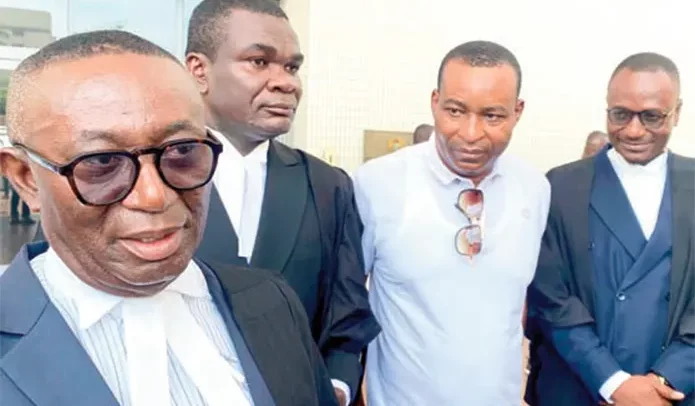
With the statutory plea bargain period set to expire next week without an agreement, attention now turns to how the prosecution and defence will proceed in the absence of a negotiated resolution.
Should no last-minute settlement emerge before the deadline, the case appears set to continue toward full trial, where the state will need to present its evidence regarding the alleged fraudulent loan scheme, the forged receipt, and the resulting financial losses to the Ghana Export-Import Bank.
For Wontumi and his co-accused, the coming weeks are likely to prove significant in determining the direction of a case that has already drawn considerable public attention given his prominent position within the New Patriotic Party’s Ashanti Regional leadership.
As the statutory deadline approaches, both sides face mounting pressure to determine whether further negotiation remains possible or whether the matter will ultimately be settled before the court through a full trial process.
READ ALSO: Energy Commission Tightens Clean Cooking Appliance Rules