

Ghana is stepping up efforts to improve the quality, safety and efficiency of clean cooking appliances entering the domestic market, with the Energy Commission introducing stricter registration requirements aimed at protecting consumers, improving energy efficiency and supporting the country’s transition to cleaner household cooking solutions.
The move comes as the Commission engaged manufacturers, importers, distributors and retailers of clean cooking appliances on newly introduced registration guidelines and compliance requirements, signalling a stronger regulatory approach to a market expected to play a central role in Ghana’s energy transition over the coming years.
The latest measures are expected to ensure that only appliances meeting approved safety and energy performance standards are allowed onto the Ghanaian market, while strengthening consumer confidence and supporting government’s broader objective of expanding access to clean cooking technologies nationwide.
The engagement reflects growing recognition that improving access to clean cooking is not solely about increasing the availability of modern fuels or efficient stoves, but also about ensuring the products available to households are safe, durable, energy-efficient and capable of delivering the health and economic benefits envisioned under Ghana’s clean energy agenda.
Commission prioritises safety and energy efficiency
Opening the stakeholder workshop, Deputy Executive Secretary of the Energy Commission, Mr. Chris Nanabanyin Yalley, described clean cooking as an important component of Ghana’s broader energy and development agenda, stressing that stronger regulation would benefit households, consumers and the country as a whole.

Cleaner kitchens mean healthier homes; smarter appliances mean lower bills; and efficient cooking means a more resilient nation.
Mr. Chris Nanabanyin Yalley, Deputy Executive Secretary, Energy Commission
According to Mr. Yalley, the Commission’s continued enforcement of Minimum Energy Performance Standards (MEPS) and mandatory energy labelling requirements has contributed to improving the integrity of Ghana’s appliance market by encouraging compliance and discouraging inefficient products.
The Commission believes that stronger enforcement not only protects consumers from poor-quality products but also supports national efforts to reduce unnecessary energy consumption, improve efficiency and promote responsible use of energy resources.
Energy efficiency has increasingly become an important pillar of Ghana’s energy policy, particularly as government seeks to balance rising electricity demand with investments in cleaner and more sustainable energy systems.
Industry briefed on new registration process
The workshop provided manufacturers, importers, distributors and retailers with detailed guidance on the Commission’s updated registration framework for clean cooking appliances.
Leading the technical session, the Commission’s Manager for Clean Cooking, Ms. Paula Adze, took participants through the various documentation and compliance requirements expected before products can be registered for sale in Ghana.

The presentation covered key regulatory requirements including safety test reports, Product Identification Declarations (PID) and energy consumption data required for product approval.
Participants were also taken through compliance timelines, product testing procedures and the regulatory expectations governing the introduction of clean cooking appliances into the Ghanaian market.
The interactive session allowed industry players to seek clarification on technical requirements while giving the Commission an opportunity to address implementation concerns ahead of full compliance.
Officials indicated that strengthening awareness among businesses would help improve compliance levels while ensuring the registration process remains transparent and predictable for investors and manufacturers.
Supporting Ghana’s clean cooking agenda
The latest regulatory measures come at a time when Ghana is pursuing a broader transition towards cleaner cooking technologies as part of efforts to reduce dependence on traditional biomass fuels such as firewood and charcoal.
Despite significant progress in expanding access to modern energy, a considerable number of households still rely on traditional cooking methods, exposing families to indoor air pollution while contributing to forest degradation and environmental challenges.
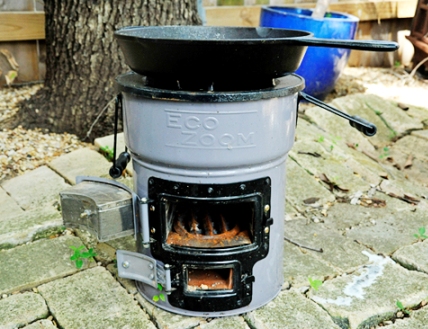
Cleaner cooking technologies, including improved biomass stoves, LPG appliances and other energy-efficient cooking systems, are increasingly viewed as critical interventions capable of improving public health while reducing emissions associated with household cooking.

For policymakers, ensuring that these appliances meet recognised safety and efficiency standards is becoming just as important as expanding access to them.
Substandard cooking appliances often consume more fuel, perform inefficiently and may expose users to unnecessary safety risks.
By introducing stronger registration requirements, the Energy Commission hopes to create a market where consumers can purchase products with greater confidence, knowing they meet nationally approved technical standards.
The approach also encourages manufacturers and importers to improve product quality while promoting fair competition among businesses operating within the sector.
Consumer protection at the centre of reforms
The Commission’s renewed focus on regulation reflects a broader commitment to consumer protection within Ghana’s energy sector.
Mandatory product registration provides regulators with greater oversight of appliances entering the market while making it easier to identify products that fail to meet approved standards.
It also strengthens enforcement by ensuring manufacturers and importers remain accountable for the products they introduce into the country.
For consumers, the benefits extend beyond safety.
Energy-efficient appliances generally consume less energy during operation, helping households reduce recurring fuel or electricity costs over the lifetime of the product.
At a national level, improved appliance efficiency contributes to lower overall energy demand, reducing pressure on electricity infrastructure and supporting broader energy conservation efforts.
These outcomes align with Ghana’s long-term objective of building a more efficient and sustainable energy system capable of supporting economic growth while reducing unnecessary energy losses.
Building a stronger clean cooking market
Industry experts have consistently argued that regulatory certainty remains one of the key ingredients for attracting investment into Ghana’s growing clean cooking sector.
Clear technical standards provide manufacturers and investors with predictable requirements while helping eliminate uncertainty surrounding market entry.
The Energy Commission’s engagement therefore serves not only as a compliance exercise but also as part of a wider effort to strengthen confidence in Ghana’s clean cooking market.
As government continues implementing policies aimed at improving household access to cleaner energy solutions, regulators say ensuring product quality will remain fundamental to achieving meaningful and lasting results.
The Commission’s latest engagement demonstrates an approach that combines regulation with stakeholder education, recognising that successful implementation depends on industry understanding as much as enforcement.
By bringing together manufacturers, importers, distributors and retailers, the Commission hopes to foster greater collaboration while ensuring businesses remain fully informed about evolving regulatory requirements.
Ultimately, Ghana’s clean cooking transition will depend not only on policy ambition but also on the availability of safe, efficient and reliable technologies capable of meeting the needs of households across the country.
The Energy Commission’s new registration framework represents another step towards that objective, reinforcing the country’s commitment to energy efficiency, consumer protection and a more sustainable energy future.
READ ALSO: Iran Reports 50 Deaths from U.S. Strikes This Month