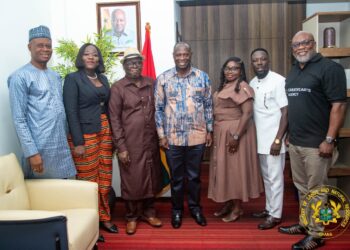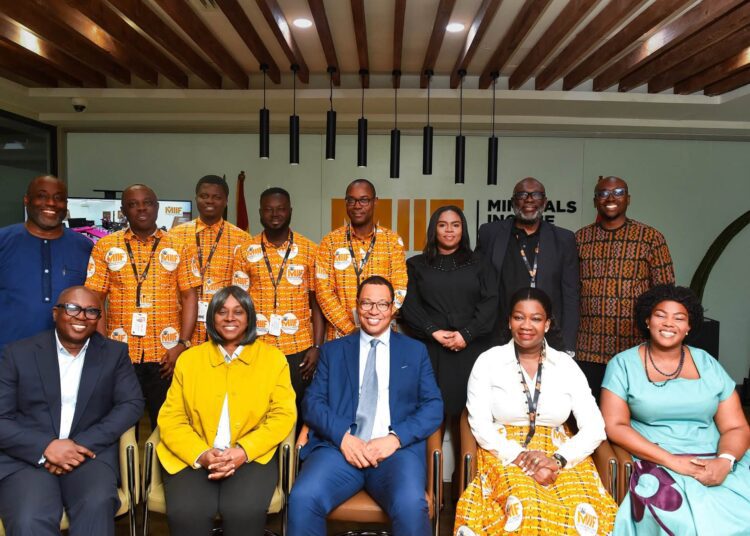
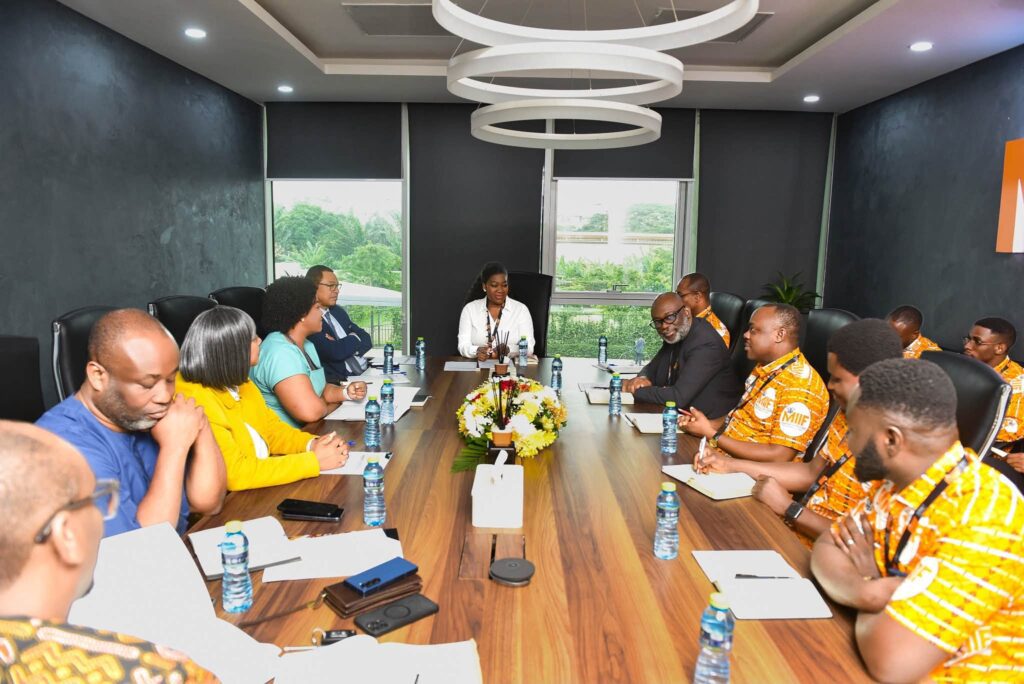
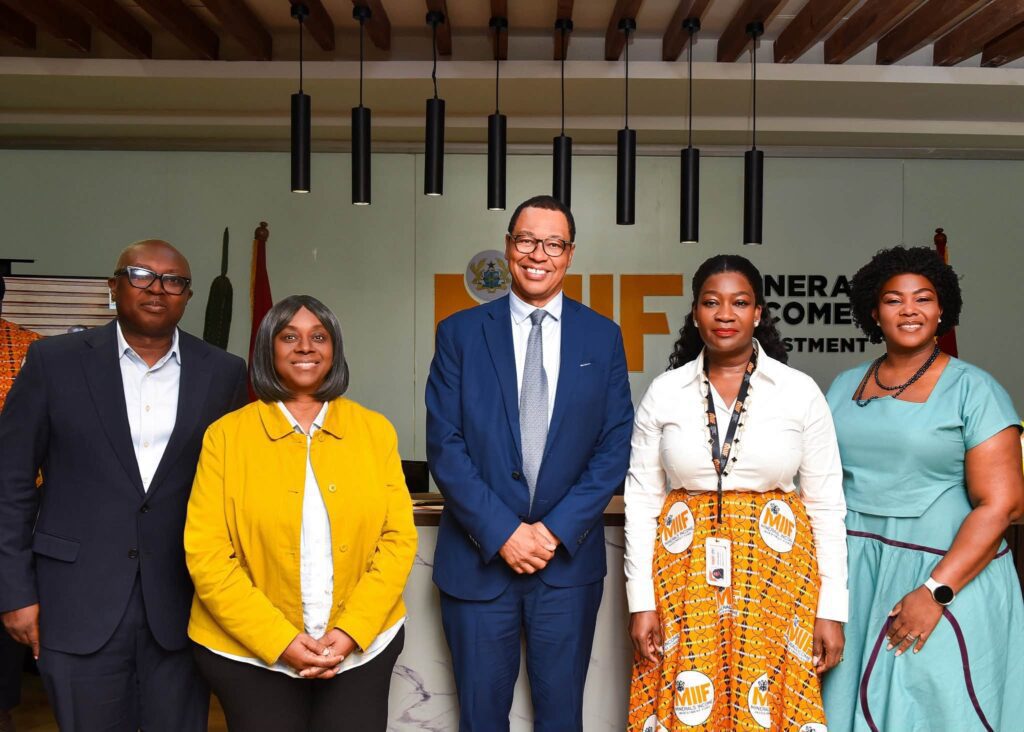
Minerals Income Investment Fund (MIIF) Chief Executive Officer, Mrs. Justina Nelson, has initiated strategic discussions with the newly appointed Chief Executive Officer of the Ghana International Bank (GhIB), Mr. Ian Greenstreet, to form a powerful collaborative framework driving global capital into Ghana’s critical minerals and mining sectors.
This engagement focuses on creating innovative financing pathways to fund value chain projects within the country’s emerging lithium industry. By bridging domestic sovereign management with international banking networks, this partnership positions Ghana as a top-tier destination for global green energy and transition investments.
“The discussions were held between MIIF CEO, Mrs. Justina Nelson, and the newly appointed CEO of GhIB, Mr. Ian Greenstreet. They explored exciting ways to fund mining value chain projects and ensure our natural resources bring maximum wealth to present and future generations.”
Minerals Income Investment Fund (MIIF)
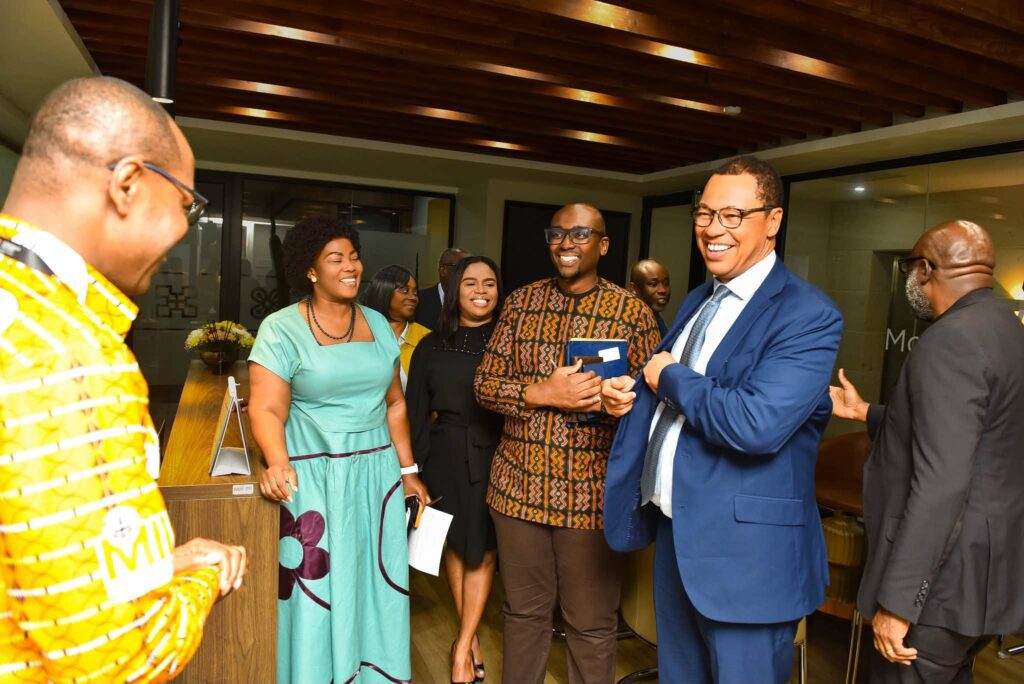
Building on this momentum, the two executives met to explore structured trade finance solutions, international investor mobilization, and mechanisms to tap into the African diaspora for vital developmental capital.
The collaboration comes at an opportune time when Ghana’s extractive economy exhibits robust growth, requiring sophisticated financial instruments to transform raw resource potential into sustainable national wealth.
By integrating GhIB’s extensive cross-border trade capabilities with MIIF’s sovereign mandate, both institutions aim to optimize revenue streams from mineral exports while de-risking high-yield mining infrastructure projects.
Unlocking the Wealth of the Lithium Value Chain
The global transition toward green energy has placed a premium on critical minerals, making the commercialization of Ghana’s lithium deposits a primary economic priority for MIIF.
To prevent the resource curse where raw materials are exported without local processing, Mrs. Nelson emphasized the need for financing across the entire domestic mining value chain.
Through this partnership, GhIB is positioned to offer targeted credit facilities and structured financing models that cater directly to early-mover mining firms and local contractors, multiplying economic retention.
Furthermore, integrating advanced risk management systems and Environment, Social, and Governance (ESG) standards into mining operations remains a pivotal pillar.
As international investors tie capital allocation to stringent ESG compliance, the joint expertise of a sovereign fund and a UK-regulated bank provides an unmatched layer of investor confidence.
Mr. Greenstreet noted that the bank is prepared to deliver these solutions, highlighting that operations will ensure “whatever we do, the value comes back to Ghana.”
This framework guarantees that eco-conscious international funds securely back the Ewoyaa Lithium Project.
Expanding Horizons as an African Commodity Bank
The ambitions of this strategic alliance extend beyond Ghana’s borders, aiming to reshape commodity banking across the continent.
Mr. Greenstreet explicitly outlined the bank’s vision during the discussions, stating, “We do not just want to be a Ghanaian commodity bank; we want to become an African commodity bank.”
This expansion strategy leverages GhIB’s operational footprint in London to connect capital-intensive mining ventures with global institutional investors.
By acting as a financial conduit, the partnership markets bankable mining projects directly to the global market, breaking dependencies on traditional syndications.
This investor engagement is paired with an innovative focus on mobilizing diaspora capital through structured investment instruments.
Ghanaians living abroad represent an underutilized source of development finance that can be channeled into secure, asset-backed mineral funds managed by MIIF.
By providing a reliable banking platform via GhIB, the partnership creates a trusted pipeline for diaspora remittances to be converted into productive equity investments.
This model deepens domestic capital markets and fosters inclusive economic growth, allowing ordinary citizens to own a stake in Ghana’s resource boom.
Securing Sustainable Fiscal Returns for Ghanaians
The ultimate measure of success for this partnership lies in its capacity to maximize long-term wealth derived from the nation’s finite natural endowments.
According to recent industrial data, the mining sector generated an impressive GH¢23.11 billion in taxes in 2025, which underscores the immense scale of the sector’s fiscal contributions.
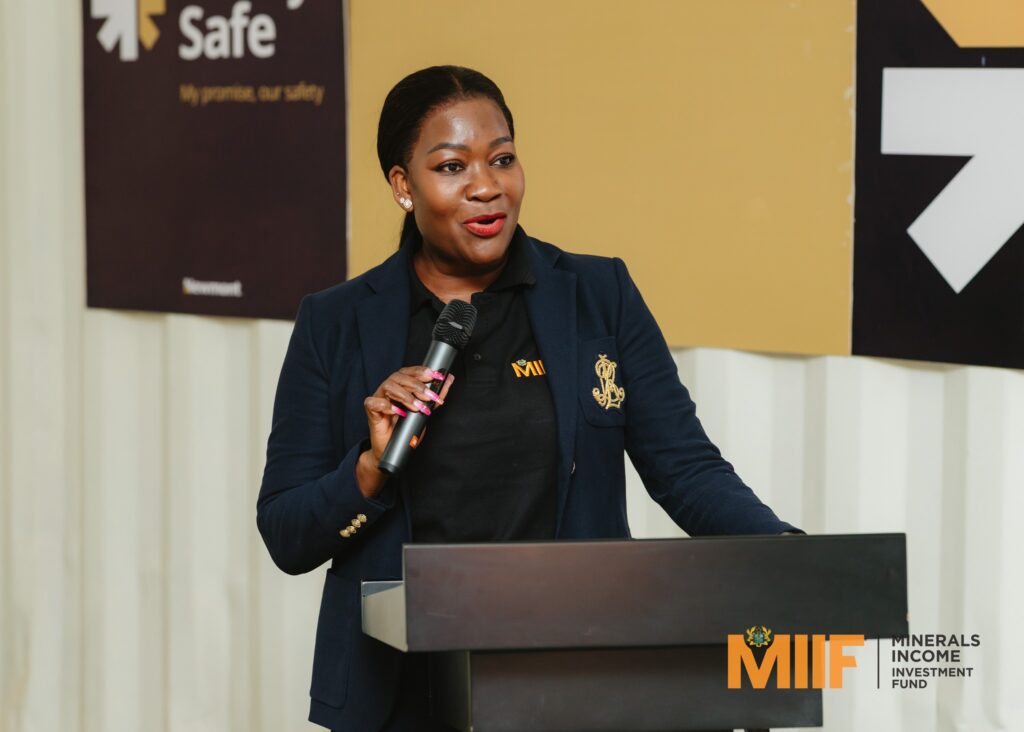
MIIF’s proactive management saw mineral royalties reach a record GH₵5.4 billion within the same period. By partnering with GhIB, the fund intends to utilize these substantial inflows as leverage to attract external foreign direct investment.
This financial synergy creates a powerful blueprint for sovereign wealth management that other mineral-rich African nations look to emulate.
Through disciplined asset allocation, structured trade finance, and transparent governance, the alliance guarantees that current mineral exploitation yields permanent capital assets.
The partnership directly supports the national objective of ensuring Ghana remains the preferred mining destination in Africa.
Ultimately, this collaboration gives concrete credence to MIIF’s commitment to creating sustainable value, transforming underground mineral resources into generational prosperity benefiting all citizens for decades to come.