Ghana’s efforts to strengthen electricity transmission infrastructure have reached another milestone as the Kumasi–Anwomaso Transmission Line Upgrade moves into its final phase of construction, with government describing the project as a major investment in improving power reliability across the Ashanti Region.
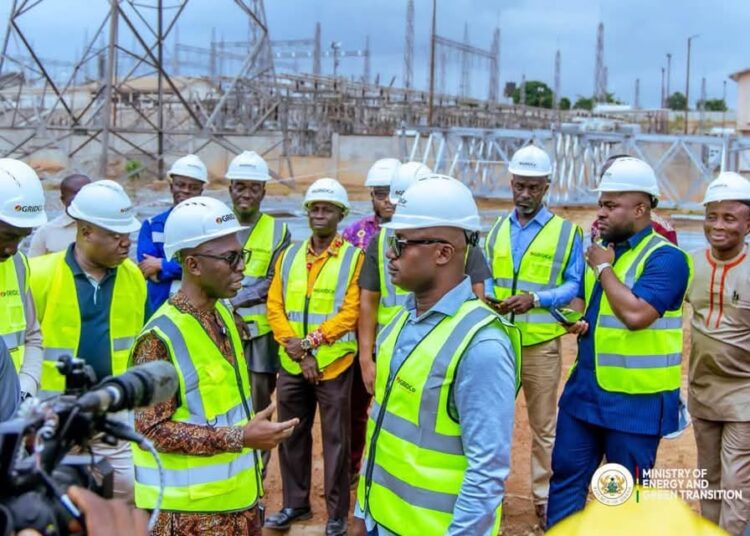
The Minister for Energy and Green Transition, Dr. John Abdulai Jinapor, announced the development after inspecting works at Anwomaso, where construction is underway on the Kumasi–Anwomaso Transmission Line Upgrade, commonly referred to as the K1–K2 Project.
The project forms part of broader efforts to modernise Ghana’s national transmission network to accommodate rising electricity demand, improve grid resilience and reduce the risk of supply disruptions in one of the country’s fastest-growing commercial and industrial centres.
Once completed, the upgraded transmission infrastructure is expected to significantly enhance electricity supply to Kumasi and surrounding communities, while supporting future industrial expansion and economic growth within the Ashanti Region.
Transmission capacity to more than double
At the heart of the project is the replacement of an ageing transmission line that has served Kumasi’s electricity network for decades.
According to the Minister, the existing 19-kilometre single-circuit 364MVA transmission line will be replaced with a modern double-circuit transmission line capable of carrying 2x488MVA, equivalent to 978MVA.

The upgrade will more than double the current transmission capacity serving Kumasi, providing the electricity network with greater flexibility to meet growing demand while reducing operational constraints.
The project will replace an ageing 19 KM single-circuit 364MVA transmission line with a modern, higher-capacity double-circuit 2x488MVA (978MVA), more than doubling the current capacity.
Dr. John Abdulai Jinapor
In addition to the transmission line replacement, the Ghana Grid Company (GRIDCo) will also undertake major improvements at the Kumasi (Ahodwo) Substation.
Government said one of the substation’s transformers will be upgraded from 66MVA to 145MVA, substantially increasing the network’s ability to deliver stable electricity to consumers across the region.
The transformer upgrade is expected to complement the new transmission line by strengthening the reliability and resilience of Kumasi’s electricity system.
Temporary outages expected during final works
While describing the project as critical to the region’s long-term electricity security, the Minister cautioned that the final construction phase will require carefully managed interruptions to electricity supply.
Construction activities entering their final stage from Monday, 20 July 2026, will require temporary shutdowns to allow engineers to complete the remaining works safely.

As we enter the final phase of construction from Monday 20th July, 2026, some customers may experience temporary and localised power interruptions to allow these essential works to be carried out safely.
Dr. John Abdulai Jinapor
The Ministry said the planned interruptions will affect only selected areas and will be coordinated by GRIDCo and the Electricity Company of Ghana (ECG) to minimise inconvenience to households and businesses.
Officials stressed that the short-term disruptions are necessary to deliver a stronger transmission network capable of providing more reliable electricity over the long term.
Supporting Kumasi’s economic growth
Kumasi remains one of Ghana’s largest commercial centres, with increasing electricity demand driven by industrial activity, expanding residential developments and growing commercial services.
Energy planners have consistently identified transmission upgrades as essential to sustaining that growth while reducing the frequency of network constraints.
The K1–K2 Project therefore represents more than an infrastructure replacement. It is designed to prepare the Ashanti Region’s electricity system for future economic expansion by creating additional transmission capacity and improving operational reliability.
A stronger transmission network is also expected to reduce pressure on existing infrastructure while improving the stability of electricity supplied to industries, businesses and public institutions.
According to the Minister, the investment reflects government’s continued commitment to strengthening critical energy infrastructure nationwide.
These temporary inconveniences are necessary to deliver a stronger, more reliable electricity network that will support the continued growth and development of Kumasi and the Ashanti Region.
Dr. John Abdulai Jinapor
Appeal for public cooperation
Recognising the inconvenience that planned outages may cause, the Minister appealed to residents and businesses to cooperate with the implementation schedule while engineers complete the remaining works.
He assured the public that GRIDCo and ECG would work together to minimise disruptions and restore electricity supply as quickly as possible wherever temporary outages become necessary.
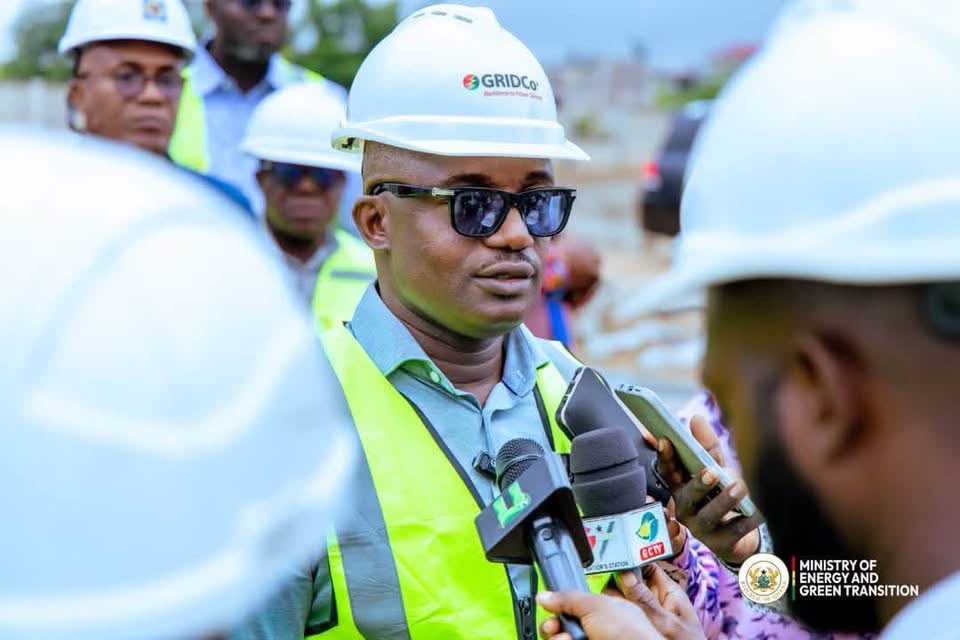
Every effort will be made by GRIDCo and ECG to minimise disruptions and restore supply as quickly as possible. I thank the people of Kumasi for their patience, understanding and continued support.
Dr. John Abdulai Jinapor
The Kumasi–Anwomaso Transmission Line Upgrade forms part of Ghana’s broader programme to modernise electricity infrastructure, strengthen grid resilience and improve power reliability across key economic corridors.
As electricity demand continues to rise alongside industrialisation and urban expansion, investments in transmission infrastructure are increasingly viewed as essential to supporting sustainable economic growth and ensuring the long-term stability of the national power system.
READ ALSO: Economic Growth Alone Cannot Save Ghana, NDPC Warns