Ghana’s dream of achieving self-sufficiency in poultry production may no longer be a distant ambition if policymakers and industry players embrace successful local models that have already demonstrated impressive results.
According to the Chief Executive Officer of Agri-Impact Limited and the Happy Poultry Project, Dr. Dan Acquaye, the country possesses the knowledge, experience and business examples needed to transform the poultry sector and reduce dependence on imported chicken.
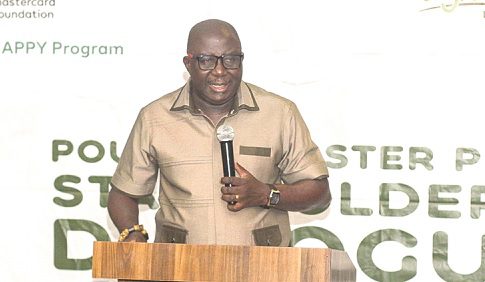
Speaking on the theme, “Can Ghana Feed Itself? The Future of Poultry Beyond Nkoko Nkitinkiti,” Dr. Acquaye stressed that Ghana’s future in poultry production depends on scaling proven initiatives instead of repeating policy mistakes that have failed to deliver lasting results.
He explained that the country’s proposed Poultry Master Plan is expected to provide a structured roadmap that will guide the industry through carefully planned stages toward long term self sufficiency.
Self Sufficiency Requires Patience and Strategic Investment
Dr. Acquaye cautioned against unrealistic expectations that Ghana could become self sufficient in poultry production within a few years.
He said the country’s annual demand exceeds 200 million birds, making the challenge far more complex than simply increasing chicken production. “We can’t be self sufficient in three years. That’s almost impossible. We consume over 200 million birds annually,” he stated.
According to him, expanding poultry production must be supported by significant investments across the entire agricultural value chain.
“For us to move, even if we have to increase production by 25 per cent, it’s not only about the supply of chicken. It’s the maize, the soya, the infrastructure, as well as the production practices.”
Dr. Dan Acquaye
His comments highlight the interconnected nature of the poultry industry, where feed production, transportation, processing facilities and modern farming methods all play vital roles in achieving sustainable growth.
Lessons From Past Policies Must Not Be Ignored
Dr. Acquaye believes one of Ghana’s biggest challenges has been the tendency to introduce new policies without fully learning from previous experiences.
He urged policymakers to carefully examine earlier interventions and identify both the successes and shortcomings before implementing new strategies.
“A key example is that when we are developing policies, we review previous policies, but we don’t always take lessons from those reviews.
“If we learn from previous policies, we will be much more circumspect in the approaches we adopt to implement a policy or strategy. We also have successful models that we can build on.”
Dr. Dan Acquaye
His remarks suggest that institutional learning could become one of the most powerful tools for transforming Ghana’s agricultural sector.
Aglow Farm Revival Demonstrates What Is Possible
One of the strongest examples cited by Dr. Acquaye was the remarkable revival of Aglow Farm, which had previously ceased operations.
He recalled that when Agri-Impact, supported by the Aglow-Impact Foundation and working in partnership with the Ministry of Food and Agriculture, took over the struggling business in 2023, the farm’s infrastructure had deteriorated significantly.
“In 2023, when Aglow-Impact, supported by the Aglow-Impact Foundation and in partnership with the Ministry of Food and Agriculture, came into the space, Aglow-Farm had closed down. The infrastructure was in ruins, and thieves had even started stealing some of the equipment.”
Dr. Dan Acquaye
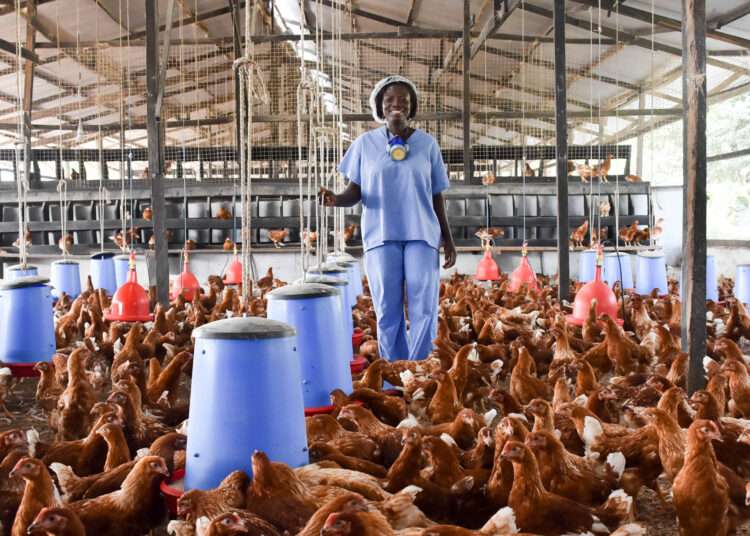
Today, the transformation has been remarkable. Within two years, Aglow Farm has resumed operations and now produces more than 300,000 birds every month. The company has also secured a licence to supply KFC, providing a significant market opportunity for locally produced chicken.
Dr. Acquaye noted that price comparisons have also shown that locally produced chicken can compete favourably with imported products. “In some cases, Aglow Farm’s prices are lower than imported chicken,” he revealed.
Stronger Poultry Industry Could Create Thousands of Jobs
Beyond food production, Dr. Acquaye believes a stronger poultry industry could become a major engine for employment and economic growth.
He explained that expanding processing facilities would immediately increase demand for birds supplied by local farmers, especially young entrepreneurs.
“If Aglow expands its market threefold or begins operating under a 24 hour economy with two or three shifts instead of one, its processing capacity will increase substantially. Everything it buys from young people producing birds will also increase threefold. That is how the economy grows.”
Dr. Dan Acquaye
Such expansion could create thousands of direct and indirect jobs across farming, feed production, transportation, processing and retail.
Northern Ghana Emerging as Investment Destination
Dr. Acquaye also pointed to Northern Ghana as one of the country’s most promising regions for poultry investment.
He highlighted the success of Lamdi Farm, which has experienced rapid expansion after receiving support from the Mastercard Foundation and the Startup Act initiative.
The farm has grown from housing about 2,000 birds to approximately 26,000 birds at a single location.
He also revealed that feed produced in Northern Ghana is about 30 per cent cheaper than feed manufactured in the southern part of the country because of easier access to locally grown maize and soya.
This cost advantage, he said, demonstrates why more investment should be directed toward the northern regions.
Poultry Master Plan Offers Long Term Direction
Dr. Acquaye disclosed that the proposed Poultry Master Plan is being developed in collaboration with the Ministry of Food and Agriculture and industry consultants.
He explained that the master plan is designed to provide a clear framework for the industry’s gradual expansion rather than pursuing unrealistic short term targets.
By replicating successful business models such as Aglow Farm, Lamdi Farm and Rockland while strengthening feed production, processing capacity and farming practices, Ghana could significantly reduce chicken imports, improve food security and create sustainable employment opportunities.
For Dr. Acquaye, the future of Ghana’s poultry industry will depend not on ambitious promises alone but on the willingness to replicate proven successes that are already delivering results across the country.
READ ALSO: BoG Warns Credit Contraction Still Haunts Ghana’s Economy