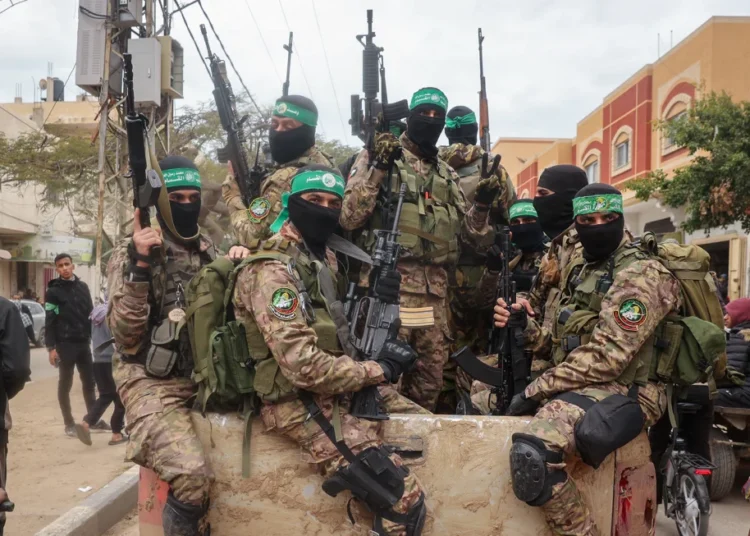
Hamas has reaffirmed its commitment to a 15-point roadmap for the second phase of the Gaza ceasefire, calling for the full implementation of the agreement as differences with Israel threaten to stall the proposed process.
In a statement published on Telegram, the Palestinian armed group said its immediate priority was the implementation of the agreement, including a complete halt to attacks on Palestinians, an Israeli military withdrawal, the reopening of crossings and the delivery of humanitarian aid, shelter supplies and reconstruction materials into Gaza.
Hamas also called on mediators and countries serving as guarantors of the agreement to “assume their responsibilities” and prevent what it described as violations that could derail the process. The group said that it would continue engaging “positively and responsibly” to implement the roadmap and bring an end to the suffering of Palestinians.
The statement was reinforced by senior Hamas official Basem Naim, who told a news agency that the group remained committed to the roadmap reached with mediators in Cairo about 10 days earlier. “We expect the mediators and the US guarantor to press Netanyahu and his government to adhere to the roadmap and not obstruct the process for internal political and electoral reasons, while continuing to jeopardise the region’s security and stability,” Naim said.
Hamas’s position comes after Israeli Prime Minister Benjamin Netanyahu rejected the 15-point proposal and said Israel would not withdraw its forces from Gaza until Hamas is disarmed. According to Israeli media reports, Netanyahu said that Israel “denies the 15-point document” and that the Israeli military “will not carry out any withdrawal until Hamas is genuinely disarmed.”
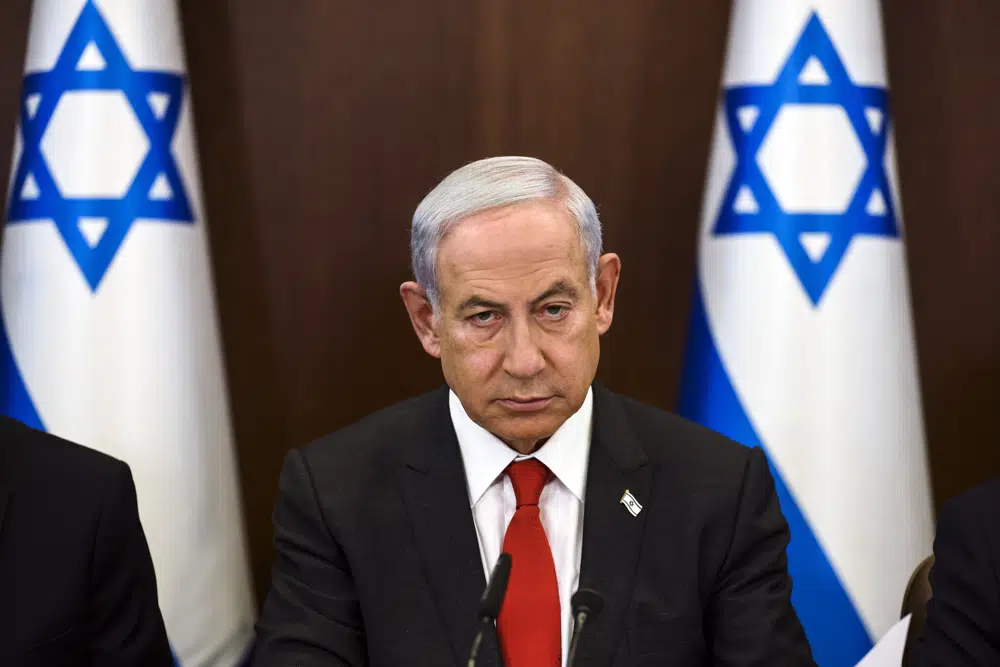
Netanyahu said Israel was seeking the complete dismantling of Hamas rather than what he described as a merely symbolic or temporary disarmament.
“Now, we are talking to the Americans about this issue. They have ideas, some of them are acceptable to us and some are not, and we know how to stand our ground on these matters.”
Benjamin Netanyahu
The disagreement centres on the sequence of steps outlined in the proposed framework. Hamas has called for an end to Israeli attacks and a withdrawal of Israeli forces, while Israel has maintained that the removal of its troops must be tied to the disarmament of Hamas and other armed groups. That difference could prove central to efforts to move the ceasefire into its second phase.
The proposed roadmap follows a US-led ceasefire framework announced by President Donald Trump late last month. Trump said that Hamas and other armed groups in Gaza had accepted a phased proposal under which they would surrender their weapons to a new Palestinian governing body, while Israel would withdraw its forces in stages as disarmament progressed.

Under the proposal, Hamas would disarm in exchange for a full Israeli military withdrawal, while governance would eventually be transferred to an independent Palestinian National Committee backed by an international security force.
The framework envisages Israeli forces withdrawing progressively as the disarmament process advances.However, the proposed arrangement faces significant obstacles, particularly over the conditions attached to disarmament, Israeli withdrawal and the implementation of humanitarian commitments.
Palestinian Official Questions Pressure on Israel
Mustafa Barghouti, Secretary-General of the Palestinian National Initiative, said Netanyahu’s rejection of the plan was not unexpected. Barghouti argued that Israel had previously failed to implement commitments contained in agreements it had signed and accused the country of violating the ceasefire’s core obligation to halt attacks in Gaza.
He claimed Israel had violated the ceasefire “3,000 times”, killing “more than 1,200 people” and injuring “more than 4,000.” He also criticised the United States for failing to act over what he described as repeated violations.
Barghouti said that other commitments had also been breached, including provisions concerning humanitarian aid, movement through the Rafah crossing, the transfer of governance to an independent committee and the deployment of a peacekeeping force.
He argued that the central issue was therefore not whether Hamas should be pressured, but whether international mediators would exert sufficient pressure on Israel to implement the proposed agreement. “The real question is who should pressure Netanyahu,” Barghouti said, arguing that Hamas had already agreed to the plan while Israel had prevented its implementation.
He described the situation as a test for Trump and the international community, asking whether governments would consider imposing sanctions on Israel in response to alleged violations.Barghouti also accused the Israeli government of pursuing what he called “ethnic cleansing” but rejected the idea that Palestinians would leave Gaza. “Palestinians will not leave,” he said.
With Hamas reaffirming its commitment to the 15-point framework and Israel insisting that disarmament must precede any full military withdrawal, the proposed second phase of the ceasefire remains dependent on resolving the fundamental disagreement between the two sides.
The role of mediators will therefore remain crucial as efforts continue to determine whether the roadmap can move from an agreed framework into actual implementation.
READ ALSO: DopeNation Hits Milestone as Kakalika Surpasses 50 Million Spotify Streams