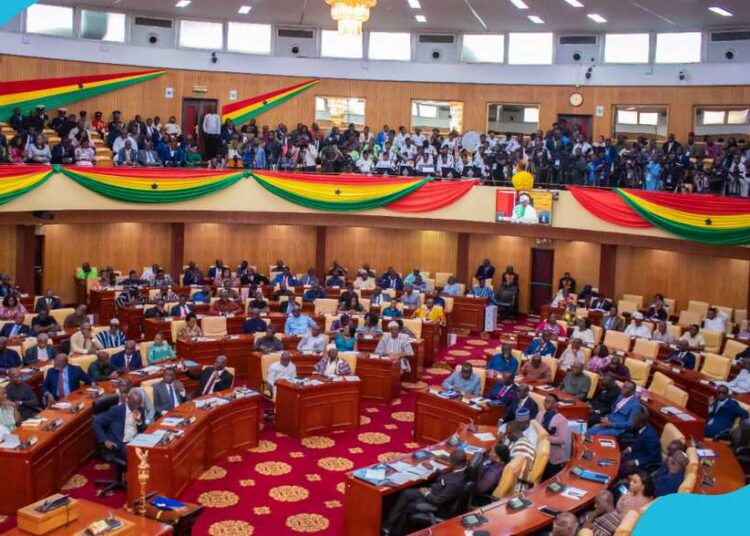
The Parliament of Ghana has passed the Ghana Cocoa Board (COCOBOD) Bill, 2026, introducing major reforms aimed at restructuring the governance of the cocoa sector, increasing domestic value addition, and improving the welfare of cocoa farmers.
The legislation, presented by Deputy Minister for Finance Thomas Nyarko Ampem, replaces the Ghana Cocoa Board Act, 1984 (PNDCL 81), which has guided the sector for more than four decades.
The COCOBOD Bill 2026 seeks to modernise Ghana’s cocoa industry by introducing a new producer pricing framework, guaranteeing farmers not less than 70 percent of the gross Free-on-Board (FOB) export price, increasing local processing capacity, and strengthening the financial sustainability of the Ghana Cocoa Board.
The reforms form part of government’s broader plan to secure long-term growth and improve returns for cocoa producers.

Parliament approves sweeping cocoa sector reforms
The passage of the new law marks a significant shift in Ghana’s approach to managing one of the country’s most important economic sectors. Cocoa remains a major source of export earnings and supports millions of livelihoods, particularly in rural communities where farming remains a key economic activity.
During the presentation of the cocoa sector reforms, Finance Minister Dr Cassiel Ato Forson said the industry had experienced significant transformation since the enactment of the Ghana Cocoa Board Act, 1984, requiring a new legal framework to address emerging challenges.
He explained that government would replace the existing legislation with a new framework designed to modernise the governance and financing structure of the sector.
COCOBOD Bill introduces 70% cocoa price guarantee
A key feature of the COCOBOD Bill 2026 is the introduction of a producer pricing mechanism that links cocoa farmer payments more closely to international market conditions, exchange rate movements, and other relevant factors.
Under the new legislation, cocoa farmers will receive a guaranteed minimum of 70 percent of the gross Free-on-Board (FOB) export price. Dr Forson said the policy would ensure cocoa producers benefit more directly from developments in global cocoa markets.

He added, “We will also guarantee cocoa farmers not less than 70 percent of the gross Free-on-Board (FOB) price.” The measure is expected to strengthen farmer incomes and improve incentives within the cocoa value chain.
Local processing mandate to boost value addition
The new legislation also introduces measures aimed at increasing Ghana’s domestic processing capacity and reducing reliance on exporting raw cocoa beans. The COCOBOD Bill mandates that at least 50 percent of cocoa beans produced in Ghana must be processed locally.
Government believes the move will expand value addition, create more opportunities within the domestic cocoa industry, and increase Ghana’s share of earnings from cocoa production.
Dr Forson said the reform would help position the country’s cocoa sector for sustainable growth by ensuring more economic benefits remain within Ghana. “The Bill will also ensure that not less than 50 percent of cocoa beans produced in Ghana is processed here in Ghana,” he said.
New framework to improve COCOBOD sustainability
Beyond pricing and processing reforms, the legislation introduces changes aimed at improving the financial management and operational efficiency of COCOBOD. The Bill establishes a new financing framework for cocoa purchases and related operations while seeking to restore the long-term financial sustainability of the institution.

According to Dr Forson, the reforms are necessary to strengthen COCOBOD’s ability to effectively support the cocoa industry. The legislation also limits COCOBOD’s involvement in non-core quasi-fiscal activities, ensuring that the organisation focuses primarily on its mandate of regulating and developing the cocoa sector.
Under the reforms, responsibilities such as road infrastructure projects will be transferred to the appropriate government agencies.
Farmer welfare programmes included in new law
The new COCOBOD framework introduces additional measures focused on improving the social welfare of cocoa farmers and their families. The legislation establishes a contributory pension scheme for cocoa farmers and an educational trust to support farmers and their children.
The welfare measures are designed to provide greater financial security for farmers beyond their years of active production and ensure improved educational opportunities for future generations.
Government has argued that improving farmer welfare remains critical to sustaining Ghana’s cocoa industry and encouraging younger generations to participate in cocoa farming.
The COCOBOD Bill also introduces a specialised cocoa tribunal to handle legal infractions and disputes within the cocoa sector. The tribunal is expected to provide a dedicated mechanism for resolving industry-related disputes and improving enforcement of cocoa regulations.

The reform is part of broader efforts to strengthen governance and accountability across the cocoa value chain.
Government targets sustainable cocoa industry growth
The passage of the COCOBOD Bill 2026 represents a major policy intervention in Ghana’s cocoa sector, with government seeking to improve farmer earnings, promote local processing, and strengthen the financial foundation of the industry.
Dr Forson said the reforms would create a stronger cocoa sector capable of delivering greater benefits to farmers and the wider economy. “Mr. Speaker, these reforms will place Ghana’s cocoa sector on a stronger financial footing, improve returns to cocoa farmers, ensure value addition, and position the industry for sustainable long-term growth,” he stated.
With cocoa remaining a key pillar of Ghana’s economy, the new legislation is expected to shape the future direction of the industry by changing how the sector is financed, managed, and linked to global markets.
READ ALSO: Government Announces Activities to Mark One Year Since Helicopter Disaster