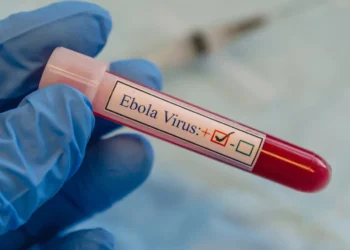
DR Congo has reported 3,532 Ebola cases, making the current epidemic the fastest-growing outbreak in the country’s history after surpassing the previous record of 3,481 infections recorded during the 2018–2020 epidemic, as the deadly virus continues to spread across the Central African nation.
The latest figures, released by the country’s communications ministry also show that the outbreak has claimed 1,556 lives, making the current crisis the largest Ebola outbreak ever recorded in the Democratic Republic of Congo and the second-largest Ebola outbreak globally.
The only Ebola outbreak to exceed the current crisis was the devastating 2014–2016 epidemic in West Africa, which affected Guinea, Liberia and Sierra Leone, resulting in 28,616 infections and 11,310 deaths, according to the World Health Organization.
The rapid escalation of the outbreak has raised concerns among health authorities and international partners, who warn that transmission is continuing to outpace efforts aimed at controlling the disease.
The current outbreak driven by the Bundibugyo species of Ebola has caused an unusually high number of deaths within a short period compared with previous outbreaks.
According to Africa Centres for Disease Control and Prevention (Africa CDC), the virus has killed more than five times as many people in the same timeframe compared with earlier Bundibugyo outbreaks.
Dr. Jean Kaseya, Director General of the CDC for Africa, added, “I am not in a position to tell you we are in total control of this outbreak today.”
The warning comes as health teams face major challenges in tracing infections, reaching vulnerable communities and preventing further spread, particularly in eastern DR Congo, where armed conflict and displacement have disrupted emergency operations.
According to health officials, more than 80% of new cases in the outbreak’s epicentre are not linked to known contacts, making it increasingly difficult to break chains of transmission.
Health authorities estimate that about 40 contacts should be tracked for each confirmed case found in metropolitan areas. Officials stated that the anticipated contact list should comprise roughly 134,400 individuals based on current statistics.
Nevertheless, just 17,558 contacts roughly 13% of the necessary number are now being monitored.
Insecurity in the eastern Congo, where years of violent violence have forced millions of people to flee their homes and made it more difficult for medical professionals to visit impacted villages, has made the problem worse.
Due to a lack of medical staff or because violence has prevented routine follow-up, about one-fifth of those who have previously been identified as contacts are apparently not being monitored.
There have also been dire repercussions. According to Africa CDC authorities, almost 60% of virus-related deaths occurred in communities rather than in medical facilities, indicating that many patients are either not receiving treatment at all or are receiving it too late.
Health Workers Race Against Time to Test New Treatments and Vaccines
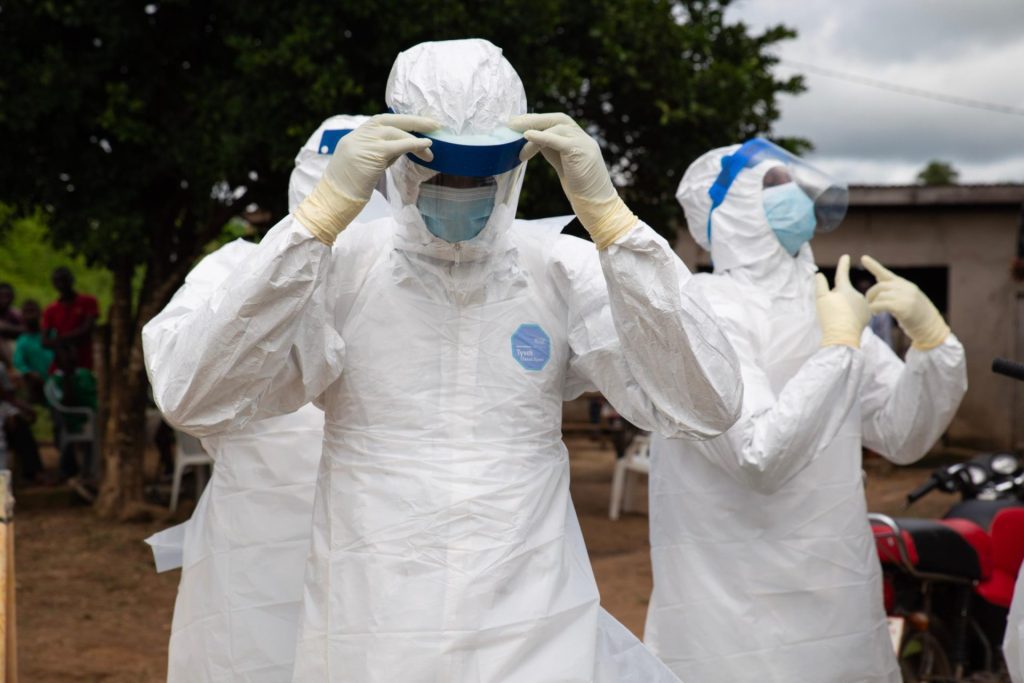
Despite the worsening outbreak, health authorities and international partners are continuing efforts to slow transmission and improve survival rates through experimental treatments, research programmes and vaccine development.
Unlike some other forms of Ebola, there are currently no approved vaccines or treatments specifically designed for the Bundibugyo strain. However, clinical trials are now underway in Congo to test possible therapies and preventive medicines.
More than 40 patients are participating in a trial examining a combination of treatments aimed at improving recovery among those infected with the virus.
A separate study is also testing an experimental antiviral drug designed to prevent people exposed to Ebola from developing the disease. Nineteen participants have already begun a 10-day course of the medicine, with researchers aiming to enrol 1,200 people.
According to health officials, the treatment may be extended to all identified contacts if analysis conducted after the initial 600 individuals yields positive results.
Scientists are also advancing efforts to develop a vaccine specifically targeting the Bundibugyo strain. A clinical trial for what could become the first vaccine against the virus began at Oxford University, where the first of 50 adult volunteers has received an experimental dose and will be monitored for safety.
Moreover, the Coalition for Epidemic Preparedness Innovations (CEPI) has also announced funding support for Hilleman Laboratories, a Singapore-based research organisation, to develop another potential vaccine candidate and prepare doses for future testing in Congo.
The research builds on previous Ebola vaccine advances, including the vaccine developed by Merck that has already been approved by regulators to protect against another species of Ebola virus.
Meanwhile, neighbouring Uganda has demonstrated that rapid intervention and strong surveillance can prevent outbreaks from escalating. Uganda recently declared an end to its related Bundibugyo outbreak after four weeks without new cases. The country recorded 20 cases and three deaths.
Health officials credited Uganda’s success to swift action, effective contact tracing and early containment measures.
However, Congo’s response remains constrained by a combination of humanitarian challenges, including insecurity, displacement and strained healthcare infrastructure.
The latest outbreak adds another layer of difficulty for a country that has repeatedly faced Ebola emergencies over the past decades. While medical advances have improved the global response to the disease, health officials warn that controlling the current crisis will require sustained international support and urgent investment in frontline response efforts.
READ ALSO: Rabotec Gravitates Mine Ownership as Project Pipeline Hits $1.8bn