
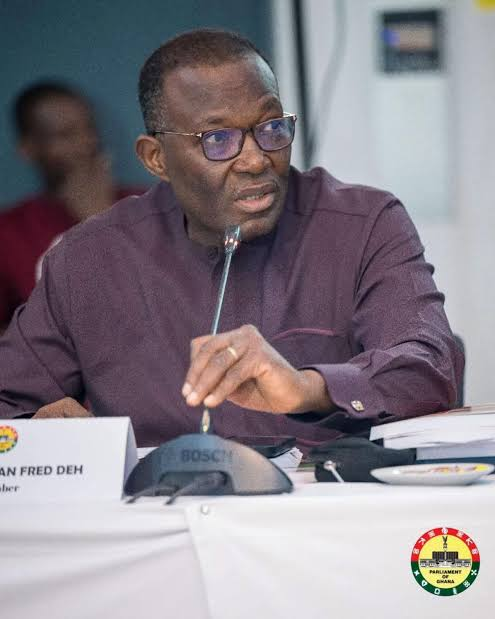
Member of Parliament’s Public Accounts Committee (PAC) and MP for Kpando, Hon. Sebastian Fred Deh, has disclosed that schools across Ghana are grappling with a staggering 94.5 percent deficit in toilet facilities, a gap he says is exposing millions of pupils to poor sanitation and unhealthy learning conditions nationwide.
Presenting findings from the Committee’s report following stakeholder engagements on school sanitation, Hon. Deh revealed that only about 7,000 out of an estimated 125,000 school infrastructure projects across the country currently have functional toilet facilities, a shortfall he described as deeply troubling given its direct impact on the health and dignity of schoolchildren.
Hon. Deh traced the roots of the crisis to a persistent failure to incorporate sanitation facilities into the design and construction of many school buildings put up under the Ghana Education Service (GES). He argued that this omission has not been an isolated occurrence but a recurring pattern across numerous infrastructure projects nationwide, one that has continued largely unchecked over the years.
According to him, the omission has continued to undermine hygiene standards in schools and negatively affect the welfare of students, who are left to learn in environments lacking even the most basic sanitary infrastructure. He was emphatic that sanitation cannot continue to be treated as a secondary consideration in school construction, insisting that it must be recognised as a core requirement rather than an optional add-on left to chance.
Among the groups most severely affected by the sanitation deficit, Hon. Deh pointed to adolescent girls as particularly vulnerable, noting that inadequate toilet facilities have forced many to miss school entirely during menstruation due to the absence of safe, private and appropriate facilities to manage their needs.
“Sanitation is not a luxury in our schools; it is a basic necessity that safeguards the health, dignity, and future of every child.”
Hon. Sebastian Fred Deh
This gender-specific impact reflects a challenge long flagged by education stakeholders as one of the more damaging consequences of poor school sanitation infrastructure, with missed school days during menstrual cycles contributing to wider gaps in academic performance and school retention rates among girls, particularly in underserved and rural communities where sanitation gaps tend to be most severe.
Public Health Risk Beyond the Classroom
Beyond its effect on school attendance, Hon. Deh warned that the sanitation deficit carries broader public health implications, explaining that inadequate toilet facilities significantly increase the risk of communicable diseases spreading within school communities.
He said the resulting unhealthy environment does not merely affect student wellbeing but actively undermines the broader teaching and learning process, creating conditions that make it harder for both students and teachers to function effectively on a daily basis.
He stressed that addressing the sanitation gap should therefore be treated as an urgent public health priority, not simply an infrastructure inconvenience to be resolved at a later stage of school development, given the scale of risk involved for pupils across the country.
To address the scale of the deficit, Hon. Deh called on the Ghana Education Service and Metropolitan, Municipal and District Assemblies (MMDAs) to strengthen collaboration, insisting that all future school infrastructure projects must include adequate toilet facilities as a standard requirement rather than an afterthought.
His call for closer coordination between these institutions reflects a recognition that responsibility for school infrastructure in Ghana is often shared across multiple layers of government, requiring deliberate alignment to avoid the kind of gaps the PAC’s findings have now brought to light. He argued that without such collaboration, the country risks repeating the same construction oversights that produced the current 94.5 percent deficit in the first place.
Long-Standing Challenge Despite Past Interventions
Hon. Deh’s disclosure adds to history of sanitation challenges within Ghana’s education sector, with inadequate toilet facilities repeatedly identified over the years as a major barrier to delivering quality education across the country.
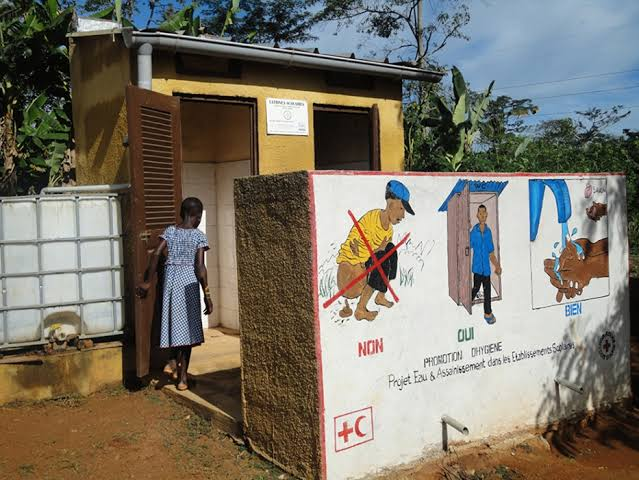
Despite successive governments, working alongside development partners, having rolled out several Water, Sanitation and Hygiene (WASH) initiatives aimed at improving conditions in schools, progress has remained uneven, with underserved communities continuing to bear the brunt of the infrastructure gap.
This pattern of uneven progress, in his assessment, suggests that isolated WASH interventions, however well-intentioned, have not been sufficient on their own to close a deficit as large as the one now confirmed by the Public Accounts Committee’s findings, reinforcing his broader call for a more coordinated, systemic approach going forward.
Call for Urgent, Coordinated Action
Hon. Deh’s submission to the Committee underscores not only the scale of the sanitation crisis in Ghana’s schools but also the urgent need for coordinated efforts among GES, MMDAs and development partners to finally close the sanitation infrastructure gap that has persisted for years despite repeated interventions.
“Quality education begins with safe, healthy, and dignified learning environments for every Ghanaian child.”
Hon. Sebastian Fred Deh
With only a fraction of the country’s school infrastructure projects currently equipped with functioning toilet facilities, his findings place renewed pressure on relevant authorities to treat sanitation not as a secondary concern but as a fundamental requirement of school construction, one directly tied to student health, attendance, and the broader quality of education across the country.
Following the presentation of these findings, attention now turns to how quickly GES and MMDAs respond to Hon. Deh’s call for stronger collaboration, and whether concrete commitments will emerge to retrofit existing schools lacking toilet facilities while ensuring all future infrastructure projects meet basic sanitation standards from the outset.
For the millions of pupils currently learning in schools without adequate facilities, the scale of the response in the coming months could determine how quickly this long-standing gap begins to close.
READ MORE: Rt. Hon. Bagbin Pledges “Sunset Fund” for the Needy