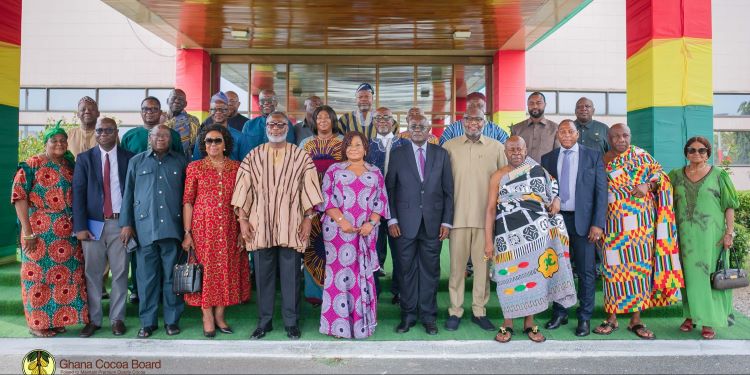
The structural foundation of Ghana’s cocoa economy is undergoing its most significant transformation since the early 1990s, with the Chief Executive of the Ghana Cocoa Board (COCOBOD), Dr. Randy Abbey, leading his top management team into a high-stakes deliberation with the Council of State.
The meeting, held at the Jubilee House, was convened to secure the advisory body’s backing for a series of radical policy shifts and strategic reforms aimed at decoupling Ghana’s cocoa production from foreign debt and reorienting it toward domestic industrialization.
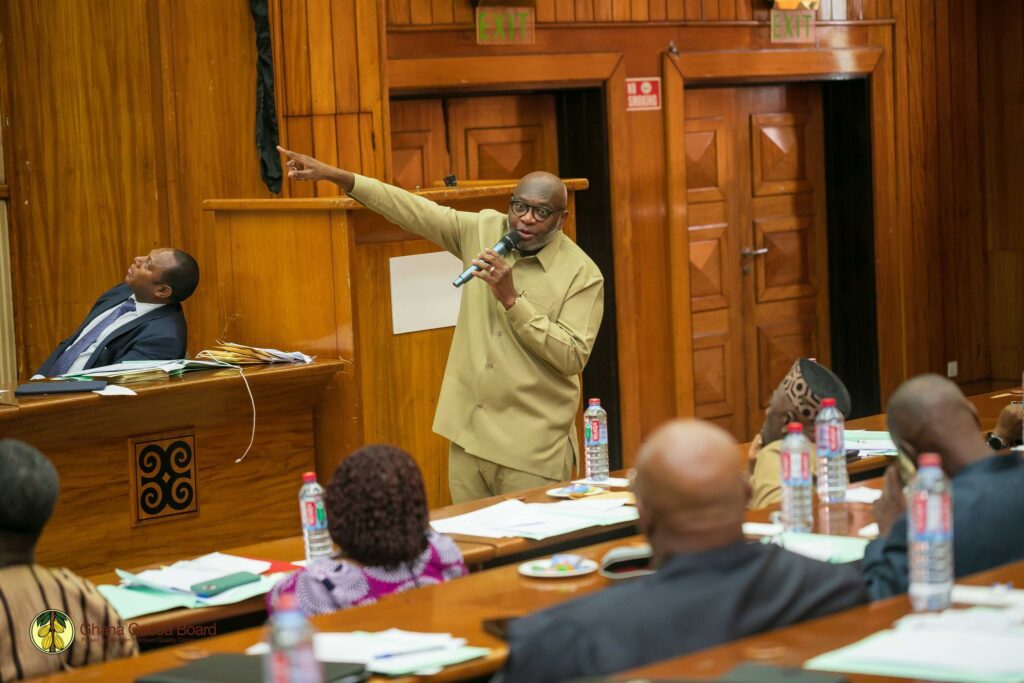
“The Chief Executive of the Ghana Cocoa Board, Dr. Randy Abbey, together with top management, engaged members of the Council of State to deliberate on key policies and strategic reforms to secure the long-term sustainability of Ghana’s cocoa sector.
“Dr. Abbey highlighted the limitations of the current cocoa collateralization model, noting that it does not sufficiently promote local value addition. He underscored the urgency of implementing a new, sustainable financing framework to ensure greater equity and resilience across the cocoa value chain”
Ghana Cocoa Board
At the heart of the “Economic Reset,” for the cocoa sector is a move away from the decades-old practice of offshore syndication. For over thirty years, Ghana has relied on a consortium of international banks to fund the annual cocoa harvest – a model that Dr. Abbey argued has outlived its utility and, more importantly, has become a structural barrier to national wealth creation.
The COCOBOD CEO delivered a forensic critique of the current cocoa collateralization model, noting that historically, Ghana has pledged its “future” cocoa crops as collateral to secure billions in foreign loans.
While this provided immediate liquidity for bean purchases, it created a restrictive “closed-loop” where the best-quality beans were strictly earmarked for export to satisfy the terms of the foreign lenders.
This system, Dr. Abbey noted, effectively starved local cocoa processors of the raw materials needed to grow.
By prioritizing the export of raw beans to pay off foreign interest, the nation has inadvertently stifled the growth of a domestic chocolate and cocoa-byproduct industry. The Chief Executive made it clear that to achieve the 50% local processing target set by President John Dramani Mahama, the financial shackles of the offshore syndication model must be broken.
Domestic Financing Framework
The proposed alternative is the introduction of a Domestic Cocoa Bond and a revolving liquidity fund. By raising capital within the Ghanaian financial market and leveraging the strengthened Ghanaian Cedi, COCOBOD aims to create a self-sustaining financing mechanism.
This would allow the board to pay farmers instantly – a critical component of the “Agribusiness Reset” – without the delays often associated with the approval of international credit lines.
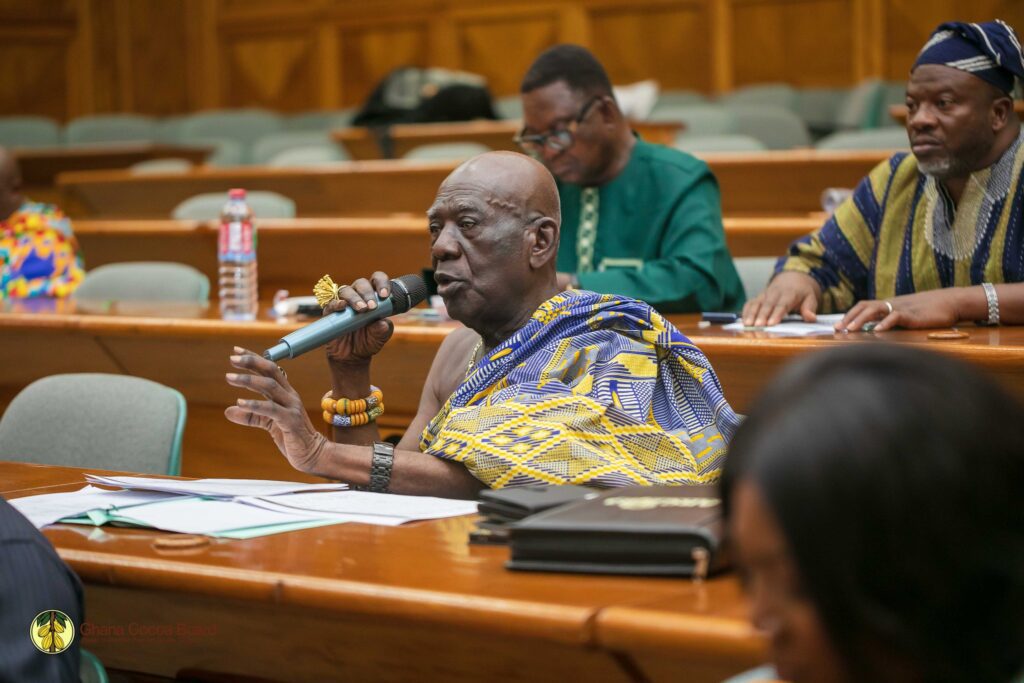
According to Dr. Abbey, this new framework is designed to provide greater equity for indigenous players. Specifically, the reforms seek to revive the Produce Buying Company (PBC) and other domestic Licensed Buying Companies (LBCs) that have historically struggled under the high interest rates and restrictive terms of the foreign-funded model.
By localizing the financing, the government ensures that the interest paid on these loans stays within the Ghanaian banking system, further stimulating the national economy.
2026 Industrial Vision
The briefing to the Council of State was explicitly aligned with the broader industrialization agenda of the current administration.
During the 2026 State of the Nation Address, the President declared that Ghana would no longer be a “raw material warehouse,” for the world. The cocoa sector, as the nation’s largest employer, is the primary testing ground for this “Value-Addition” philosophy.
Dr. Abbey emphasized that the reforms are not merely about money; they are about sovereignty. When Ghana controls the financing of its cocoa, it controls the destination of its beans. This allows the state to strategically direct high-quality cocoa to local refineries, supporting the production of cocoa butter, liquor, and finished chocolates for the 400-million-strong ECOWAS market.
The Council of State members raised questions regarding the impact of these reforms on the farm-gate price.
Dr. Abbey assured the Council that the reset is designed to put more money directly into the pockets of the farmer. By eliminating the high fees and “arrangement costs,” associated with international syndication, COCOBOD can redirect those savings into improved producer prices and social interventions, such as the Cocoa Farmer Pension Scheme.
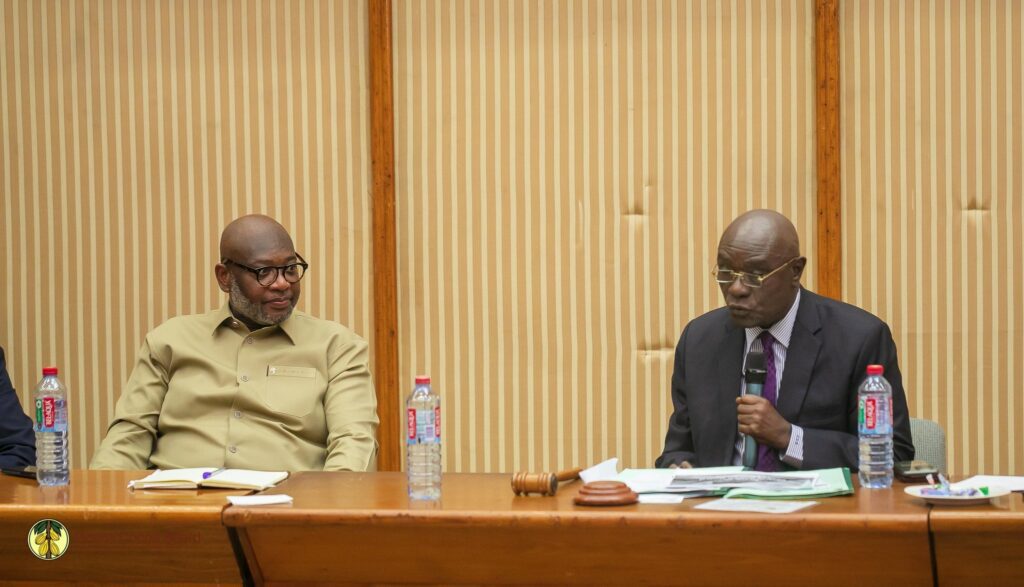
As the meeting concluded, the consensus was clear: the era of “borrowing to export” is coming to an end. The transition to a sustainable, locally-funded financing framework is a prerequisite for the industrial transformation of Ghana.
The Ghana Cocoa Board is now moving toward the formal implementation phase of these reforms, which are expected to be fully operational by the start of the 2026/2027 crop season.
READ ALSO: Trump Outlines Objectives For Military Strikes Against Iran