Ghana may be celebrating notable improvements in key macroeconomic indicators, but the National Development Planning Commission (NDPC) has cautioned that economic growth on its own will not guarantee sustainable national development unless deep rooted social and institutional challenges are urgently addressed.
The Commission has warned that persistent youth unemployment, weak public service delivery, poor maternal health outcomes and implementation bottlenecks continue to threaten the country’s long term progress despite encouraging gains in economic performance.
These concerns are contained in the 2025 National Annual Progress Report (APR) as the final assessment of the Agenda for Jobs II Creating Prosperity and Equal Opportunity for All policy framework covering the period from 2022 to 2025.
The report paints a picture of an economy showing signs of recovery while exposing the difficult realities facing millions of Ghanaians who continue to struggle with limited employment opportunities and inadequate public services.
NDPC Calls for Balanced National Development
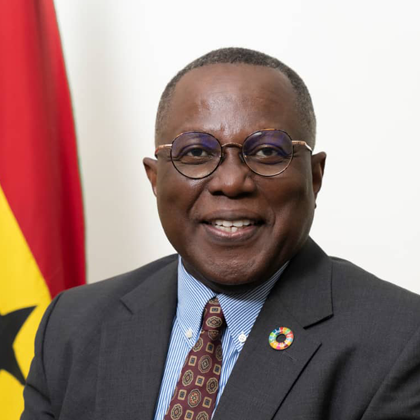
Speaking at the launch of the report, Chairman of the NDPC, Dr. Nii Moi Thompson, stressed that the Annual Progress Report provides an objective and evidence based assessment of Ghana’s development performance.
According to him, the report serves as one of the Commission’s most important accountability tools, helping policymakers and citizens understand where progress has been made and where urgent action is still required.
“The report provides a balanced assessment of Ghana’s development performance. While it records improvements in key macroeconomic indicators, including stronger economic growth, declining inflation, improved fiscal performance and a reduction in the public debt to GDP ratio, it also identifies persistent challenges such as youth unemployment, maternal health outcomes, implementation capacity and public service delivery.”
Dr. Nii Moi Thompson
Dr. Thompson explained that the report fulfills the Commission’s constitutional responsibility to monitor, evaluate and report on the implementation of national development policies, programmes and projects.
Economic Recovery Brings Hope
One of the report’s most encouraging findings is Ghana’s improving macroeconomic environment in 2025.
According to the Commission, the country experienced stronger economic growth during the year, while inflation continued to decline. Fiscal performance also improved significantly, helping to reduce the country’s public debt to GDP ratio.
These indicators suggest that economic stabilization efforts are beginning to produce positive results after years of economic difficulties marked by high inflation, debt restructuring and fiscal pressures.
For the government and investors, these improvements provide renewed confidence in Ghana’s economic outlook and demonstrate the effectiveness of ongoing macroeconomic reforms.
However, the NDPC insists that these gains must translate into meaningful improvements in the lives of ordinary citizens if the country is to achieve inclusive and sustainable development.
Youth Unemployment Remains a National Concern
Despite the positive economic indicators, the Commission identified youth unemployment as one of Ghana’s most pressing development challenges.
The report suggests that while the economy is expanding, many young people continue to face difficulties finding decent and sustainable employment opportunities.
This disconnect between economic growth and job creation remains a major concern because unemployment among the youth has significant implications for poverty reduction, social stability and national productivity.
The Commission believes that creating quality jobs must remain a top national priority if Ghana wants its economic recovery to benefit all segments of society.

Weak Public Services Continue to Affect Citizens
Another major concern highlighted in the report is the continued weakness in public service delivery across various sectors.
According to the Commission, deficiencies in service delivery reduce the impact of government programmes and limit the benefits citizens receive from public investments.
The report also points to poor maternal health outcomes as an area requiring immediate policy attention.
These findings suggest that improving healthcare delivery, strengthening institutions and ensuring efficient implementation of government programmes are just as important as achieving impressive economic statistics.
Without stronger public institutions and better services, the Commission warns that macroeconomic progress may fail to produce lasting improvements in living standards.
Implementation Challenges Slow National Progress
Beyond identifying social challenges, the NDPC also highlighted weak implementation capacity as a major obstacle to national development.
The Commission noted that successful policies alone are not enough. Effective implementation remains essential for achieving desired development outcomes.
According to the report, addressing implementation gaps across Ministries, Departments and Agencies, Regional Coordinating Councils and Metropolitan, Municipal and District Assemblies will be critical for improving future development performance.
The findings underscore the importance of strengthening public sector efficiency and ensuring that development policies are translated into measurable results.
Rigorous Assessment Supports Evidence Based Policymaking
Director General of the NDPC, Dr. Audrey Smock Amoah, explained that the media engagement preceding the report’s public release was designed to promote accurate, balanced and evidence based reporting.
She said the report was developed through extensive nationwide monitoring and evaluation exercises coordinated by the Commission.
The assessment relied on Annual Progress Reports submitted by Ministries, Departments and Agencies, Regional Coordinating Councils, Metropolitan, Municipal and District Assemblies, together with official national data.
According to her, the findings underwent rigorous verification, validation, technical review and approval before publication, ensuring the credibility of the final report.
Report Intended to Shape Future Development Policies
Presenting an overview of the findings, the Commission’s Chief Analyst, Mr. Isaac Eweh, said the report evaluates implementation of Ghana’s national medium term development policy framework across all levels of government.
He explained that beyond measuring progress, the report identifies implementation gaps, emerging challenges and priority areas requiring urgent policy attention.
According to Mr. Eweh, the findings are expected to strengthen accountability, support government decision making and guide future national development planning.
The report also provides policymakers, development partners, civil society organisations, the private sector and citizens with credible evidence on Ghana’s development performance in 2025.
Economic growth is important, but it cannot stand alone. Sustainable national development will depend on the country’s ability to create jobs, strengthen public institutions, improve service delivery and ensure that the benefits of economic progress reach every Ghanaian.
READ ALSO: KBTH Calls Design Competition for Customise Korle Bu Cloth