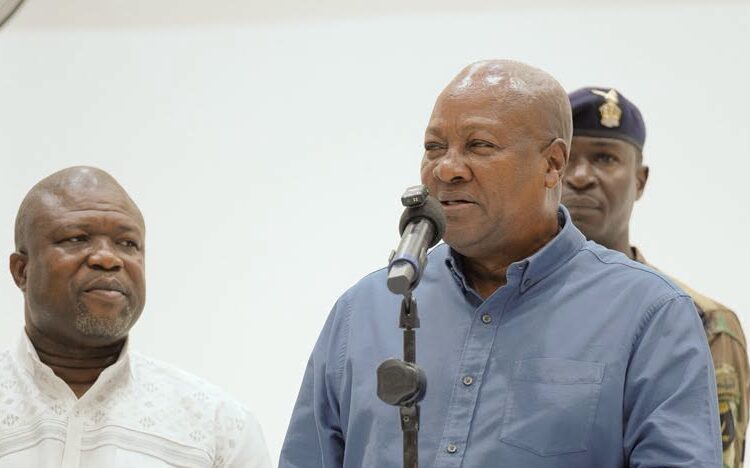
President John Dramani Mahama has unveiled an ambitious vision for the Volta Economic Corridor, describing it as a key pillar of the government’s 24-Hour Economy policy that will transform agriculture, manufacturing, and transportation across three regions.
Speaking at a Citizen Engagement session at Ho Technical University during his two-day Resetting Ghana Tour of the Volta Region, the President said the initiative will establish agro-industrial parks, expand large-scale irrigation farming, and strengthen transport links to drive economic growth.
The proposed corridor will span parts of the Greater Accra, Volta, and Eastern regions, combining industrial development with modern agricultural production and an integrated logistics network.
According to President Mahama, the project is designed to reduce transportation costs, improve market access, and create opportunities for businesses operating along the Volta Lake basin.
His remarks also highlighted the government’s efforts to revive the Juapong Textiles factory, which he described as an important component of the broader industrial transformation planned for the Volta Region.
Corridor to anchor industrial and agricultural expansion
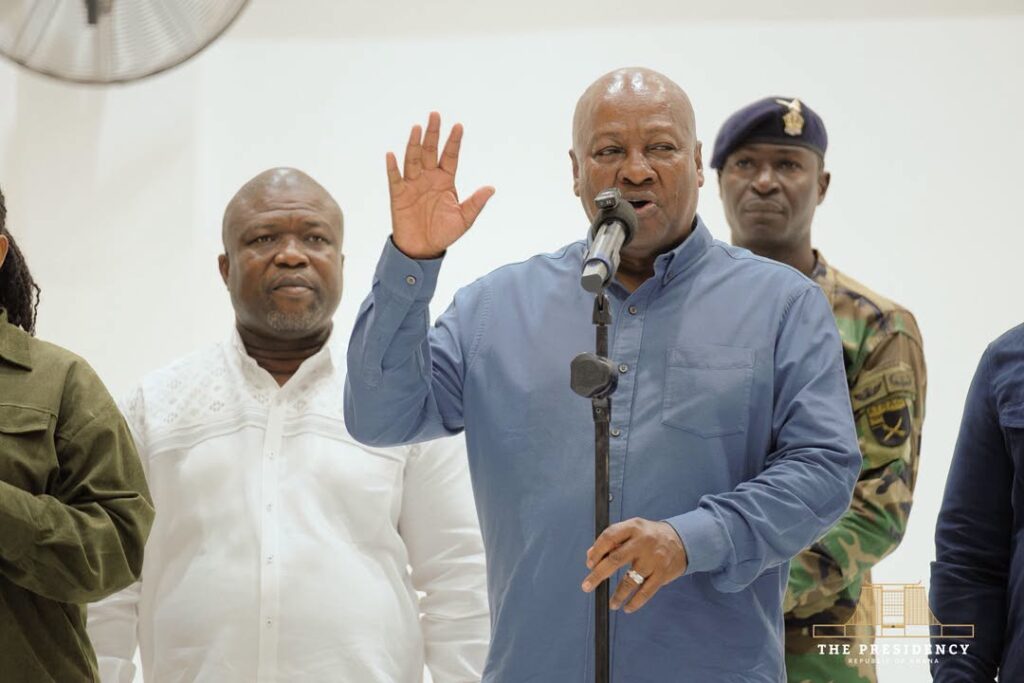
President Mahama said the Volta Economic Corridor forms a major component of the government’s Twenty Four Hour Economy programme and has been carefully identified as a strategic zone for industrial and agricultural investment.
“It covers part of Greater Accra, part of the Volta Region, and part of the Eastern Region. All that corridor has been identified as not only an industrial enclave, but for the setting up of agro industrial parks and for large scale irrigation farming.”
President John Dramani Mahama
According to the President, the combination of industrial production and modern commercial agriculture is intended to maximise the economic potential of the corridor while creating jobs and increasing productivity.
He said irrigation infrastructure will support year round farming, reducing dependence on seasonal rainfall and enabling higher agricultural output to feed processing industries within the corridor.
Rail and water transport to strengthen regional trade
President Mahama said efficient transport infrastructure will play a central role in the success of the Volta Economic Corridor. He noted that investments initiated during his previous administration have laid the foundation for the integrated logistics system now being expanded.
“And so that whole area, including water transport, luckily, in my first presidency, we signed with the Indian Exim, and they put in the rail line from Tema to Akosombo.The port in Mpakadan is going to be built. And there’s a private investor also building a second port at Asikuma.”
President John Dramani Mahama
He explained that these facilities would become major transport hubs connecting communities along the Volta Lake with markets across the country. “And those will be the key ports, and they’ll connect Kpando and all the other communities along the lake all the way to Buipe in the north.”
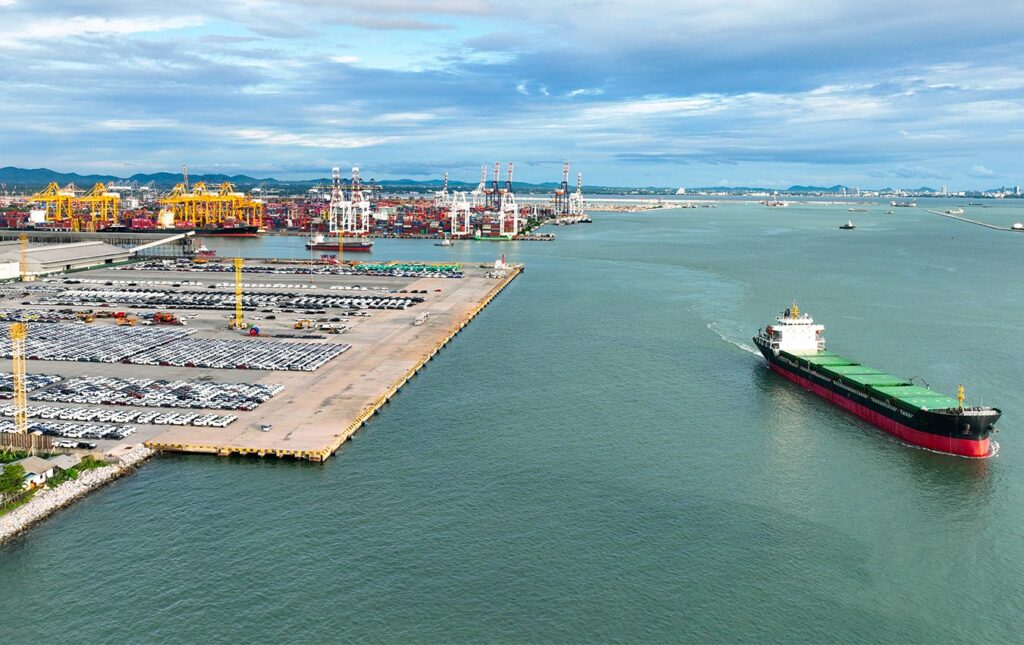
President Mahama said the combination of rail and water transport would create a seamless supply chain capable of moving agricultural produce, industrial goods, and equipment efficiently from production centres to domestic and international markets.
“And so that whole corridor will be reached by train and by barge so that any products that they produce, containers, industrial equipment, and whatever, will be brought down the lake and put on the train straight to Tema, either for export or for domestic consumption.”
President John Dramani Mahama
He said the transport network would significantly improve the movement of goods while lowering logistical costs for businesses operating within the corridor.
Juapong revival forms part of broader industrial agenda
President Mahama linked the proposed corridor to the planned revival of Juapong Textiles, describing the factory as one of the Volta Region’s most important industrial assets.
Reflecting on the area’s history, he said Juapong was once recognised as one of Ghana’s leading industrial towns and played a vital role in the country’s integrated cotton and textile industry.
The President recalled that during his childhood his father operated the Mesido Rice Mill in northern Ghana, where the country maintained a thriving agricultural economy that produced enough rice for domestic consumption and exports.
He also remembered the neighbouring Ghana Cotton Company, which processed cotton harvested across northern Ghana before transporting it south.
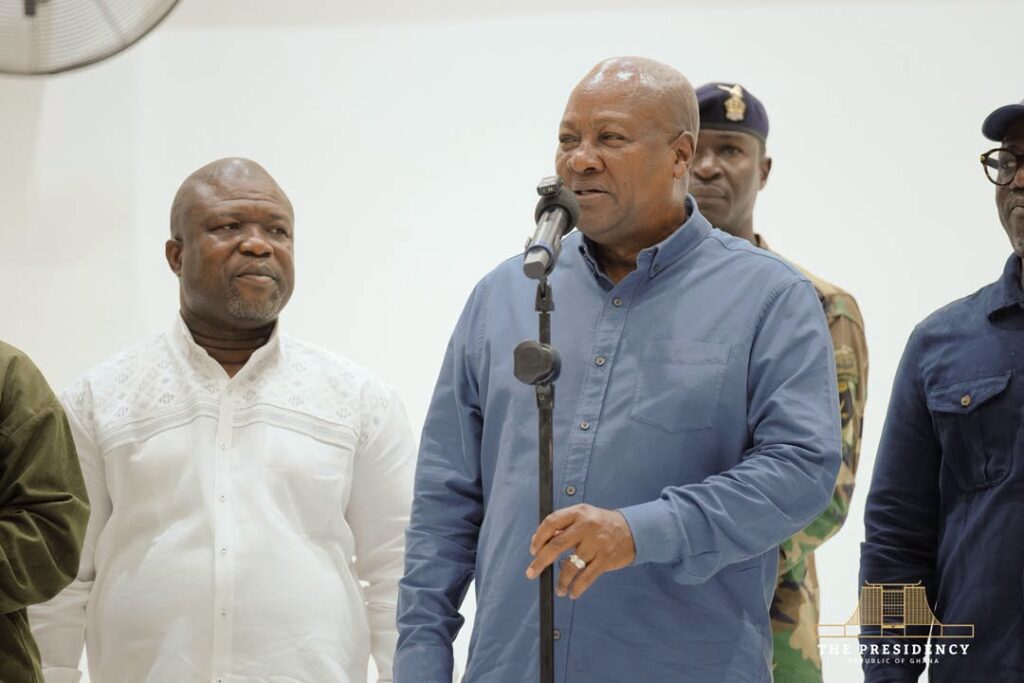
Only later, he said, did he realise that the cotton was destined for Volta Star Textiles in Juapong, where it was transformed into thread and woven into grey baft for textile manufacturers including Ghana Textile Printing Company.
“They used to spin the cotton, produce the thread, and weave the thread into what we call grey baft. And the grey baft was supplied to GTP and all the other textiles companies so that they print the wax prints that our mothers and sisters loved to wear. So it was an integrated cotton industry.”
President John Dramani Mahama
Government advances sustainable factory restoration
President Mahama attributed the collapse of Juapong Textiles to the disruption caused by an unpaid electricity bill that halted production and triggered financial difficulties from which the company never recovered.
He said successive governments attempted to restore operations without success, leaving the once vibrant factory abandoned for years. According to the President, the current administration has adopted a different strategy aimed at ensuring the factory remains commercially viable after reopening.
“We have finished the process of a transactions advisor. Indeed, we’ve even gone beyond the transactions advisor. The transactions advisor has selected the strategic investor who’s coming to join with us to revive the factory.”
President John Dramani Mahama
The government is currently reviewing the investor’s proposal and feasibility studies before implementation begins. New machinery and regional cotton supply to restore production. President Mahama said the rehabilitation project will include the installation of modern machinery to improve productivity and competitiveness.

“We’re also, like I said yesterday, going to source the cotton because the cotton industry in the north collapsed. And so we’re going to source the cotton from next door in Benin and from Burkina Faso, and we’re going to bring Juapong Textiles back to its old glory.”
President John Dramani Mahama
The President expressed confidence that combining agro industrial development, efficient transport infrastructure, and the revival of Juapong Textiles would reposition the Volta Region as a major centre of manufacturing and commercial agriculture.
He said the integrated strategy would strengthen domestic production, improve regional trade, and create new economic opportunities across the corridor while supporting Ghana’s broader industrialisation agenda.
READ ALSO: President Mahama Promises to Focus on His One-Term Mandate