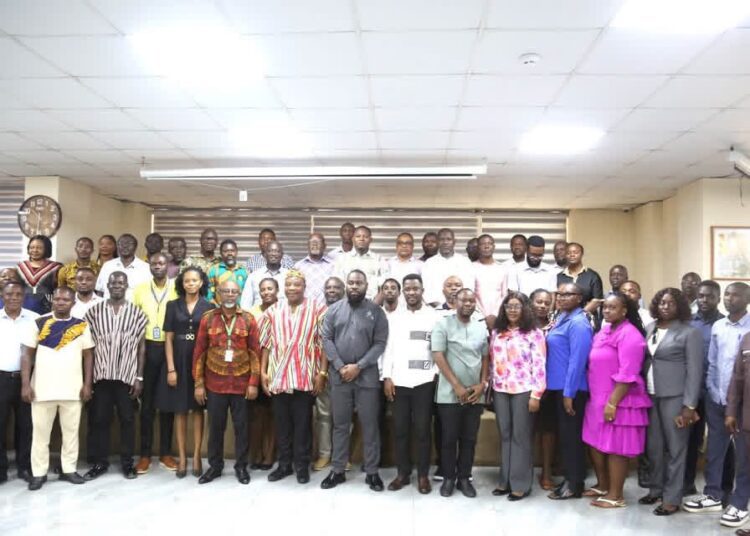
Ghana is moving to mainstream energy efficiency in the country’s building approval system after the Energy Commission completed a nationwide capacity-building programme aimed at equipping local government officials to enforce new energy-efficiency requirements in building permits.
The initiative, which culminated in a final sensitisation workshop in Accra, is expected to strengthen the role of Metropolitan, Municipal and District Assemblies (MMDAs) in promoting sustainable building practices, reducing electricity consumption and supporting Ghana’s broader energy transition agenda.
The training forms part of efforts to integrate energy-efficiency considerations into development control and building permitting, positioning local authorities to ensure new developments comply with national standards as demand for electricity continues to rise.
With buildings accounting for a significant share of electricity consumption, particularly through cooling systems, the Energy Commission believes improving efficiency at the design and approval stage will help lower energy demand, reduce operating costs for consumers and improve the long-term sustainability of Ghana’s power sector.
Energy efficiency now a national development priority
Speaking at the closing workshop, Deputy Executive Secretary of the Energy Commission, Mr. Chris Nanabanyin Yalley, described energy efficiency as no longer merely a technical issue but a national development priority requiring stronger institutional collaboration.

Energy efficiency has become a national development imperative.
Mr. Chris Nanabanyin Yalley, Deputy Executive Secretary, Energy Commission
Mr. Yalley explained that one of the biggest drivers of electricity consumption in modern buildings remains heating, ventilation and air-conditioning (HVAC) systems, which account for a substantial proportion of energy use.
Heating, ventilation, and air-conditioning (HVAC) systems alone account for about 50 per cent of electricity use in air-conditioned buildings.
Mr. Chris Nanabanyin Yalley
According to the Commission, addressing energy performance during the building approval stage presents one of the most effective opportunities to improve efficiency before construction is completed, rather than attempting expensive retrofits after buildings become operational.
The approach aligns with Ghana’s broader objective of improving energy productivity while managing increasing electricity demand driven by rapid urbanisation, commercial development and industrial expansion.
New compliance pathways for developers
As part of the reforms, the Energy Commission is promoting its Building Energy Efficiency Guidelines, which establish three compliance pathways for developers seeking approval for new projects.
Mr. Yalley said the framework offers Prescriptive, Performance-Based and Certification-Based compliance options, allowing developers flexibility while ensuring buildings satisfy national energy-efficiency standards.

The Commission has also proposed revisions to the Local Government Service Operational Manual to formally integrate these requirements into the building permit procedures administered by Metropolitan, Municipal and District Assemblies.
If implemented, the changes would make energy-efficiency considerations an integral part of Ghana’s development-control framework, strengthening regulatory oversight while encouraging more sustainable building designs.
The Commission believes embedding these standards into existing permitting processes will improve consistency across local authorities while supporting the country’s long-term energy conservation efforts.
Local officials equipped to drive reforms
The nationwide programme targeted officers across Ghana’s Local Government Service, including planning officers, works engineers, building inspectors and environmental health officers responsible for overseeing development activities within their respective assemblies.
According to the Energy Commission, participants have now been equipped to serve as Energy Efficiency Champions within their districts, helping ensure energy-efficiency requirements are incorporated into planning and development decisions.
Mr. Yalley said the initiative was implemented with the support of the United Nations Environment Programme (UNEP) and the Ministry of Local Government, Chieftaincy and Religious Affairs, reflecting growing collaboration among national and international institutions to strengthen sustainable urban development.
Beyond technical training, the programme sought to improve institutional understanding of energy-efficient building practices while enhancing coordination between regulators and local authorities responsible for granting development approvals.
The Commission indicated that it would continue providing technical guidance to assemblies as implementation progresses, ensuring local authorities receive ongoing support as the new procedures are rolled out nationwide.
Reducing energy demand through better buildings
The latest reforms come as Ghana continues to pursue strategies aimed at improving energy efficiency across multiple sectors of the economy.
While renewable energy expansion remains a major component of the country’s energy transition, policymakers increasingly recognise that reducing unnecessary electricity consumption is equally important in strengthening energy security.
Buildings represent one of the largest consumers of electricity, particularly in urban centres where commercial offices, shopping facilities, hotels and residential developments rely heavily on air-conditioning systems.

Improving building efficiency therefore offers an opportunity to lower electricity demand without compromising economic growth or occupant comfort.
According to the Energy Commission, the reforms have the potential to reduce building energy consumption by 20 per cent within five years, delivering savings for property owners while easing pressure on the national electricity system.
The reforms could cut building energy consumption by 20 per cent within five years.
Mr. Chris Nanabanyin Yalley
Industry observers note that integrating energy-efficiency requirements into the permitting process could also encourage greater adoption of energy-conscious building designs, efficient cooling technologies and improved construction practices.
For developers, incorporating efficiency measures at the planning stage is generally considered more cost-effective than modifying completed buildings to meet evolving energy standards.
Supporting Ghana’s energy transition
The completion of the nationwide training programme marks another step in Ghana’s broader strategy to improve energy efficiency while supporting sustainable urban development.
The final workshop concluded a series of regional engagements that prepared MMDAs to implement new energy-efficiency workflows within their building approval systems, creating a more consistent national framework for regulating building performance.
As Ghana seeks to balance growing electricity demand with investments in generation, transmission and renewable energy, policymakers increasingly view energy efficiency as a critical pillar of long-term energy security.
The Energy Commission’s latest initiative reinforces that approach by placing local authorities at the centre of implementation, ensuring that energy efficiency becomes part of everyday planning decisions rather than an afterthought in building development.
With trained officials now positioned across assemblies nationwide and new compliance pathways established for developers, the Commission expects the reforms to contribute meaningfully to reducing electricity demand, lowering operating costs and supporting a more sustainable built environment for Ghana’s future.
READ ALSO: Dep. AG: No Plea Deal Reached in Wontumi’s GHC30m Eximbank Trial