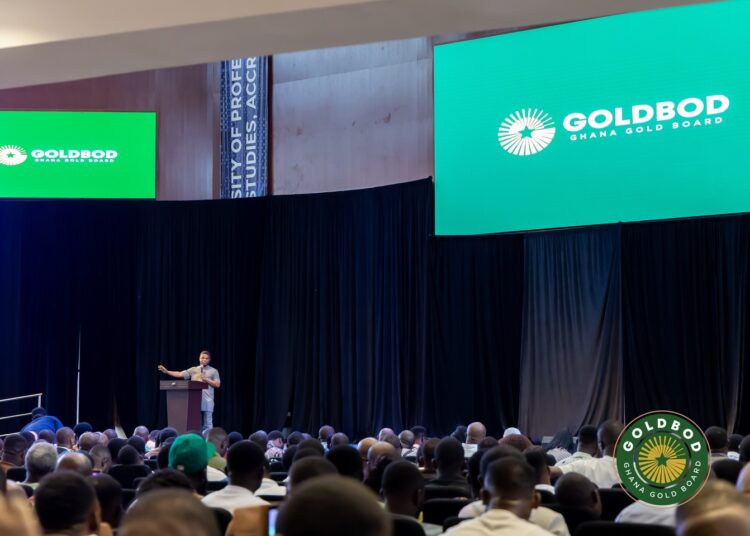
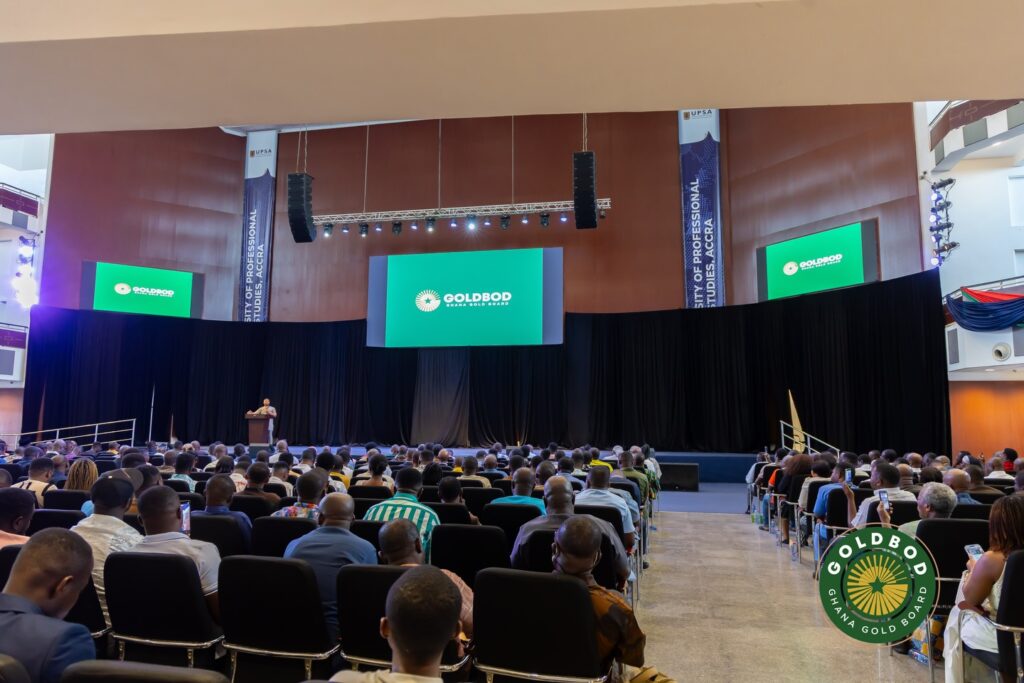
Ghana Gold Board (GoldBod) has hosted Licensed Gold Buyers Association to introduce sweeping operational reforms aimed at sanitizing the domestic gold trade.
This strategic move is designed to address critical systemic “irregularities” including gold smuggling, hoarding, and significant revenue leakages that threaten the nation’s economic stability.
Held at the University of Professional Studies (UPSA) in Accra, the forum served as a retrospective review of the 2025 fiscal year while laying the groundwork for a more transparent trading regime.
The engagement focused on transitioning the sector toward a centralized monitoring model to ensure that every ounce of gold produced within the Artisanal and Small-Scale Mining (ASM) sector is properly accounted for and channeled into the national reserve.

“Hoarding is one of the biggest challenges we are confronting because we have observed a significant reduction in the volumes accumulated for export.
“When gold is hoarded, it disrupts the system and weakens the country’s ability to accumulate reserves and get foreign exchange inflows. This practice undermines GoldBod’s operational model.”
Sammy Gyamfi, Gold Board CEO
Strengthening Traceability and Market Transparency
A primary pillar of the proposed reforms is the establishment of GoldBod District Gold BuyingCentres across all mining regions. These centers are designed to replace the current fragmented purchasing system, which the Chief Executive Officer of GoldBod, Sammy Gyamfi, Esq., noted makes it “difficult to determine the exact quantities of gold purchased” or the precise locations of licensed offices.
By centralizing these activities, Ghana Gold Board aims to create a structured market where transactions are recorded in real-time, effectively closing the gaps that allow for under-declaration and revenue loss.
From an extractive expert’s perspective, this move is a “quantum leap” toward meeting OECDDue Diligence Guidance and LBMA responsible sourcing standards.
Traceability is no longer a luxury but a requirement for accessing premium international markets. As Mr. Gyamfi emphasized, the inability to trace gold to specific concessions limits Ghana’s global competitiveness.

These district hubs will serve as the primary nodes for “fingerprinting” gold origin, ensuring that the US$10.8 billion revenue generated in 2025 from an impressive 104 tonnes of ASM gold is not only maintained but expanded through ethical compliance.
Combatting the “Internal” Smuggling Threat
In a candid assessment of the sector’s integrity, the Gold Board CEO disclosed that recent data suggests a “substantial proportion” of smuggling activities are now linked directly to licensed buyers rather than the miners themselves.
This shift in the smuggling profile has prompted the Board to rethink its commission-based incentive model.
While the model was intended to stimulate supply, it has inadvertently encouraged some actors to engage in “hoarding in anticipation of price or commission increases,” a move that directly sabotages the stability of the local currency, the Cedi.
The reforms, scheduled for implementation between May and June 2026, will introduce more stringent oversight mechanisms to ensure that buyers who receive financial support from GoldBod fulfill their mandate of delivering gold to the national pot.
By curbing these internal irregularities, the government seeks to protect the “credibility of Ghana’s gold trading regime” and ensure that the sector remains a robust pillar for foreign exchange earnings.
Promoting Responsible ASM Operations
The relevance of this engagement extends beyond mere revenue collection; it is fundamentally about the formalization of the ASM sector. Decentralized state-buying counters are essential for bringing informal miners into the formal economy without employing purely punitive measures that drive the trade underground.
By engaging the Licensed Gold Buyers Association, GoldBod is leveraging the “middleman” layer of the value chain to enforce better ESG (Environmental, Social, and Governance) practices at the pit level.
This consultative approach ensures that the “reform process remains ongoing,” with Mr. Sammy Gyamfi reassuring stakeholders that the government is not seeking to “distort operations” but rather to “strengthen the system” for mutual benefit.
By aligning local trading with international “responsible gold guidance,” Ghana is positioning its Gold Coast Refinery and its ASM products to be recognized as “conflict-free” and “ethically sourced,” which is critical for long-term sustainability in the 2026 global market.
READ ALSO: Mahama to Host Accra Reset ‘Addis Reckoning’ at AU Summit