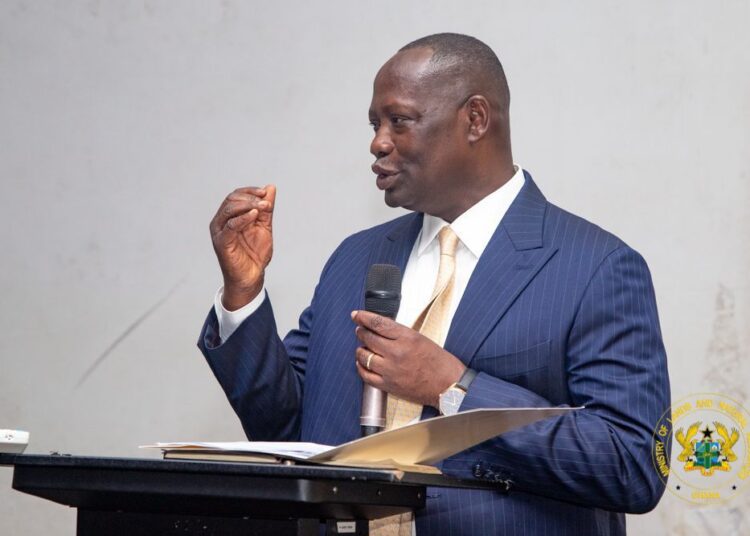
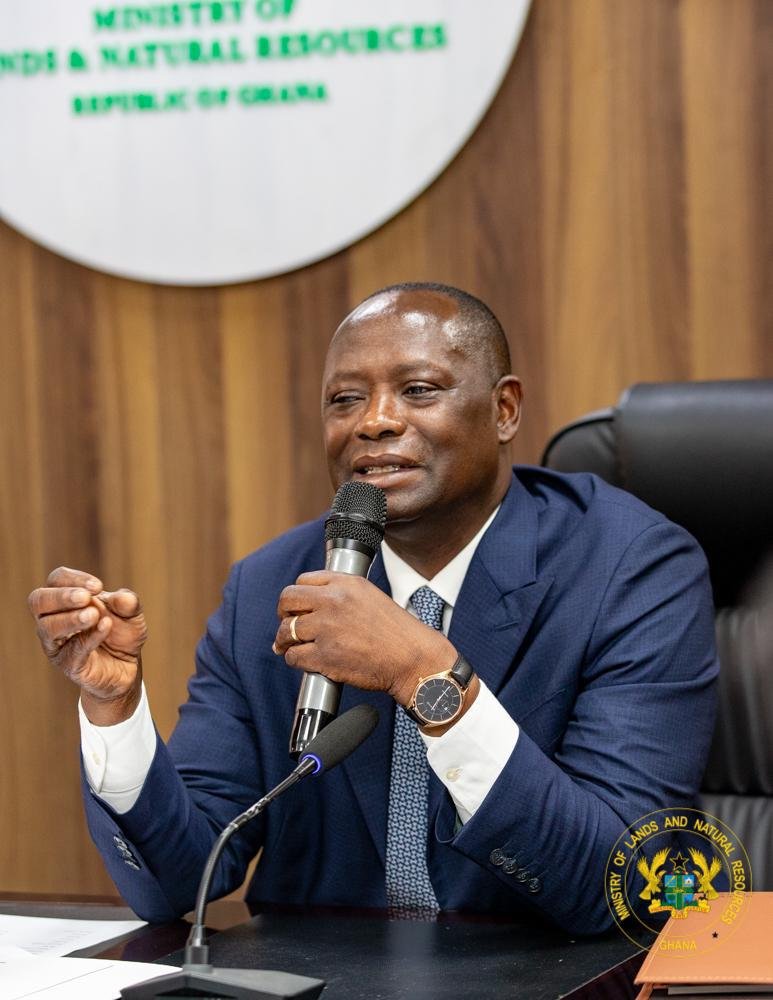
Minister for Lands and Natural Resources, Hon. Emmanuel Armah-Kofi Buah, has issued a clarion call for a fundamental restructuring of Ghana’s extractive industry, asserting that the nation must aggressively leverage its natural resources to catalyze indigenous development.
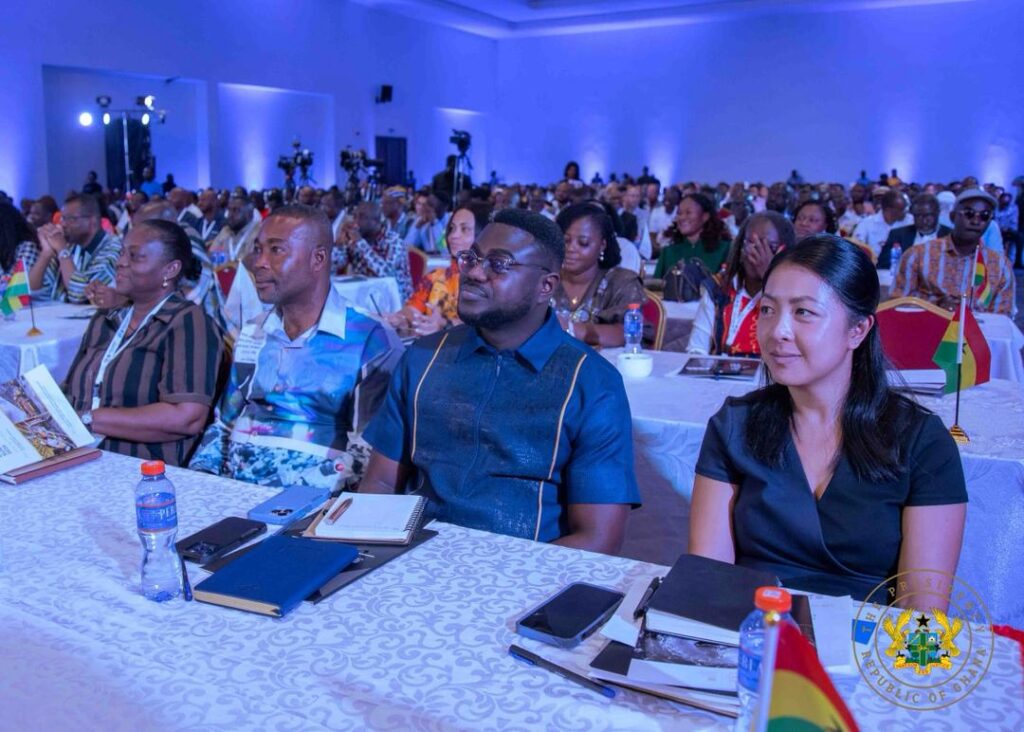
Addressing stakeholders at a recent industry summit, the Minister expressed concern over the persistent “enclave” nature of the mining sector, where local businesses currently capture less than 40 percent of total procurement spend.
He emphasized that the era of being “prolific producers but passive participants” must end to ensure that the nation’s mineral wealth translates into tangible improvements in the living standards of its citizens.
“We must ourselves take advantage of our resources to provide the means for our own development. It is only by doing so that we shall be able to develop the productive capacity of our people and raise the standards of life of our people.”
Hon. Emmanuel Armah-Kofi Buah

Hon. Armah-Kofi Buah highlighted a stark disparity in the distribution of high-value services, noting that over 70 percent of specialized technical support, engineering design, and equipment supply is still sourced from outside Ghana’s borders.
He argued that political independence is incomplete without economic sovereignty, echoing the “Nkrumahist” philosophy that the wealth of the land must serve the welfare of the people.
To bridge this gap, the government is advocating for a “structured intention” by capital and technology, favoring partnerships that transform raw potential into high-performance industrial output through joint ventures and equity holdings.
Closing the Procurement and Technical Gap
The Minister pointed out that despite the billions of cedis generated in annual expenditure within the mining sector, the local economy remains largely insulated from these financial flows.
He noted that while young engineers in mining towns possess the talent to “diagnose complex problems,” they are often sidelined due to a lack of formal partnerships with international firms.
By fostering joint ventures between Ghanaian fabrication companies and global engineering entities, the Minister believes the industry can move beyond simple contract fulfillment to achieve genuine knowledge transfer and skill upgrades.
Innovation and Exporting Ghanaian Solutions

A key pillar of the government’s strategy involves the integration of local technology startups into the mining value chain. Hon. Armah-Kofi Buah cited the potential for Ghanaian-developed innovations, such as drone-based monitoring solutions, to not only serve domestic mines but to be exported across the African continent.
This approach shifts the focus from merely saving costs for multinationals to building a robust local innovation ecosystem that can compete globally, ensuring that Ghanaian ingenuity becomes a primary export alongside raw minerals.
Securing the Future Beyond Mineral Depletion
To ensure a lasting legacy, the government is encouraging local firms to seek equity stakes in the country’s endowed mining operations rather than settling for dividends or service contracts.
The Minister argued that local ownership provides a “voice in decision-making” and a commitment to sustainable practices that will outlast the lifespan of any single mine.
This “commanding heights” approach is designed to ensure that even when the gold is gone, the built capacity, infrastructure, and indigenous capital remain as the bedrock of a diversified and resilient Ghanaian economy.
READ ALSO: Trade Ministry Condemns Terrorist Killing Of Tomato Traders