The UK government has announced a major overhaul of its international development policy, signalling a decisive shift in foreign aid allocation amid rising defence spending and global instability.
Under the revised framework, the overall aid budget will be reduced and remaining resources will increasingly be directed toward humanitarian emergencies and conflict-affected regions. In addition, UK will support strategic partnerships focused on security, climate resilience, and economic stability.
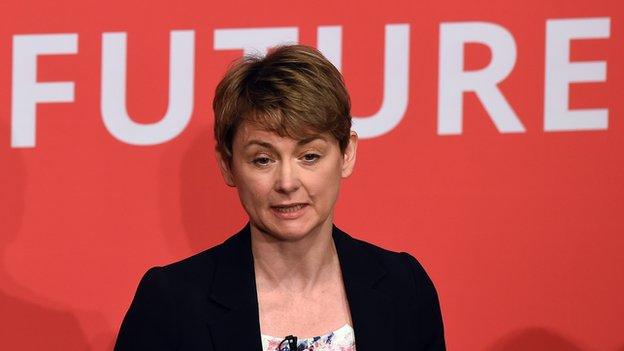
In a statement to Parliament by the Foreign Secretary, Yvette Cooper, the key policy element is reducing Official Development Assistance (ODA) to 0.3% of Gross National Income (GNI) by 2027. This change mirrors a broader foreign policy reset across Europe, as governments balance defence needs, budget constraints, and global volatility.
“Let me be clear, our commitment to international development remains a central part of our foreign policy. It reflects both our values and our national interest. Supporting international development is a core part of our moral purpose.
“We must stand up against global disease and hunger. We support those trapped in crises caused by conflict or climate change. We also know that preventing conflict, instability, and crisis, displacement and migration, supporting security, economic development, growth, and trade, and building global partnerships are all the right things to do.”
Yvette Cooper
Humanitarian Priorities and Aid Rebalancing
The Foreign Secretary explained that humanitarian aid and crisis response will anchor the new policy, especially in regions hit by war, instability, and mass displacement.
Under the revised framework, the government will be “committing £1.4bn a year to tackle human suffering in some of the worst humanitarian crises,” with the majority of geographic support allocated to the “most fragile and conflict-affected states,” she disclosed.
Countries such as Ukraine, Palestine, Sudan, and Lebanon will remain priority recipients of UK humanitarian aid. Sudan, in particular, was highlighted as facing what Cooper described as “the most severe humanitarian crisis of the twenty-first century.”
The Foreign Secretary also confirmed that UK will “withdraw from traditional bilateral funding for G20 countries.”
In lower-income countries such as Yemen, Somalia, and Afghanistan, direct grant funding will be reduced, although support will continue through multilateral channels and international organisations operating in those contexts. In countries such as Pakistan and Mozambique, the UK will transition from grant-based aid to investment-driven development models.
Cooper stressed that the government will back initiatives with measurable impact, stability, and economic opportunity. “We will focus on areas that maximize impact, transform lives, and build stability. We will create jobs and economic opportunities as the path out of poverty. We will also save lives and improve health. We back proven global partnerships where the UK has strong engagement and expertise,” she added
In addition, climate finance will also be prioritized with about £6 billion allocated to mitigation, adaptation, and nature-based solutions over the past 3 years.
Investment-Led Development and UK’s Global Influence
Another central feature of the new strategy is a shift toward investment-led development, leveraging private-sector financing, technical expertise, and multilateral institutions to achieve long-term outcomes.
According to Yvette Cooper, British International Investment will play a pivotal role in this model, acting as a key vehicle for mobilizing capital in developing economies, “that’s why in Ethiopia earlier this year, I signed a joint agreement for energy transmission projects worth £300 million, enabled by a British International Investment company that delivers UK investment across Africa the kind of modern partnership that helps create jobs locally and reduces the pressures that drive dangerous migration.”
The Foreign Secretary further stated that a broader strategy is to deploy UK institutional expertise across development programmes. This includes leveraging capabilities from HM Revenue and Customs, the Met Office, universities, and the financial services sector to support governance reform, tax capacity-building, climate resilience planning, and economic management in partner countries.
Multilateral institutions will also play an increasingly central role in the UK’s development strategy.
Furthermore, Cooper highlighted increased contributions to the World Bank’s International Development Association and the African Development Fund, arguing that these institutions can significantly multiply the impact of UK funding. For example, contributions to the African Development Fund are expected to leverage additional concessional financing and enable large-scale infrastructure and development investments across the continent.
Alongside financial contributions, the UK intends to use its influence within international financial institutions to push for reforms, including enhanced representation for low-income countries and expanded debt relief mechanisms.
Despite the scale of reductions in traditional aid spending, the Government insisted that the UK will remain one of the world’s leading development donors, projecting that it will continue to rank among the top five global contributors.
READ ALSO : US Expands Visa Bond Requirement To 12 More Countries