Ghana’s Treasury bill market continues to face mounting pressure as investor participation weakens in the face of persistent fiscal uncertainty and rising yields.
The latest auction results reveal a sharp 32.19 percent undersubscription, marking the third consecutive week the government has failed to meet its target, a trend analysts say reflects deepening caution among investors.
Data from the Bank of Ghana shows that the government raised GH¢3.16 billion against a target of GH¢4.63 billion, ultimately accepting GH¢2.84 billion in bids. The widening gap between targets and actual subscriptions underscores the fragile state of demand in the short-term securities market.
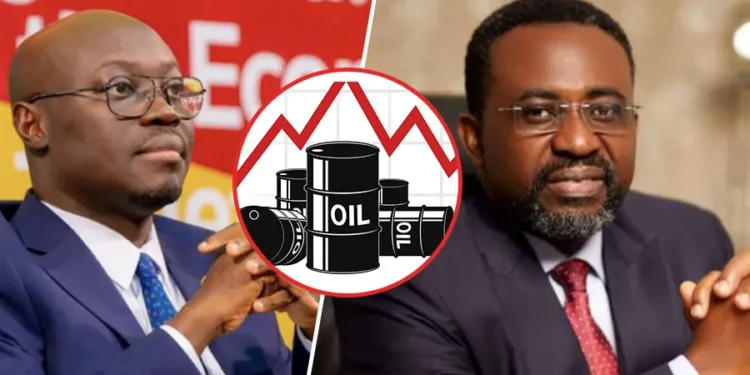
Reacting to the latest development in an interview with The Vaultz News, Isaac Kwasi Mensah, Financial Analyst and Portfolio Manager at SIC Financial Services Limited, attributed the trend to heightened investor caution driven by uncertainty around fiscal policy and market direction.
Weak Demand Reflects Growing Investor Caution
According to Mr. Mensah, the repeated undersubscription of Treasury bill auctions is a clear indication that investors are adopting a more guarded approach.
“Investors are deliberately staying on the sidelines because the current environment does not provide enough clarity. The current happenings in the middle east, in addition, there are still questions around fiscal consolidation, borrowing strategies, and the direction of interest rates, and these uncertainties are influencing decision-making.”
Isaac Kwasi Mensah
He emphasized that the issue is not necessarily a lack of liquidity but rather a strategic pause by market participants.
“This is not a liquidity crisis,” he noted. “It is a confidence issue. Investors want to be sure they are being adequately compensated for the risks they are taking.”
Short-Term Instruments Dominate Market Activity
A closer look at the auction results shows that the 91-day bill dominated investor interest, attracting GH¢2.02 billion in bids, representing 63.8 percent of total submissions. Out of this, GH¢1.99 billion was accepted.
Mr. Mensah explained that the strong preference for short-term instruments reflects a defensive investment strategy.
“In times of uncertainty, investors prefer shorter tenors because they offer flexibility. It allows them to reassess their positions frequently and take advantage of potential increases in yields.”
Isaac Kwasi Mensah
The 182-day bill recorded GH¢498.9 million in bids, with GH¢416.9 million accepted, while the 364-day bill saw GH¢648 million in bids, with an uptake of about GH¢416.93 million.
“The relatively lower interest in longer-dated instruments shows that investors are not comfortable locking in funds for extended periods,” he added. “There is a strong expectation that yields could move higher.”
Rising Yields Fail to Attract Strong Demand
Despite the subdued demand, yields continued to trend upward across the curve. The 91-day bill held steady at 4.81 percent, while the 182-day bill rose to 6.71 percent from 6.62 percent. The 364-day bill also increased by 7 basis points to 9.84 percent.
Mr. Mensah noted that while rising yields typically attract investors, the current environment presents a different dynamic. “Higher yields are usually an incentive, but in this case, they are not enough,” he said.
“Investors are more concerned about the trajectory of rates and the broader economic outlook. Many believe yields have not yet peaked.”
Isaac Kwasi Mensah
He added that this expectation is encouraging investors to delay commitments.
“If investors think yields will rise further, they will naturally hold back and wait for better entry points,” he explained.

Government Faces Tight Financing Trade-Offs
The persistent undersubscription presents a challenge for the government as it seeks to finance its short-term obligations while maintaining stability in borrowing costs.
Mr. Mensah highlighted the difficult choices policymakers must navigate.
“The government is in a tricky position. It must decide whether to accept higher rates to attract more investors or maintain its stance on cost control. Either way, there are implications for fiscal sustainability.”
Isaac Kwasi Mensah
He stressed that how these trade-offs are managed will have a direct impact on market confidence.

Outlook Hinges on Confidence and Clarity
In the intervening time, the analyst noted that the outlook for the Treasury bill market remains cautious, with investor sentiment likely to stay subdued until clearer signals emerge on fiscal policy and economic stability.
Mr. Mensah believes that restoring confidence will be key to reversing the current trend.
“The market needs clarity and consistency in policy direction. Once investors are convinced that risks are being managed effectively, demand will begin to recover.”
Isaac Kwasi Mensah
He added that yield adjustments alone will not be sufficient to revive interest.
“It is not just about higher rates,” he concluded. “It is about confidence. Without that, investors will continue to remain on the sidelines.”
All in all, Ghana’s Treasury bill market remains in a holding pattern, shaped by cautious sentiment, rising yields, and an urgent need for stronger fiscal signals to restore investor confidence.
READ ALSO: Nigerian Troops Rescue Worshippers After Deadly Easter Attack