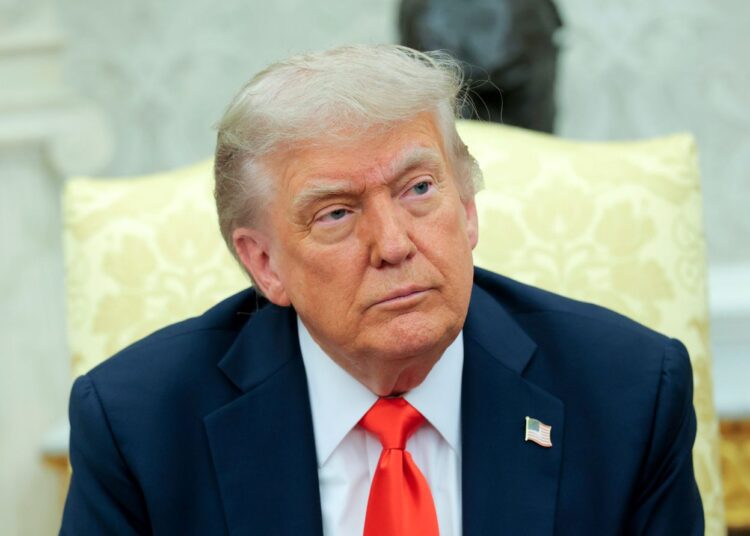
Countries around the world have welcomed the announced ceasefire between US and Iran.
US President Donald Trump has agreed to suspend his planned bombing of Iran for two weeks, following his threat that “a whole civilization will die tonight” if Tehran did not comply with his demands.
Less than two hours before his deadline to his planned attack, Trump took to his platform Truth Social to announce the ceasefire. He said that the ceasefire agreement was made on the condition that Iran agrees to reopen the Strait of Hormuz. He also credited Pakistan for mediating the settlement.
“Based on conversations with Prime Minister Shehbaz Sharif and Field Marshal Asim Munir, of Pakistan, and wherein they requested that I hold off the destructive force being sent tonight to Iran, and subject to the Islamic Republic of Iran agreeing to the COMPLETE, IMMEDIATE, and SAFE OPENING of the Strait of Hormuz, I agree to suspend the bombing and attack of Iran for a period of two weeks.”
Donald Trump
He said that the US has received a 10-point proposal from Iran, “and believe it is a workable basis on which to negotiate.” He added that the US and Iran have agreed on “almost all of the various points of contention” and that the two-week period will allow the agreement to be “finalised and consummated.”
Shortly after Trump’s message, Iran’s Minister of Foreign Affairs Abbas Araghchi confirmed that an agreement had been reached. “If attacks against Iran are halted, our Powerful Armed Forces will cease their defensive operations,” Araghchi wrote.
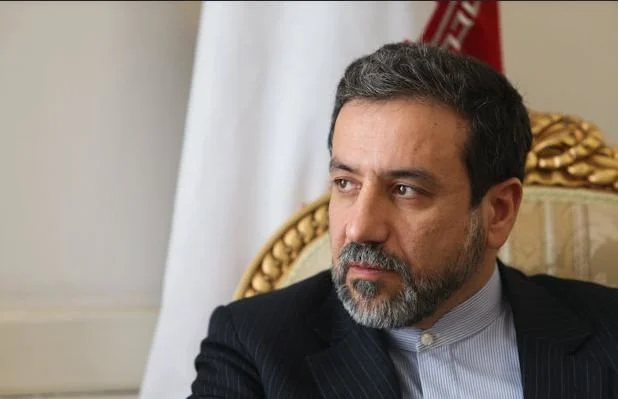
“For a period of two weeks, safe passage through the Strait of Hormuz will be possible via coordination with Iran’s Armed Forces and with due consideration of technical limitations.”
Abbas Araghchi
Egyptian Ministry of Foreign Affairs said the ceasefire “represents a very important opportunity that must be seized to make room for negotiations, diplomacy, and constructive dialogue.”
The ministry said in a statement on Facebook that a truce must be built upon with a full commitment to “stopping military operations and respecting freedom of international navigation.”
The post also said that Egypt will continue efforts with Pakistan and Turkiye “to promote security and stability in the region”, and that the talks between the US and Iran “must take into account the legitimate security concerns” of Gulf nations.
The Omani foreign ministry said that it welcomes the announcement and appreciated “the efforts of Pakistan and all parties calling for an end to the war.”
“We affirm the importance of intensifying efforts now to find solutions that can end the crisis from its roots and achieve a permanent cessation of the state of war and hostilities in the region.”
Omani foreign ministry
Japan’s Chief Cabinet Secretary Minoru Kihara told reporters that Tokyo welcomes the news of a two-week ceasefire between the US and Iran as a “positive move” as it awaits a “final agreement.” Minoru said the de-escalation of hostilities in the Middle East remains a top priority.
Australian Prime Minister, Anthony Albanese and Minister for Foreign Affairs Penny Wong issued a joint statement welcoming the news and expressing their hopes that the deal will lead to a long-lasting resolution.
German Chancellor Friedrich Merz hailed the ceasefire and thanked Pakistan for its role in mediating the truce. He said that the aim in the coming days should be to negotiate a “lasting end to war” through diplomatic channels.
Ukraine welcomed the ceasefire agreed between the US and Iran and the unblocking of the Strait of Hormuz with Foreign Minister Andrii Sybiha calling for similar “decisiveness” by Washington in stopping Russia’s war on his country.
UN Secretary-General, Antonio Guterres, according to his spokesperson, called on all parties to abide by the terms of the ceasefire “in order to pave the way toward a lasting and comprehensive peace in the region.”
Guterres underscored “that an end to hostilities is urgently needed to protect civilian lives and alleviate human suffering” and thanked Pakistan and other nations involved in facilitating the truce.
Further Talks Expected In Islamabad
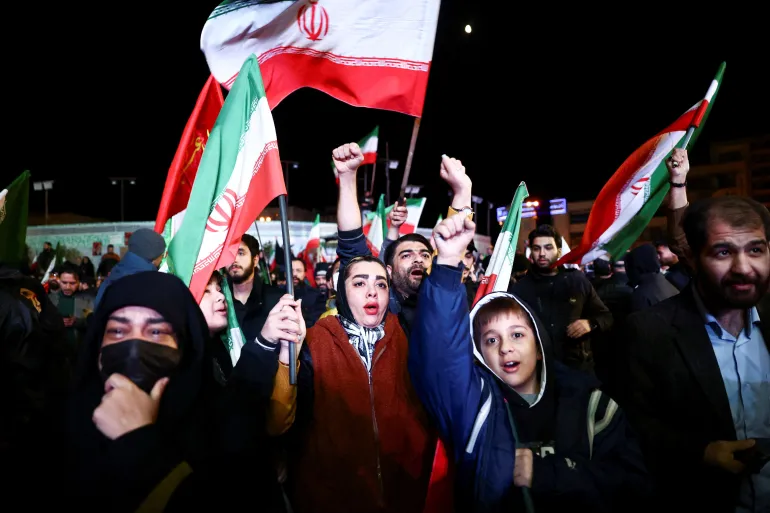
Further talks to finalise a peace deal are set to begin in Pakistan’s Islamabad.
Iran’s National Security Council said that talks with Washington will begin in the Pakistani capital based on Tehran’s 10-point proposal.
According to Iran’s National Security Council, its 10-point proposal calls for Iranian dominance and oversight of the Strait of Hormuz, which it said would grant it a “unique economic and geopolitical position.”
The proposal also calls for the withdrawal of all “US combat forces” from bases in the Middle East and a halt to military operations against allied armed groups across the region.
It goes on to demand “full compensation” for war damages, as well as the lifting of all sanctions by the US, the United Nations Security Council and the International Atomic Energy Agency.
The proposal also calls for the release of frozen Iranian assets abroad and the ratification of any final agreement in a binding UN Security Council resolution.
The council said that while Tehran has agreed to talks, it does so “with complete distrust of the American side.”
READ ALSO: Damang Mine Takeover: Lands Minister Directs Minerals Commission to Adopt Tender Committee’s Report