The World Bank is sounding a stark warning as it embarks on its 2026 Spring Meetings.
More than one billion young people in developing countries are expected to reach working age within the next 10 to 15 years, placing unprecedented pressure on already strained labour markets. This looming demographic wave is now being framed as one of the most urgent economic challenges of the decade.
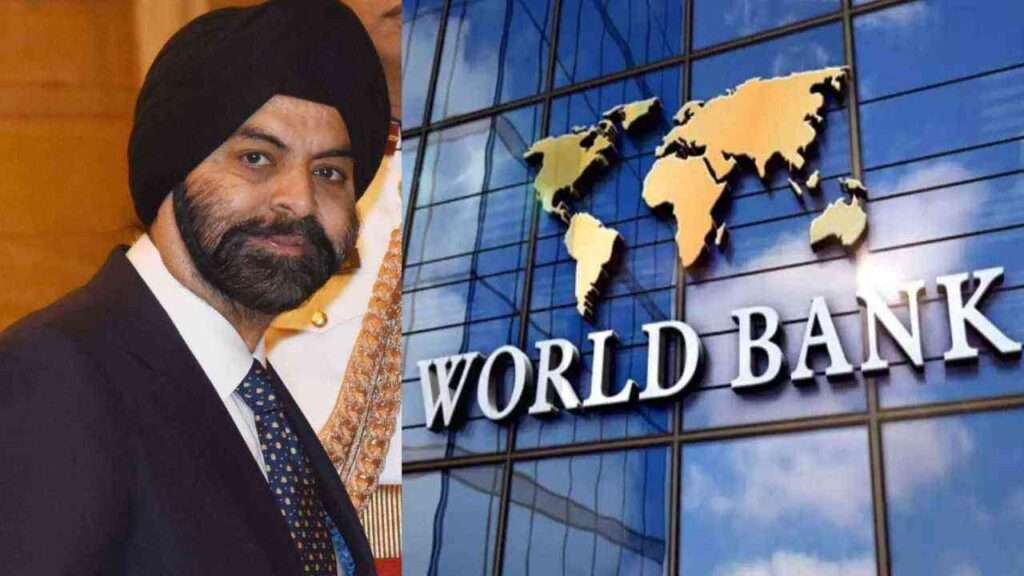
World Bank Group President Ajay Banga and Sweden’s Finance Minister Elisabeth Svantesson in a dialogue, argued that traditional development models are no longer sufficient to absorb this surge in job seekers. With public finances constrained and economic growth uneven, governments alone cannot meet the scale of the employment demand.
Why Public Spending Alone Will Not Work
For decades, development strategies have leaned heavily on public sector spending to stimulate growth and job creation. However, rising debt levels and tightening fiscal space across many developing economies are limiting governments’ ability to expand expenditure.
According to Banga and Svantesson, the central issue is no longer just about funding development but about creating the right conditions for sustainable employment. They stress that the real challenge lies in enabling businesses to start, grow, and hire at scale.
This shift marks a critical turning point. Job creation is no longer viewed as a byproduct of economic growth. Instead, it is being positioned as the primary measure of development success. Outcomes such as rising incomes, reduced poverty, and expanded opportunities are now directly tied to how effectively economies can generate jobs.
The Private Sector Takes Centre Stage
A key message emerging from the World Bank’s new approach is the pivotal role of the private sector. While governments can lay the groundwork through policy and infrastructure, it is businesses that create the majority of jobs.
The authors emphasize that without a thriving private sector, even the best-funded public initiatives will fall short. Entrepreneurs, small businesses, and large corporations alike must be empowered to expand operations and absorb the growing workforce.
This requires more than just access to finance. It demands a business environment that is predictable, transparent, and efficient. Where these conditions are weak, firms remain small, investment slows, and job creation stagnates.
The Power of Predictable Policies
One of the most striking elements of the World Bank’s argument is its focus on predictability. Clear rules, consistent regulation, and reliable institutions are identified as essential drivers of investment.
“Investment follows predictability,” the authors note, highlighting how uncertainty can deter both domestic and foreign investors. In many developing economies, businesses face challenges such as inconsistent policies, bureaucratic delays, and unclear regulatory frameworks. These barriers often prove more restrictive than limited access to capital.
By improving regulatory clarity and strengthening institutional frameworks, governments can create an environment where businesses feel confident to invest and hire.
Building the Foundations for Job Creation
The World Bank outlines a three-part framework to tackle the jobs crisis. The first pillar is stronger infrastructure, which supports productivity and connectivity. The second is a conducive business environment that allows firms to grow. The third is the mobilisation of private capital at scale.
Among these, the business environment stands out as the most critical. Simplifying business registration, reducing bureaucratic hurdles, and ensuring fair taxation systems are seen as immediate priorities.
For micro and small enterprises, access to basic financial tools and streamlined processes can make a significant difference. Growing firms need efficient permitting systems, secure land rights, and access to working capital. Larger corporations benefit from transparent procurement systems and policies that support integration into global value chains.
Lessons from Sweden
Sweden is presented as an example of how strong institutions and clear regulations can drive economic success. Efforts to simplify regulatory processes and improve permitting systems have helped create a business-friendly environment where companies can expand and hire with confidence.
While the Swedish model may not be directly transferable to all developing economies, the underlying principle remains relevant. Predictability and effective governance are universal drivers of investment and job creation.
Repositioning the World Bank’s Role
The World Bank is also redefining its own approach to development. Rather than acting solely as a financier, it aims to become a system builder that shapes the conditions for private sector growth.
Through tools such as Business Ready and Women, Business and the Law, the institution is working to identify regulatory barriers and link policy reforms more closely to job creation outcomes. This reflects a broader shift toward using limited public resources to attract and leverage private investment.
By aligning diagnostics, policy advice, and financing, the World Bank hopes to create a more integrated approach to development that delivers tangible employment results.
A Global Economic Test
The implications of the jobs crisis extend far beyond individual countries. Successfully creating jobs at scale could lead to stronger global growth, more resilient supply chains, and greater economic stability. Failure, however, could result in increased migration pressures, slower growth, and heightened global fragility.
The demographic surge is therefore not just a local issue but a global economic test. Policymakers gathering at the Spring Meetings are being urged to act with urgency and precision.
All in all, Infrastructure and finance remain important, but the rules governing economies may ultimately determine success. Creating a predictable, enabling environment for businesses could mean the difference between harnessing the potential of a billion young people and leaving a generation behind.
READ ALSO: Late Detection Costing Ghanaian Lives- Health Minister