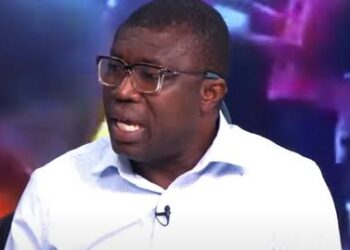

The Secretary to the Constitutional Review Implementation Committee, Osagyefo Oliver Barker-Vormawor, says the committee will take the public disagreements it encounters back to government with a warning that they could sink the referendum.
He told The Vaultz News in an exclusive interview at his Accra office that the committee has no power to alter government positions, only to report where the country stands on them.
The question arises because government rejected several recommendations from the Constitution Review Committee chaired by Professor Kwasi Prempeh, including the election of Metropolitan, Municipal and District Chief Executives.
Organised labour has objected publicly, and Barker-Vormawor says the committee reads consensus building as part of its own mandate rather than a matter it can leave entirely to the political actors.
Referring The Divergences Back To Government
Barker-Vormawor located the duty in the committee’s terms of reference. “Because I read in the mandate of the committee also the responsibility to build consensus,” he said, describing that work as gathering partners at the table and holding a dialogue rather than negotiating new positions.
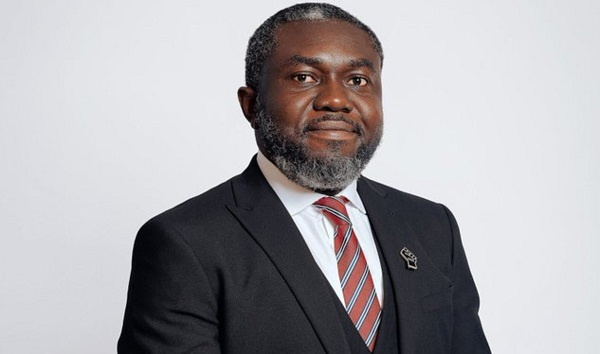
What the committee can do with what it hears is narrower. It can document where opinion diverges from the government package and hand those records back to the policymaker, but it cannot rewrite the package itself.
He set out the report he expects to deliver. “In the process of trying to build consensus, these are the divergences we have noticed. This is where people stand on it. Our advice to you is that it could affect turnouts. It could affect the ability of these proposals to be carried in a referendum.“
That advice, in his framing, comes with an invitation rather than a demand. Government remains free to reconsider, and the committee’s role ends at presenting the range of views for that judgment to be made.
A Warning Tied To The Referendum Threshold
The turnout caution carries weight because of how Article 290 works. Amendments to entrenched provisions require at least 40 percent of registered voters to turn out and at least 75 percent of votes cast to support the change, so public disaffection with any single item can drag down the whole exercise.
Rejected recommendations that enjoyed broad backing during the review therefore present a practical risk, not merely a political one. Citizens who wanted elected chief executives and did not get them may see little reason to show up for a ballot that leaves the arrangement untouched.
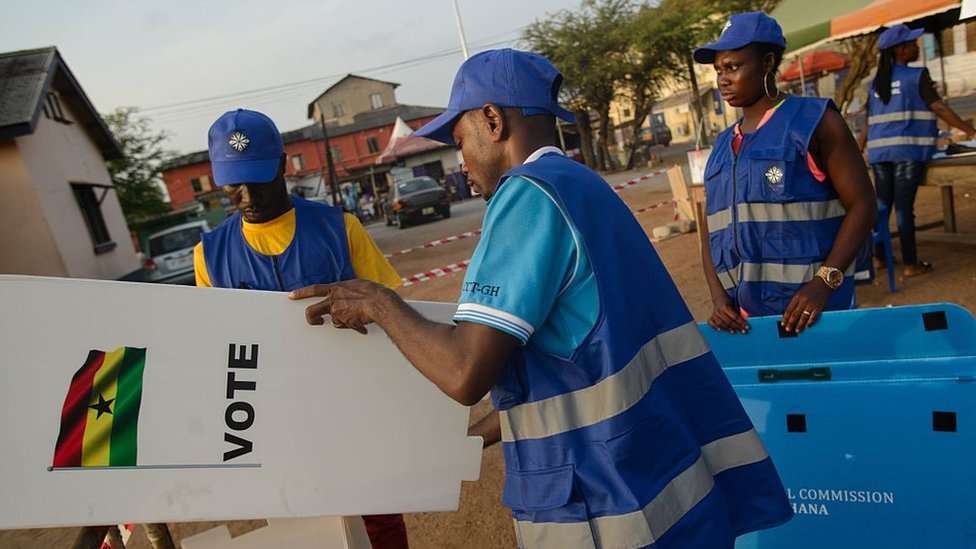
Barker-Vormawor kept his description of the committee’s job deliberately modest against that backdrop. “Our mandate is to draft and chaperone the process towards completion,” he said.
Labour, The IEA And The Papers Still Coming
He said he has followed the positions of organised labour closely and is reading submissions as they arrive. The Institute of Economic Affairs has already published a paper, and he expects formal positions from the opposition and from civil society organisations in the coming period.
Those submissions matter to the record the committee will compile. Each adds to the evidence of where consensus exists and where it breaks down, which is the substance of what goes back to government.
The volume of incoming papers also complicates the timetable. A committee that treats consensus building as a mandate rather than a courtesy has to absorb positions from labour, think tanks, parties and civil society before it can credibly tell government where the country stands.
He did not pretend neutrality about the content of what he is reading. “I find a lot of those things compelling. By sitting on the committee, I haven’t lost my views on what reforms are important.”
Personal Views Inside A Neutral Committee
That admission led to the sharpest passage of the interview. “There are several things I disagree with the government on, and that is why I’m happy that I am not being invited to go and campaign for the government on any of these things,” he said.

Asked how he would handle his own ballot, he drew no distinction between himself and any other voter. “And if I’m going to express a vote on anything, I would vote in line with my beliefs and what I think better advances Ghanaian democracy. If there are things which I don’t think they do that, I would vote no on them.”
The committee’s institutional position stays separate from that personal one. Its function is to refer the disagreements back to government and let government reflect on its own stance, which leaves the decision precisely where he insists it belongs.
The arrangement puts a good deal of weight on government’s willingness to revisit choices it has already announced. If the rejected recommendations stay rejected and the turnout warning proves accurate, the committee will have discharged its mandate exactly as described and still watched the reform package fail at the only threshold that counts.
READ ALSO: Banks Dominate GSE Gains as Market Stages Rebound