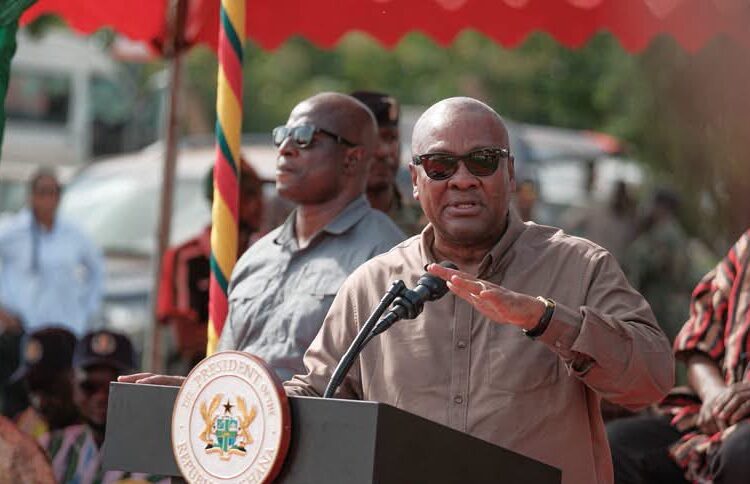
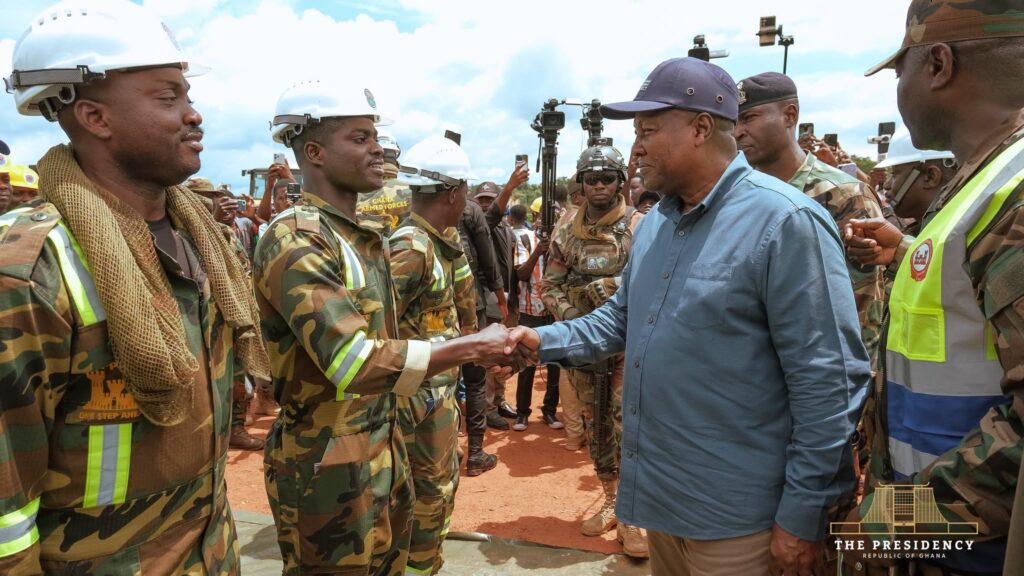
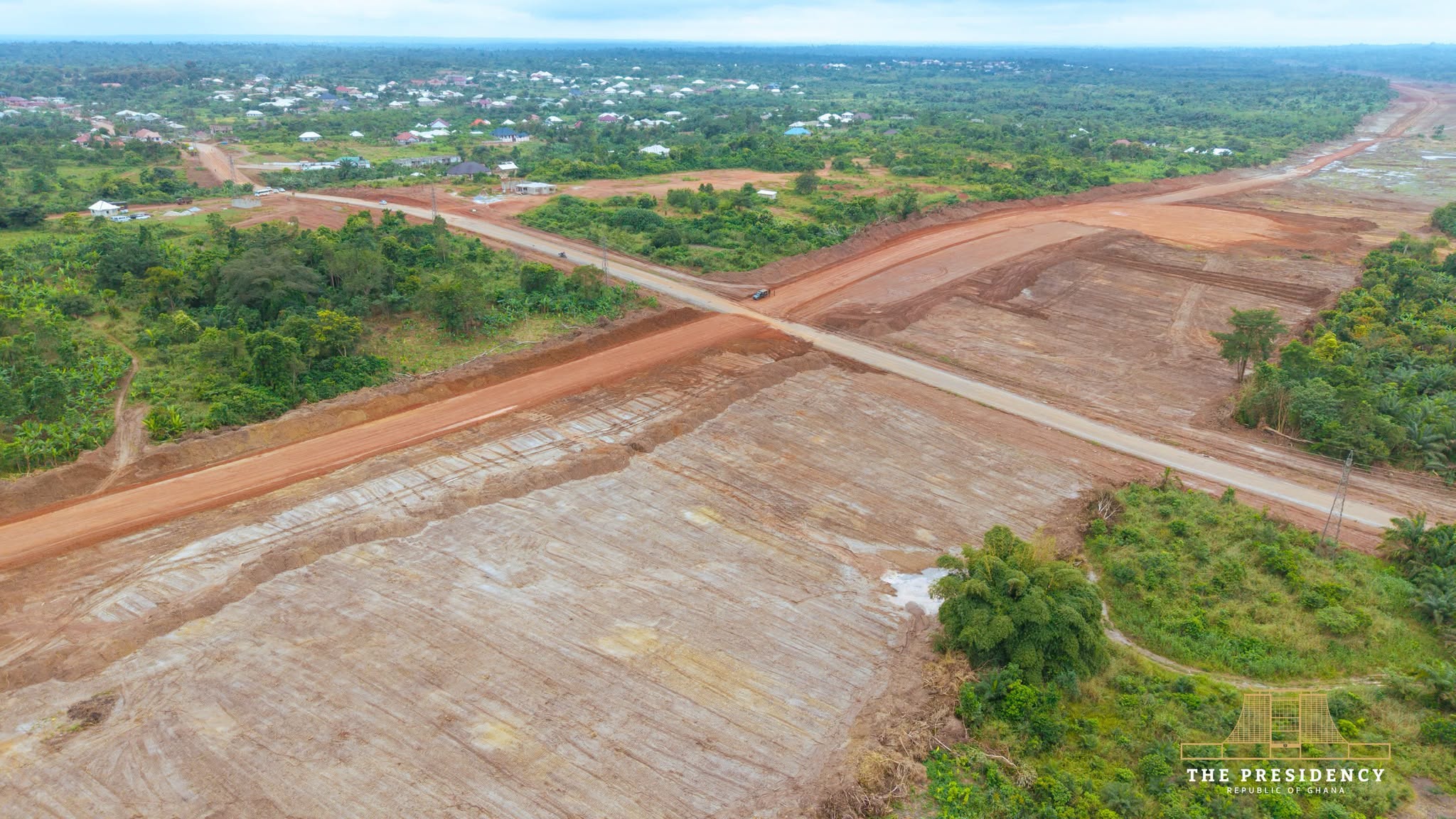
President John Dramani Mahama has disclosed that the design of the Accra-Kumasi Expressway reserves space within the corridor for a future railway line linking Ghana’s two largest cities. He made the disclosure on Monday, September 14, 2026, at Kwaso near Ejisu, where the Ghana Armed Forces handed over the cleared right-of-way for the project.
The provision costs the state almost nothing now but removes the single most expensive obstacle to building rail later, which is acquiring land through settled communities and compensating the people on it.
President Mahama also announced that the Finance Minister will draw up a financing plan to revive Ghana’s railway sector, signalling that government intends to treat road and rail along the corridor as one transport system rather than two competing projects.
Rail Corridor Reserved Inside the Accra-Kumasi Expressway
The President set out the provision in plain terms while describing his wider vision for opening up the country through transport corridors. “In this expressway we’re doing, we’ve left some space that can accommodate a rail line between Accra and Kumasi,” he said.
He linked the decision to a financing question that has stalled rail development for more than a decade. “Aside from that, the Minister of Finance will come up with a financing plan to revitalise our railways.”
The approach matches what the Ghana Railway Development Authority proposed earlier this year.
In May, the authority’s Chief Executive, Dr Fredrick Appoh, said the plan involved reserving at least 200 feet on either side of the expressway specifically for railway development, and that the route was intended to accommodate a high-speed intercity service connecting the major urban centres along the way, with links to the Boankra inland port.
What an Accra-Kumasi Railway Would Cost
The financing gap is substantial. Dr Appoh put the requirement for a full Accra to Kumasi line at roughly 2.2 billion dollars, covering double track, permanent way, earthworks and rails across some 200 kilometres.
Speaking on the constraints facing the sector, he said Ghana needs “political will, technical competence and dedicated funding” in combination, noting that the first of the three was already in place under the current administration.
He argued that shorter segments could move quickly with money behind them, estimating that the Accra to Nsawam stretch could be finished within 17 months if funding were ring-fenced.
That figure sits alongside a road project already estimated at about four billion dollars, of which two billion is banked at the Bank of Ghana with the balance promised by December. No comparable account exists for the rail component, and the President did not attach a timeline or a budget line to it.
A Master Plan That Has Stalled Before
Ghana has been here before. The Railway Master Plan completed in 2013 proposed a new standard gauge network of just over 4,000 kilometres at an estimated cost of 21.5 billion dollars, to be delivered in six phases.
Phase two, designated a priority, covered roughly 1,234 kilometres, including a Takoradi to Kumasi western line and an Accra to Kumasi eastern line of about 300 kilometres. The original delivery window for those priority projects ran from July 2016 to June 2020 and closed with the work largely unbuilt.
The colonial-era triangle linking Sekondi, Kumasi and Accra covers about 1,000 kilometres of narrow gauge track laid to move minerals and cocoa to the coast. Successive governments have committed to converting it to standard gauge for speeds of up to 160 kilometres per hour, and the Tema to Mpakadan line stands as the clearest piece of progress in that programme.
A rail line running inside the expressway corridor would also be materially shorter than the eastern line drawn in the master plan, since the new road alignment covers 198.7 kilometres against the 270 kilometres of the existing highway and the roughly 300 kilometres of the planned eastern route.
Road First, Rail Later
Nothing announced on Monday commits money to construction. What the corridor buys government is optionality, and the value of that depends entirely on whether the reserved strip survives the decades of encroachment that have eaten into rail reservations elsewhere in the country.
For now the sequence is clear enough. The expressway moves first, with the Expression of Interest for contractor prequalification published on September 11, a four-week selection window, and a sod-cutting promised at Kwaso before Christmas.
The rail line waits on a financing plan that the Finance Ministry has yet to publish, and on a sector whose plans have historically outrun its budgets.
READ ALSO: Global Gas Shock Tests Ghana’s Gas-To-Power Strategy