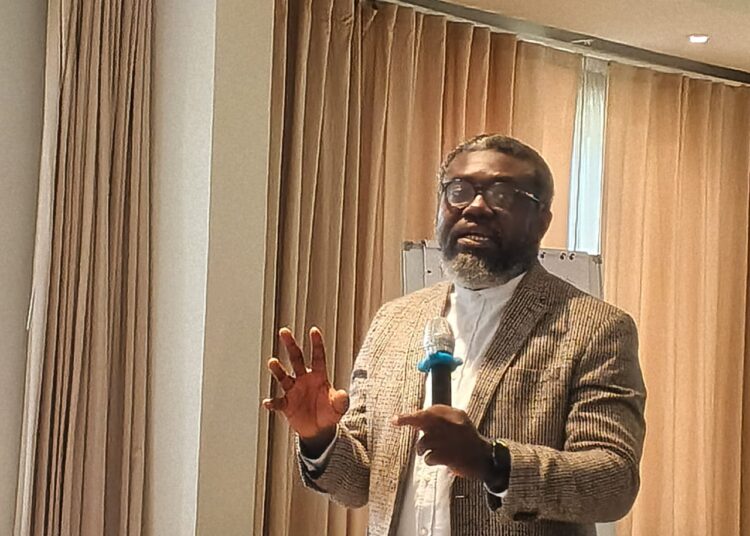
The Secretary to the Constitutional Review Implementation Committee, Osagyefo Oliver Barker-Vormawor, has named young people as the constituency with the greatest stake in Ghana’s constitutional reform.
He told The Vaultz News in an exclusive interview at his Accra office that the changes under consideration will shape their lives far longer than those of the political class proposing them.
His reasoning rests on arithmetic rather than sentiment, since a Ghanaian entering the workforce today will live under the amended constitution for roughly four decades before reaching retirement age. That timescale, he argues, makes engagement now a matter of self-interest rather than civic duty.
The Generation That Inherits The Rules
Barker-Vormawor put young people ahead of every other group when asked who should be following the committee’s work. “First and foremost, young people,” he said.
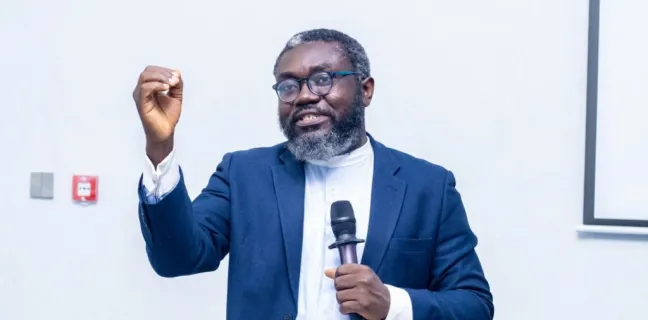
He connects that priority to the gap between who decides and who lives with the decision. The proposed changes, in his account, direct more of the future of young Ghanaians than that of most people currently holding political power, which means they will have to build their society around rules written largely without them.
His conclusion was unambiguous. “So yeah, I think young people are a key constituency.“
Cooperatives, Farmers And Organised Labour
Beyond the youth bracket, he pointed to groups organised around work rather than age. Cooperatives, farmer cooperatives, working-class people and organised labour should all be paying heightened attention to what is being proposed and how it lands on them, he said.
The grouping is telling. These are constituencies with existing structures capable of mobilising members, which matters for a reform process that will eventually need public participation at scale. They also sit outside the professional and legal circles that usually dominate constitutional debate in Ghana.
Why He Doubts The Business Lobby
His assessment of the private sector was markedly cooler. Business interest in reform is waning, he suggested, particularly among firms that have learned to operate profitably in the current economy.
He offered a blunt explanation. “Many of them depend on the dysfunctionality of the state anyway.” The claim goes to the heart of why constitutional reform struggles for allies.
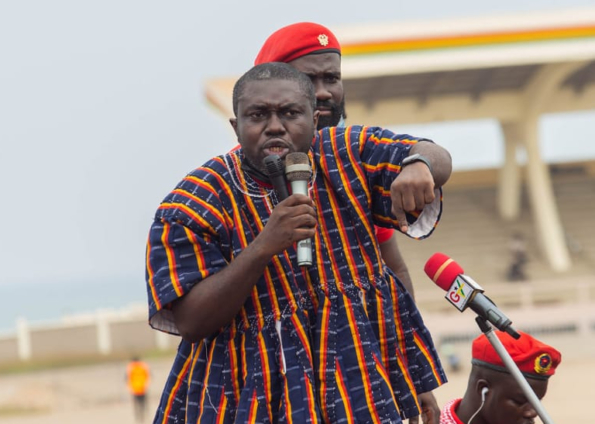
Where procurement is unpredictable, regulation inconsistent and access to decision makers informal, the firms that thrive are often those best placed to work the gaps rather than those that would benefit from closing them.
Barker-Vormawor accepts that he must still make the case to people whose interests run against his vision of a just society. He suggested that business figures too often lose sight of the balance between profit and humanity, and he expects them, once engaged, to press for provisions that reinforce their own position.
Procurement, State Monopolies And Article 71
He stopped short of writing the sector off. “But it’s not a zero-sum game,” he said, arguing that several reforms would serve business and ordinary Ghanaians at the same time.
He named better predictability in procurement law as one example, and reform of state enterprises that operate as monopolies as another. Both, in his reading, reach the common man as directly as they reach a contractor.
The item he flagged for workers specifically was the emoluments regime, which he described as the dismantling of the Article 71 framework.
That provision governs how the salaries and benefits of the president, ministers, members of parliament, judges and other constitutional officeholders are set, and the ex gratia payments flowing from it have drawn sustained public anger. He argued that workers have a direct stake in those questions.
A Broad Church By Necessity
Barker-Vormawor closed the point by widening it rather than narrowing it, saying that all the different groups should have a stake in the conversation.
That inclusiveness carries a practical logic beyond fairness. A reform package that eventually faces a referendum will need turnout from constituencies that no political party has an obvious incentive to mobilise, and the organised groups he lists are the ones with the reach to deliver it.
The harder problem is the one he identified himself. If the firms with the most money and the loudest voice see less upside in a functioning state than in the current arrangement, then the coalition for reform has to be built from farmers, unions and young people who have far less practice at lobbying and far less to spend on it.
Whether that coalition materialises before the bills reach Parliament will say more about the fate of this reform effort than the drafting ever could.
READ ALSO: Dr Ackah Highlights Five Years Of Ghana Energy Reforms