The European Union has finalized the long-awaited €90bn (£78bn) loan for Ukraine along with a 20th sanctions package against Russia.
After weeks of delay, the EU signed off on the loan today, in time for a summit in Cyprus that began in the evening and will include talks over a dinner with the Ukrainian leader, Volodymyr Zelenskyy.
Both agreements were finalised after Hungary lifted its veto. Hungary lifted its vetoes over the long-delayed loan and sanctions after a dispute over a damaged oil pipeline that traverses Ukraine came to an end. Russian oil deliveries to Hungary and Slovakia resumed on Thursday, the Hungarian energy group MOL reported, after both countries; heavily dependent on Russian crude, dropped their objections to EU support for Ukraine.
Viktor Orbán, the Hungarian Prime Minister who was defeated by his Conservative rival, Péter Magyar, earlier this month, will not take part in what would have been his final EU summit.
Zelenskyy joined the other leaders in the Cypriot resort of Ayia Napa for talks over dinner. “It matters that Ukraine is securing this level of financial certainty,” he wrote on social media highlighting spending priorities that included arms production, “the procurement of necessary weapons from partners that do not yet produce in Ukraine,” and preparing the energy sector for next winter; a response to Russia’s devastating attacks on Ukraine’s energy infrastructure in recent months.
He told reporters that he wished the incoming Hungarian government all the best, while questioning Orbán’s approach to Ukraine. “Our people need to have strong, warm, good relations,” he said referring to the two countries. He added, “You are neighbours. You have to live in peace.” He disclosed that his team was already in touch with their Hungarian counterparts.
EU leaders will also discuss how to respond to surging energy prices and the wider ramifications of war in the Middle East, amid uncertainty over a definitive end to the conflict.
EU leaders are also expected to discuss ideas to respond to a rise in energy prices, including a proposed cut to electricity taxes and incentives to accelerate the shift to green energy. Despite a boost to wind and solar power since the energy crisis of 2022, the EU has been slower to scale down the use of oil and gas in other parts of the economy, such as transport and housing.
The latest EU sanctions against Russia; the 20th round since the invasion, blacklist Russian banks and energy companies, as well as entities in the United Arab Emirates, Thailand and China, including Hong Kong, for helping Moscow evade western restrictions. In the first case of its kind, the EU is also imposing a ban on the export of hi-tech machine tools and telecoms equipment to Kyrgyzstan, which is accused of “systematic and persistent” failure to prevent their re-export to Russia, where they are used to make missiles and drones. The former Soviet Republic has previously said it is working to comply with western sanctions.
Ukraine Loan, Sanctions On Russia Welcomed
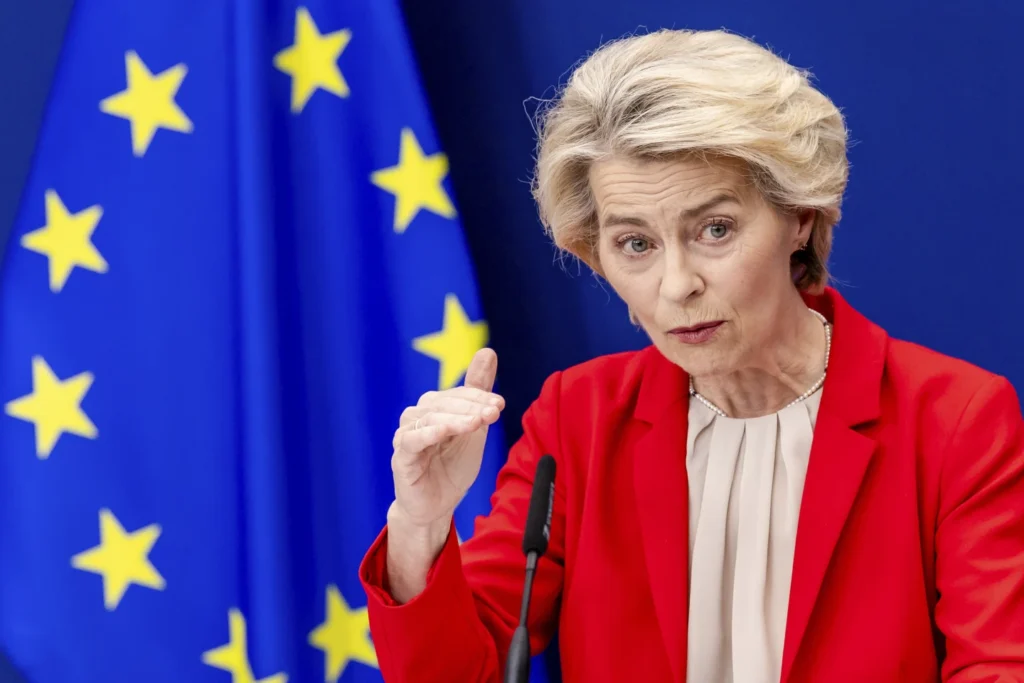
The European Commission President, Ursula von der leyen welcomed both agreements. Von der Leyen said that while Russia doubles down on its aggression, “we are doubling down on our support to the brave Ukrainian nation, enabling Ukraine to defend itself and putting pressure on Russia’s war economy.”
Speaking later, von der Leyen said that she thought it would be possible to disburse the first tranche of the €45bn funding planned for 2026 in this quarter, meaning by the end of June. The first payment, she indicated, would fund Ukraine’s domestic drone production; “drones from Ukraine for Ukraine.”
The loan, funded by EU borrowing with the intention that Russian reparations will fund repayments, is expected to provide two-thirds of Ukraine’s financial needs in 2026 and 2027.
Welcoming the agreements, the European Council’s President, António Costa, said “the next step is to open the first cluster of negotiations for the Ukrainian accession to the European Union.”
Hungary has also been blocking the opening of “clusters” of negotiating topics that will allow Ukraine to progress its application to join the EU. While other member states support the start of talks, many are also wary of any fast-track procedure for Kyiv, which filed its application for EU membership a few days after the invasion.
READ ALSO: Alex Acheampong and Diana Hamilton Uplift Spirits with New Single “ABC”