
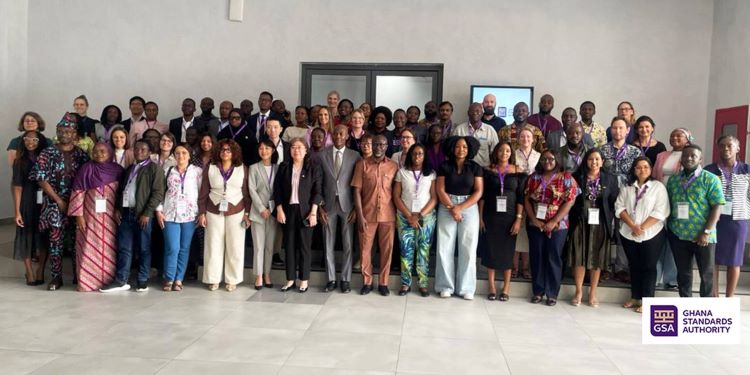
The Ghana Standards Authority (GSA), in a strategic partnership with the Swedish Institute for Standards (SIS), is hosting the international plenary of ISO/TC 338 from April 20 to April 24, 2026, to codify the safety and quality of menstrual products, bringing the landscape for women’s health in Africa to a significant milestone.
According to the GSA, for the past few days, Accra has become the center of a global effort, as this technical committee is tasked with the arduous work of formulating the first comprehensive set of international standards for menstrual products.
Held at the Palms by Eagles Hotel, the meeting, representing a shift away from anecdotal hygiene advocacy toward the rigorous, data-driven world of industrial standardization, has brought together a diverse cohort of material scientists, public health experts, and regulatory authorities from over 55 countries.
“Key topics discussed during the meetings included: national implementation of menstrual products standards, support for laboratory testing of menstrual products, increasing government awareness in countries where the issues receive limited attention, communication and outreach activities on menstrual products standards”
Ghana Standards Authority
The significance of hosting this plenary in Ghana marks the transition of the GSA from a regional regulator to a key participant in the global quality infrastructure.
Through its collaboration with the SIS, the GSA is leveraging decades of Swedish expertise in standardization to fast-track the development of benchmarks that will eventually dictate the manufacturing and trade of menstrual products worldwide.
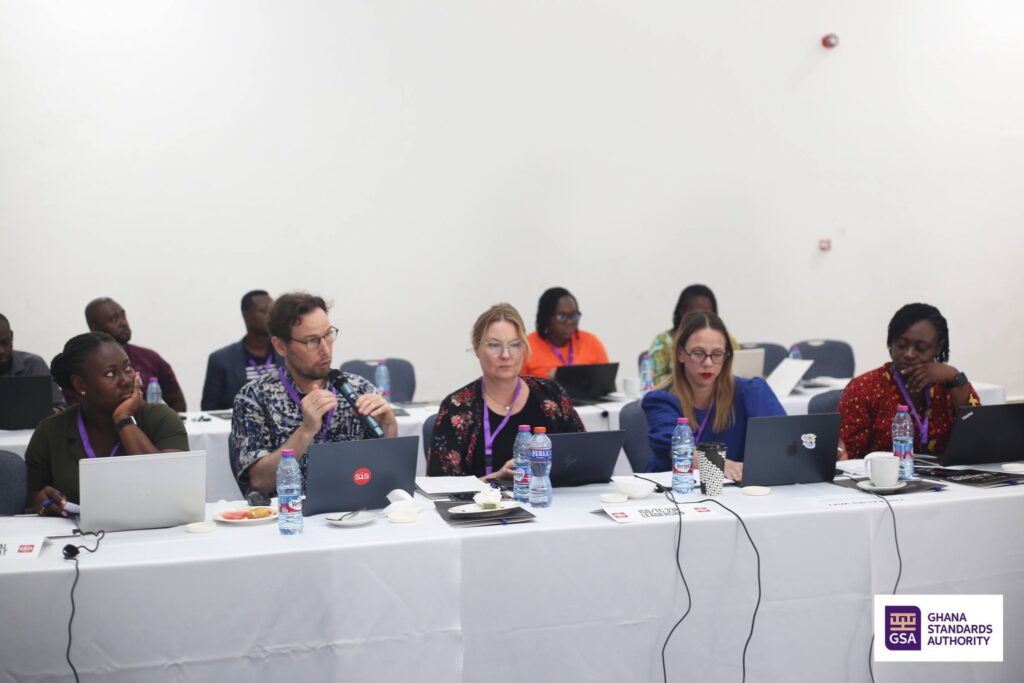
A primary focus of the ISO/TC 338 meetings is the establishment of robust test methods. In the realm of industrial manufacturing, a standard is only as effective as the laboratory’s ability to verify it. Experts in Accra are meticulously defining the protocols for testing absorbency, material integrity, and biocompatibility.
For the GSA, the importance of this engagement lies in the support for laboratory testing. Aligning with global ISO test methods puts Ghana in a position to begin to upgrade its domestic testing facilities to international levels. This infrastructure is essential for local manufacturers who wish to certify their products for export, ensuring that “Made in Ghana” labels carry the weight of global compliance.
According to the committee, the complexity increases significantly when moving from single-use to reusable products. While disposables have established, albeit fragmented, testing histories, reusable products require a focus on material fatigue and the safety of sterilization processes over hundreds of cycles.
The committee is therefore working to standardize how these products are evaluated for chemical leaching and microbial resistance after repeated washes, as establishing these requirements creates a protected space for industrial innovation in the sustainable hygiene sector and allows for a regulated market where high-quality reusable products can thrive alongside disposables.
National Implementation
Beyond the laboratories, the Accra meetings are addressing the systemic challenge of national implementation. Standardization often exists in a vacuum until it is integrated into national policy and legislative frameworks.
The GSA is using this plenary to increase government awareness of the economic and health implications of poor-quality products.
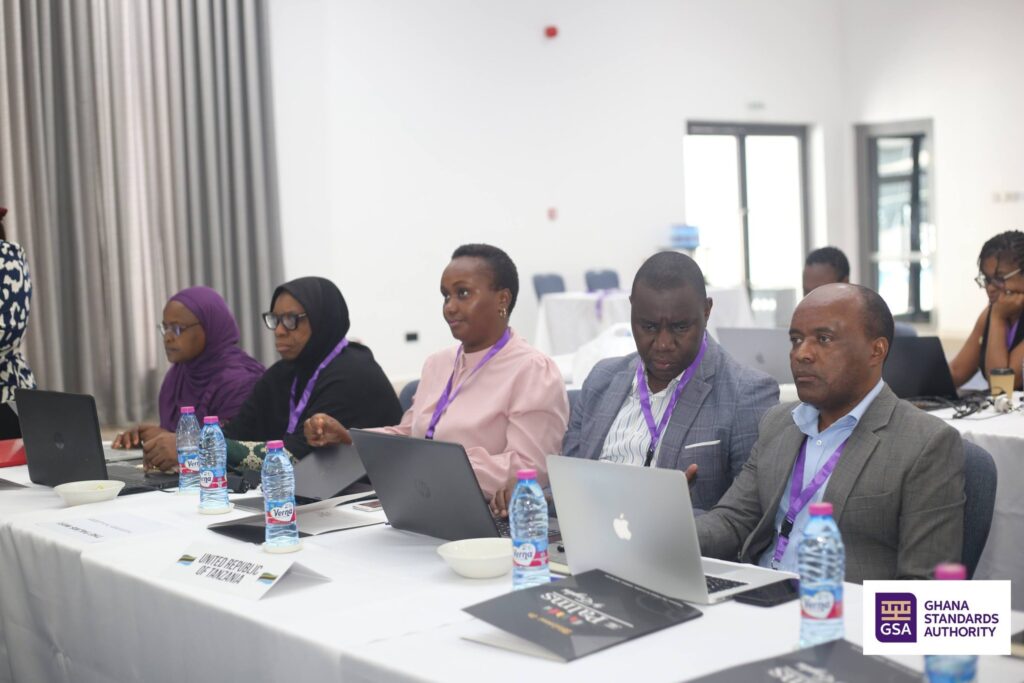
In many regions, the absence of a regulatory floor has allowed for the entry of sub-standard goods that pose significant health risks to consumers, and by finalizing these ISO standards, the GSA hopes to provide the government with a technical mandate to enforce quality control at the ports and in the marketplace.
The GSA also noted how vital the discussions regarding outreach and communication are, especially since standards are historically dense, alongside technical documents that can be inaccessible to the average manufacturer or policymaker.
The GSA and SIS are working on frameworks to translate these complex ISO requirements into actionable guidelines for local industries, ensuring that the standards are not just archived on a shelf but are actively used to guide production lines and procurement processes. The goal is to build a culture of standardization where safety is a non-negotiable industrial requirement rather than a premium feature.
The broader economic merit of the ISO/TC 338 meetings is the potential for regional trade harmonization within the framework of the African Continental Free Trade Area (AfCFTA), where the absence of unified standards acts as a technical barrier to trade.
If Ghana’s standards for menstrual products differ from those of Nigeria or Kenya, local manufacturers face redundant certification costs.
The ISO plenary for international standards is geared towards facilitating a “one-test, one-standard” environment to reduce the friction for Ghanaian companies looking to supply the West African sub-region, turning a health necessity into a viable export commodity.
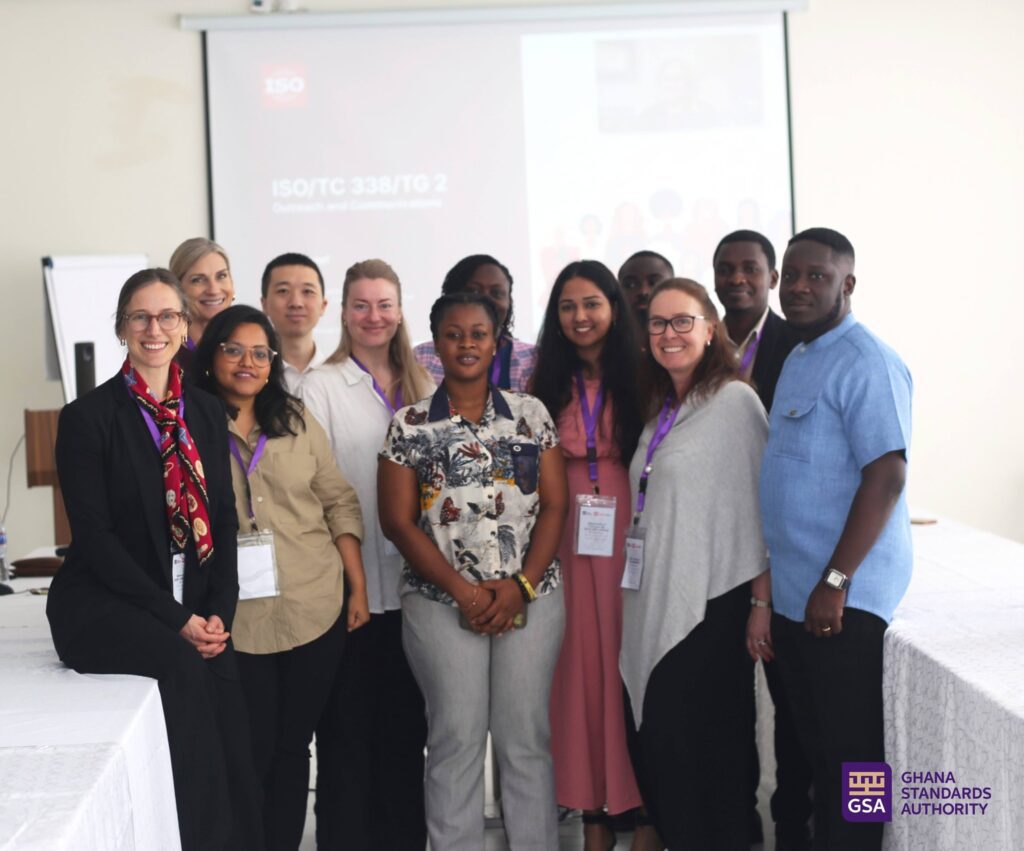
The GSA announced that the Friday seminar, themed “Breaking Barriers to Safe Menstruation,” will serve as the industrial catalyst for this vision. It is meant to bridge the gap between the expert committees and the private sector stakeholders who will eventually be tasked with implementing these standards.
This outreach is crucial for ensuring that the technical requirements developed this week reflect the manufacturing realities on the ground in emerging markets – a move toward inclusive standardization, where the voices of 55 countries ensure that the final ISO documents are globally applicable and technically sound.
READ ALSO: Regina Van Helvert Redefines The Celebrity Wedding Narrative