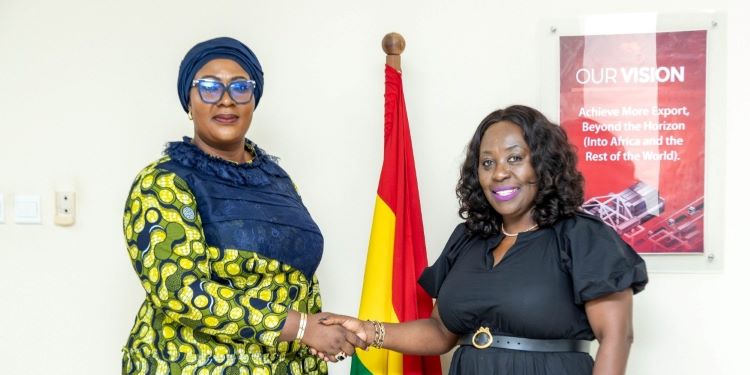
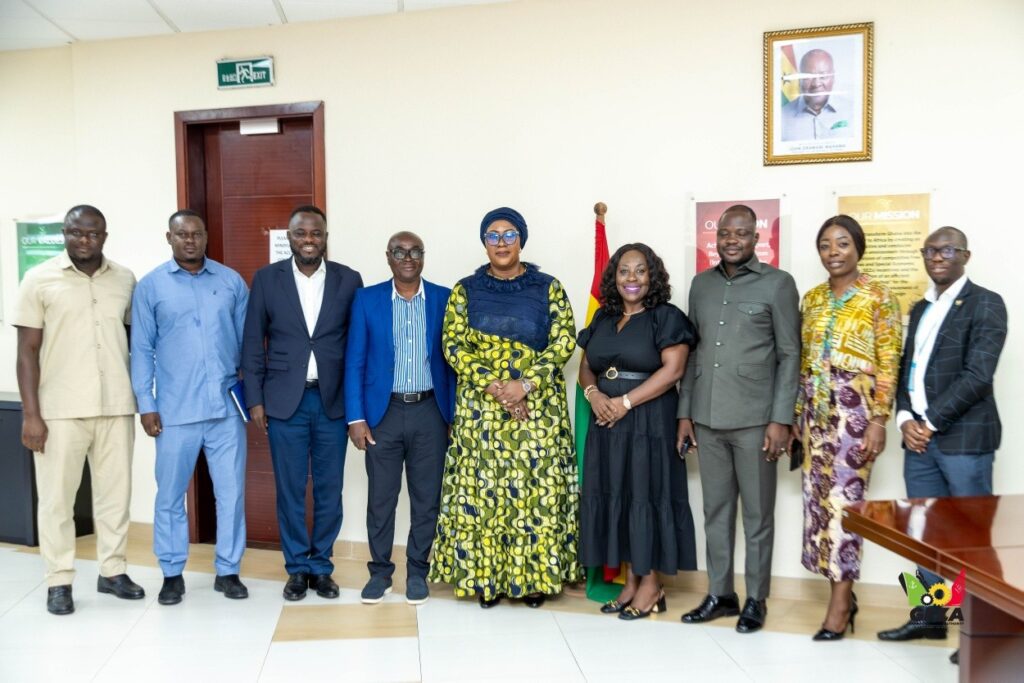
The Chief Executive Officer of the Ghana National Gas Limited Company (GNGLC), Ms. Judith Adjoba Blay, has paid a recent visit to the Chief Executive Officer of the Ghana Free Zones Authority (GFZA), Dr. Mary Awusi, to institutionalize a strategic energy-industrial collaboration.
The engagement at the GFZA Head Office entrenched the alignment between the nation’s primary gas supplier and the authority managing its export-led industrial enclaves. Discussions focused on the ongoing institutional effort to deepen the integration of natural gas infrastructure into Ghana’s broader industrial and energy development agenda.
“The meeting highlighted the critical role of natural gas infrastructure in driving industrialization and supporting economic growth within the country’s Free Zones enclaves. The cooperation between these two state entities is expected to ensure that energy reliability remains the bedrock of industrial productivity within designated Free Zones”
Ghana Free Zones Authority
The GFZA noted that currently, the Ghana National Gas Company operates a network of Natural Gas Transmission Pipelines that serve as the lifeblood for several key industrial zones, including the Tema Export Processing Zone and the Sekondi Industrial Park.
These pipelines are essential for the transportation and supply of natural gas, which serves the dual purpose of power generation and direct industrial usage. The transition toward a gas-led industrial framework is a necessary step for giving companies operating within these enclaves access to a consistent and cost-effective energy source.
For the Ghana Free Zones Authority, a stable energy supply is the primary factor in attracting and retaining prospective industries. The discussions between Ms. Blay and Dr. Awusi centered on how to enhance energy reliability to meet the increasing demands of these industrial enclaves.
As Ghana seeks to position itself as a hub for export-oriented manufacturing, the reliability of the gas-to-power chain becomes a non-negotiable prerequisite for success. The GNGLC’s presence in the Tema and Sekondi enclaves provides localized energy solutions that mitigate the risks of power fluctuations, which can often derail high-precision industrial operations.
The collaboration supports not only existing industries but also paves the way for future infrastructure development. Strengthening the cooperation between GNGLC and GFZA allows for better long-term planning, particularly concerning the expansion of transmission pipelines into newer sections of the Sekondi Industrial Park.
Both institutions are aligning their development maps to facilitate the provision of natural gas before new industrial tenants arrive. This proactive approach is intended to foster an environment of “increased industrial productivity,” where the transition from site acquisition to full-scale production is accelerated by ready access to energy.
Infrastructure for Productivity
The Ghana National Gas Company’s operational footprint within the Tema Export Processing Zone was highlighted as a blueprint for how energy infrastructure can be utilized to maximize economic output.
Through facilitating the “transportation and supply of natural gas,” GNGLC provides the fuel necessary for both heavy manufacturing and the thermal plants that power the enclaves.
This synergy between the industrial enclave and the gas transmission network has established a competitive advantage for Ghana, as it reduces the logistical overhead for companies that would otherwise rely on more expensive or less reliable fuel sources.
Furthermore, the visit emphasized the strategic importance of the Sekondi Industrial Park in the nation’s energy security framework. As the Western Region continues to grow as an industrial powerhouse, the expansion of natural gas infrastructure in this area is critical.
The partnership between Ghana Gas and the Free Zones Authority backs the GFZA’s industrial strategy with the technical expertise and infrastructural capacity of the GNGLC. This joint effort is expected to contribute significantly to the country’s sustainable economic growth by linking natural resource extraction directly to value-added industrial activity.
The engagement between Ms. Judith Adjoba Blay and Dr. Mary Awusi concluded with a reaffirmation of the strategic partnerships necessary to secure Ghana’s industrial future. The commitment expressed by both CEOs highlights a move toward a more integrated governance model, where energy and industrial policies are treated as a single, cohesive unit.
This institutional cohesion is vital for navigating the complexities of the 2026 energy market, where reliability and sustainability are the keys to attracting foreign direct investment. The focus is not only on the immediate needs of today’s manufacturers but also on building a resilient energy network that can support the next generation of industries.

With the leadership of both GNGLC and GFZA aligned, the path to a high-productivity, energy-secure industrial sector is increasingly clear. The visit of Ms. Blay to the GFZA Head Office is the first step in a renewed drive to turn Ghana’s natural gas reserves into a powerful engine for industrial transformation.
READ ALSO: Opposition to Gold Fields Lease Renewal “Ill-Informed”– Dr. Manteaw