
Fresh polling data released by research firm Global InfoAnalytics has placed Dr Cassiel Ato Forson ahead of other potential presidential contenders within the National Democratic Congress, with pollster Mussa Dankwa describing him as the best-performing candidate for the party at the current moment.
Speaking in a media interview on the latest political trends captured by his firm, Mr Dankwa said the data emerging from recent polling presents a clear statistical picture of voter preferences and indicates that Dr Ato Forson currently enjoys the strongest electoral performance among tested candidates within the opposition party.
According to him, the findings come from polling conducted in March, which also captured shifting voter loyalties, changing demographic patterns, and the emergence of new political trends that could shape future electoral contests in Ghana.
Mr Dankwa said while several names continue to generate public interest within the NDC, the numbers currently point decisively in favour of Dr Ato Forson. “For now, I think without any doubt that Ato Forson is the best performing candidate for the NDC at this moment,” he stated.
Head to Head Polling Favors Ato Forson
Explaining the basis for his conclusion, Mr Dankwa referenced head-to-head electoral simulations involving potential NDC candidates against Dr Mahamudu Bawumia. He noted that while Johnson Asiedu Nketiah also posted competitive numbers, Dr Ato Forson emerged with the widest margin in direct comparisons.
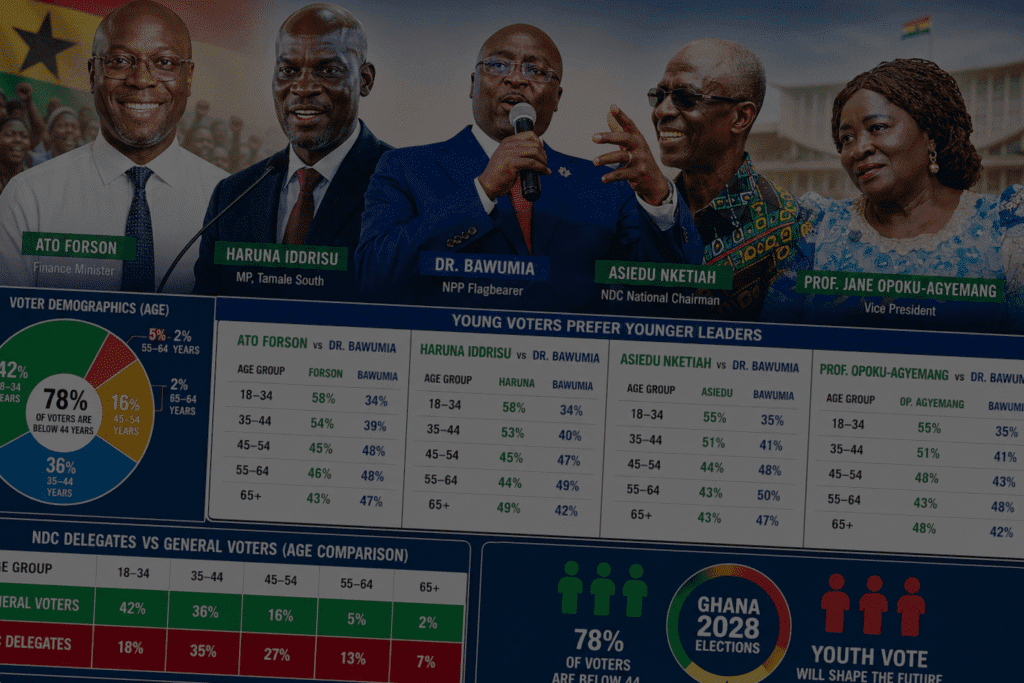
According to the data presented by Global InfoAnalytics, Mr Asiedu Nketiah recorded 51 percent against Dr Bawumia’s 39 percent in one set of simulations. In other projections, the NDC chairman climbed to 54 percent while Dr Bawumia polled 37 percent.
However, Mr Dankwa said Dr Ato Forson outperformed both figures, polling 55 percent against Dr Bawumia’s 37 percent, creating what he described as an 18 point lead.
“Ato Forson does 55 percent against Bawumia. Bawumia gets 37 percent. That is an 18-point gap. So would I choose somebody who has an 18-point gap to face an election? Naturally, statistically, I will go for the one that gives me the chance”.
Mussa Dankwa, Executive Director for Global InfoAnalytics
He added that the data also revealed particularly strong support for Dr Ato Forson among Akan voters, a demographic often regarded as politically decisive in national elections.
“If you look at the vote Ato Forson gets among the Akans, it is much bigger than the vote that Asiedu Nketiah gets against Bawumia. The Akans rally behind Ato Forson much more”.
Mussa Dankwa, Executive Director for Global InfoAnalytics
Changing Political Demographics
Beyond candidate comparisons, Mr Dankwa said the March poll also captured significant changes in Ghana’s broader political landscape, including what he described as a major shift in voter identification between the country’s two major political parties.
According to him, data collected by Global InfoAnalytics shows that the NDC now holds a stronger voter base than the New Patriotic Party, marking a dramatic reversal from previous political patterns.

“This showed how NPP has declined from being the party with the most voters to the party with the fewest voters,” he said. Mr Dankwa revealed that among every 100 voters sampled, approximately 40 identified with the NDC while only 30 identified with the NPP.
He described the trend as one of the most significant political shifts his organization has observed in recent years. He also pointed to changes among traditionally influential voter blocs, particularly within educated and high-income demographics.
According to the pollster, voters with university degrees and above now appear to favor the NDC in greater numbers than the NPP, a trend he said represents a sharp departure from previous political behavior.
“If you sample people with degrees and above, 45 percent will say they are NDC. Only 25 will say they are NPP. Before, the elite were NPP. Now it has changed”.
Mussa Dankwa, Executive Director for Global InfoAnalytics
He added that the same trend is visible among higher income earners, noting that individuals earning above certain income thresholds now appear to identify more with the NDC than the NPP.
New Political Forces Emerging
Mr Dankwa also touched on the rise of the United Progressive Party, saying the March poll was the first major survey conducted by Global InfoAnalytics to include the party in national voter simulations.
He described the results as both surprising and politically significant. “The first poll we have done that involves UP was the March poll, and they are showing signs of resurgence,” he said. According to him, the data also revealed that supporters of the party tend to be among the most educated voter groups in the country.
He further noted that some of the voters currently drifting toward the UP appear to be former NDC supporters rather than defectors from the NPP, suggesting a more complex realignment within the country’s political space.
Mr Dankwa also disclosed that recent polling on governance and leadership shows strong approval ratings for the current administration across all sixteen regions of Ghana.
“If you look at his approval rating as a president, every region in this country approves of the way he is doing his job. In all sixteen regions, the approval rating is about 50 percent. That is the first time we have seen this happen in our polling history”.
Mussa Dankwa, Executive Director for Global InfoAnalytics
He said the data also suggests that many Ghanaians believe government is making progress in the fight against corruption, though concerns remain about accountability for past actions.
Polling Must Remain Independent
Addressing concerns about the influence of political polling on national discourse, Mr Dankwa insisted that pollsters must remain independent and objective.
He said the role of research institutions is not to influence election outcomes but to provide an accurate reflection of public opinion that can help policymakers understand emerging concerns.
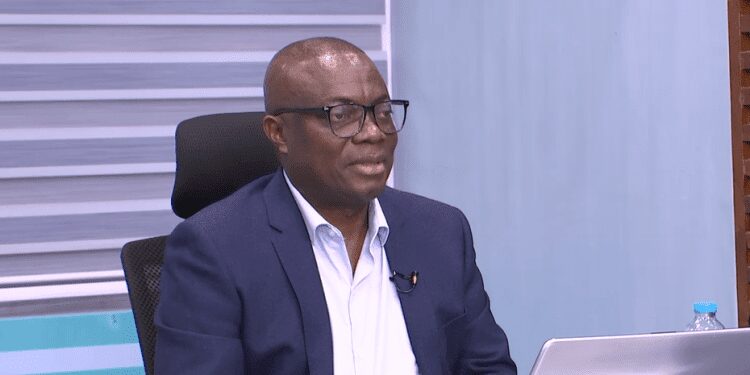
Mr Dankwa added that Global InfoAnalytics has maintained the same commitment to fairness for several years and will continue to publish data regardless of political reactions.
As political discussions intensify ahead of future contests, the latest polling data is expected to fuel fresh debate within party circles and among political observers about leadership choices, voter trends, and the evolving dynamics of Ghana’s electoral landscape.
READ ALSO: Ghana Seals Historic IMF Exit, Transitions to a Non-Financing Technical Assistance PCI