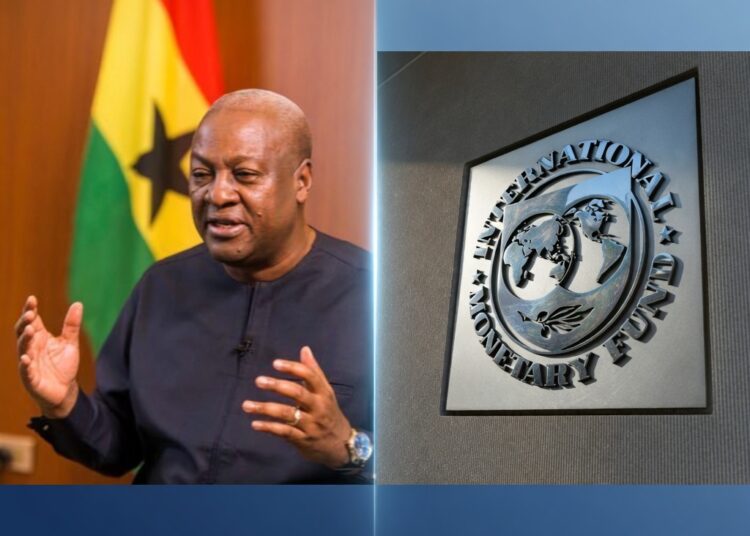
Ghana has officially brought its financial bailout relationship with the International Monetary Fund to a close, marking what government officials describe as one of the most defining economic milestones in the country’s recent history.
In an official statement issued by the Presidency and signed by Felix Kwakye Ofosu, spokesperson to President John Dramani Mahama and Minister for Government Communications, the government announced the successful conclusion of Ghana’s Extended Credit Facility programme with the IMF, while simultaneously transitioning into a Policy Coordination Instrument, widely known as PCI.
The announcement signals the end of Ghana’s reliance on direct IMF financial support and the beginning of a new chapter focused on technical support, policy credibility, and long term economic reforms.
A Historic Economic Turning Point
According to the statement, “This milestone represents the restoration of macroeconomic stability and debt sustainability, well ahead of the original timeline.”
The announcement comes after a difficult period in Ghana’s economic history that saw the country grapple with rising inflation, a depreciating currency, debt distress, and severe fiscal pressures that forced the nation to seek support from the IMF.
However, the administration of President Mahama says it took decisive action in 2025 to rescue and recalibrate the programme after what it described as a derailment at the end of 2024.
The government explained that the turnaround was driven by a combination of frontloaded fiscal consolidation, strict expenditure controls, and deep structural reforms aimed at restoring investor confidence and stabilising the economy.
Economic Indicators Show Strong Recovery
The results of those interventions, according to the Presidency, have been substantial.
The government said inflation has declined significantly, the Ghana cedi has strengthened sharply against major foreign currencies, public debt as a percentage of Gross Domestic Product has dropped considerably, and economic growth has returned with renewed momentum.
Perhaps one of the strongest signals of Ghana’s recovery is the improvement in its sovereign credit ratings.
The Presidency noted that Ghana’s credit standing has moved from restricted default status to a “B” rating with a positive outlook, representing five distinct rating upgrades.
“This reflects improved fiscal performance, normalised creditor relations, stronger external buffers, and renewed market confidence,” the statement said.
The development is expected to improve Ghana’s standing in international financial markets and reduce investor concerns about sovereign risk.
Foreign Reserves Hit Record Levels
Another major highlight in the government’s announcement is Ghana’s foreign exchange reserve position.
According to the release, gross international reserves have climbed to approximately 14.5 billion US dollars as of February 2026, representing nearly six months of import cover.
This is one of the strongest reserve positions Ghana has recorded in its economic history.
“These foreign exchange reserve buffers provide Ghana with the capacity to withstand external shocks and stand on its own feet,” government stated.
Analysts say strong reserve buffers are critical in protecting economies like Ghana from global commodity shocks, currency pressures, and external debt vulnerabilities.
What The PCI Means For Ghana
Although Ghana’s IMF financial bailout has ended, the country will continue to work closely with the IMF under a Policy Coordination Instrument.
Unlike the Extended Credit Facility, the PCI does not involve direct financial disbursements.
Instead, it serves as a non financing technical assistance framework designed to support economic reforms, improve policy implementation, and signal credibility to international investors and development partners.
For clarity, the Presidency stressed: “The PCI does not provide financial bailout, but will offer continuous capacity development, confidence boost to the market, and deliver a catalytic effect for fresh financing to Ghana.”
This means Ghana will no longer depend on emergency financial support from the IMF, but will continue benefiting from expert guidance and policy oversight.
The Push Toward Investment Grade Status
The government believes the PCI arrangement will play a critical role in helping Ghana achieve investment grade status in global financial markets.
Achieving investment grade would significantly lower borrowing costs for both government and private businesses, while attracting long term institutional investors into the country.
The Presidency explained that such a development would increase foreign direct investment, unlock cheaper financing for critical infrastructure projects, and support private sector expansion.
Beyond the numbers, government says the broader objective is to create jobs, accelerate industrialisation, and improve living standards for Ghanaians.
Gratitude To Citizens And Development Partners
In the statement, government expressed appreciation to the Ghanaian people for enduring the difficult reforms that made the turnaround possible.
“Government is exceedingly grateful to the people of Ghana for their sacrifices, resilience and forbearance,” the release stated.
The administration also extended gratitude to bilateral creditors, the Official Creditor Committee, domestic investors, and international partners for their support during the restructuring process.
As Ghana enters this new phase, President Mahama’s administration says it remains committed to prudent economic management, fiscal discipline, transparency, and creating an attractive environment for both local and foreign investors.
With the IMF bailout now officially behind it, Ghana’s next challenge will be sustaining the gains and proving that this recovery can translate into lasting prosperity.