
The Bank of Ghana (BoG) has issued a strong warning to businesses, investors, importers and financial institutions, cautioning that speculative demand for foreign currency could undermine the remarkable gains achieved by the cedi and threaten the country’s broader economic recovery.
At a time when Ghana’s economy is showing encouraging signs of stability, monetary authorities are urging market participants to base their financial decisions on genuine business needs rather than fear-driven currency purchases and speculative activities.
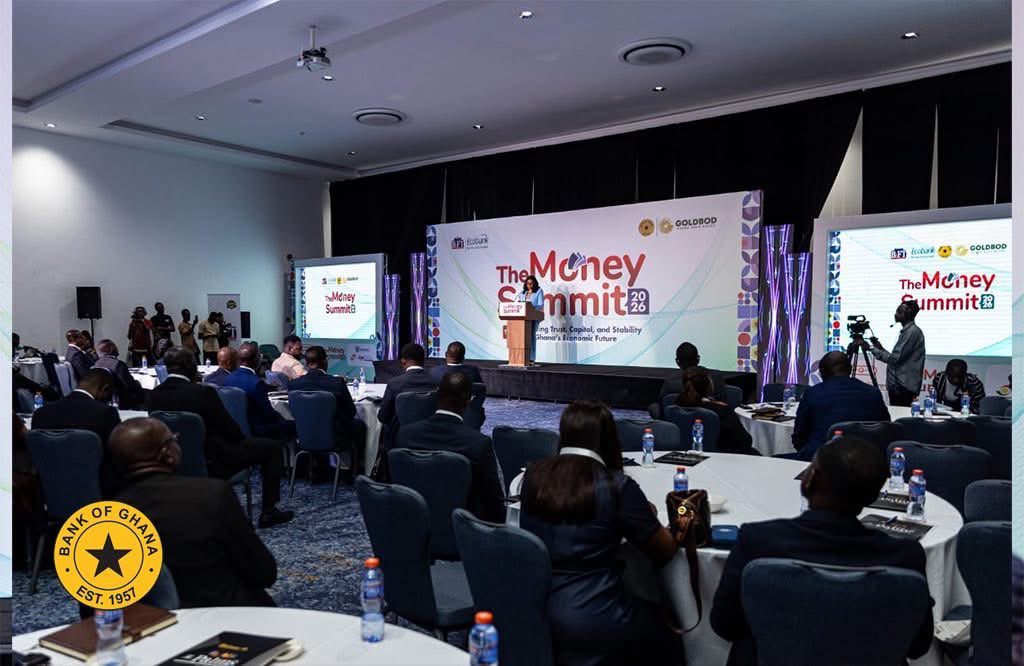
Speaking at the Money Summit, the Second Deputy Governor of the Bank of Ghana, Matilda Asante-Asiedu, stressed that responsible market conduct remains critical to preserving confidence in the foreign exchange market.
According to her, recent improvements in economic fundamentals have created conditions that support exchange rate stability, making it imperative for all economic actors to avoid actions that could trigger unnecessary volatility.
“The Fundamentals Do Not Reward Speculation”
Mrs. Asante-Asiedu delivered a direct message to market participants, emphasizing that current economic realities do not justify speculative bets against the local currency.
“The fundamentals of this economy do not reward speculation against our currency. I urge every actor, because we’ve seen that semblance in the market, whether you’re a bank, you’re an importer, you’re an exporter, you’re an investor, to transact on the genuine and present needs, not out of fear and panic. Because, as you have heard, our reserves continue to build, and they are there as buffers to help us support this economy.”
Mrs. Asante-Asiedu
Her comments come amid growing concerns that renewed demand for foreign currencies could place fresh pressure on the cedi despite significant progress made over the past year.
The central bank believes that transactions grounded in actual commercial requirements rather than expectations of future currency movements will help sustain stability and reduce unnecessary disruptions in the market.
Renewed Pressure on the Cedi
Although the cedi has been one of the best-performing currencies in recent times, recent market movements indicate that pressure remains present.
Data from the foreign exchange market show that by the close of last week, the cedi had depreciated by 0.94 percent against the US dollar on a week-on-week basis. The local currency also weakened by 0.70 percent against the British pound and 1.24 percent against the euro.
These developments pushed the cedi’s year-to-date loss against the US dollar to 10.14 percent, highlighting the challenges that continue to confront policymakers despite notable improvements in macroeconomic conditions.
Economists note that exchange rates are often influenced not only by economic fundamentals but also by market sentiment. When businesses and individuals rush to acquire foreign currencies due to fear or speculation, demand can rise sharply and place additional pressure on the local currency.
This is precisely the behavior the central bank is seeking to discourage.
Lessons From Last Year’s Market Reversal
The BoG believes recent history offers a powerful lesson for those considering speculative positions against the cedi.
According to Mrs. Asante-Asiedu, many individuals and institutions that accumulated foreign currency in anticipation of further depreciation suffered losses when the cedi staged an impressive turnaround.
“We all saw the lessons plainly last year. Those who bet against the cedi and hoarded foreign currency soon found themselves on the wrong side of the trade, unwinding at a loss as the currency staged one of the world’s strongest recoveries through 2025. And the traders amongst us will tell you, there was a time when people who had held now began to dump.”
Mrs. Asante-Asiedu
The statement reflects the dramatic shift that occurred in the market as improved foreign exchange inflows, stronger reserve accumulation and growing investor confidence supported the local currency’s recovery.
For many market observers, the experience serves as a reminder that speculative currency trades can carry significant risks, especially when economic conditions begin to improve.

Protecting Hard-Won Economic Gains
The Bank of Ghana maintains that preserving exchange rate stability remains essential for controlling inflation, encouraging investment and supporting long-term economic growth.
A stable currency helps businesses plan more effectively, reduces uncertainty and protects consumers from sharp increases in the cost of imported goods and services.
The central bank therefore views responsible market participation as a shared responsibility between regulators, financial institutions, businesses and investors.
With foreign reserves continuing to strengthen and macroeconomic indicators showing signs of improvement, authorities remain confident that the economy is on a more stable path. However, they warn that maintaining these gains will require discipline and restraint from all participants in the foreign exchange market.
READ ALSO: Ghana Invests in Energy Storage to Meet Skyrocketing Demand