Ghana’s recent economic recovery could come under threat if the country fails to maintain strict fiscal discipline, Bank of Ghana Governor Dr Johnson Asiama has warned.
The Governor stressed that continued restraint in government spending, stronger revenue mobilisation and prudent debt management will be crucial to preserving the gains achieved in recent months.
His warning comes at a time when Ghana is recording stronger economic growth, improved external reserves and signs of renewed macroeconomic stability. However, Dr Asiama cautioned that these gains could quickly come under pressure if fiscal management weakens.
BoG Governor Sounds Fiscal Warning
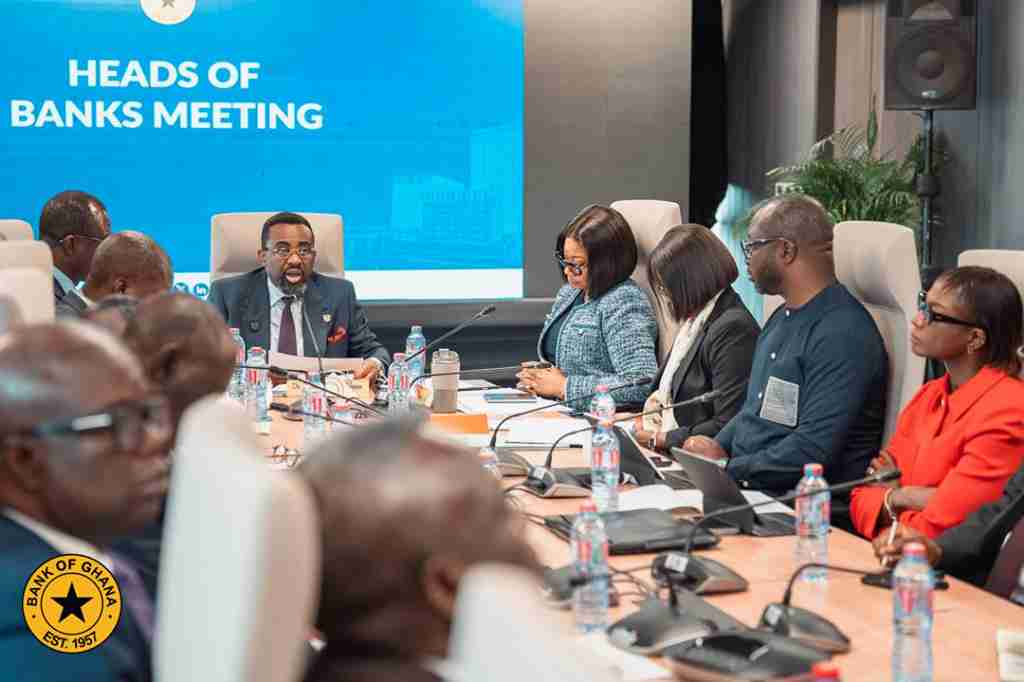
Speaking during a meeting with Managing Directors and heads of commercial banks at the Bank Square in Accra, Dr Asiama placed fiscal discipline at the centre of Ghana’s economic recovery.
He said the government must remain committed to expenditure restraint while taking steps to mobilise sufficient domestic revenue to support public finances.
According to the Governor, prudent debt management and disciplined fiscal policies are essential not only for maintaining debt sustainability but also for restoring investor confidence.
“Prudent debt management and fiscal discipline will be critical to preserving debt sustainability, strengthening investor confidence, and reducing fiscal risks to the macroeconomic outlook.”
Dr Asiama
The warning highlights the importance of avoiding a return to excessive government spending, particularly after years of fiscal pressures that contributed to Ghana’s debt challenges.
First Quarter Performance Offers Hope
Despite concerns over revenue shortfalls, Dr Asiama said government’s fiscal performance during the first quarter of 2026 provided an important foundation for macroeconomic stability.
He explained that strong expenditure restraint helped the government achieve better-than-targeted fiscal balances on a cash basis.
“Fiscal performance in the first quarter of 2026 broadly reflected strong expenditure restraint, notwithstanding revenue shortfalls, resulting in better-than-targeted balances on a cash basis.”
Dr Asiama
The development suggests that efforts to control expenditure are beginning to produce results.
However, the revenue shortfall remains a concern. Without stronger revenue mobilisation, maintaining fiscal stability could become increasingly difficult, particularly as the government faces competing demands for infrastructure, social programmes and other public services.
$12.9 Billion Reserves Strengthen Confidence
Ghana’s external position has also recorded significant improvement, according to the BoG Governor.
Dr Asiama disclosed that gross international reserves reached US$12.9 billion at the end of June 2026, equivalent to approximately five months of import cover.
The reserve position provides an important buffer against external shocks and could help strengthen confidence in Ghana’s economy.
However, the Governor acknowledged that the country has recently faced pressures on its reserves, alongside developments in the Middle East that could create additional uncertainty for the global and domestic economy.
For Ghana, maintaining adequate reserves remains critical because it supports the country’s ability to meet external obligations and manage pressures in the foreign exchange market.
Ghana’s Economy Posts 6.4% Growth
Despite the challenges, Ghana’s economy continues to demonstrate strong momentum.
Real Gross Domestic Product grew by 6.4% in the first quarter of 2026, compared with 6.2% during the same period in 2025.
Dr Asiama said the expansion was largely driven by the services and industrial sectors, highlighting the broadening strength of economic activity.
The Bank of Ghana’s Composite Index of Economic Activity also points to sustained and broad-based momentum.
The latest growth figures provide a major boost to efforts to stabilise the economy. Stronger economic activity can increase business confidence, support job creation and improve government revenue collection.
Debt Management Remains Critical
Ghana’s debt situation remains one of the major areas requiring careful management.
Dr Asiama stressed that prudent debt management must remain a priority if the country is to preserve debt sustainability and reduce fiscal risks.
Excessive borrowing and weak expenditure controls could undermine the progress made on inflation, reserves, economic growth and investor confidence.
For investors, fiscal discipline provides an important signal about the government’s commitment to maintaining sustainable public finances.
A deterioration in fiscal conditions could increase borrowing risks and place renewed pressure on the broader economy.
BoG Tackles Dud Cheques
Beyond fiscal policy, Dr Asiama raised concerns about the continued issuance of dud cheques within the banking system.
He said the Bank of Ghana had observed a high level of non-compliance and urged commercial banks to strengthen their monitoring systems.
Banks were also encouraged to intensify engagement with customers and promote confidence in cheques as a payment instrument.
The issue is important for financial sector stability because repeated use of dud cheques can undermine trust between businesses, individuals and financial institutions.
Crackdown on Unlicensed Digital Lenders
The Bank of Ghana is also stepping up its fight against unlicensed digital lending operations.
Dr Asiama disclosed that the central bank has started publishing weekly lists of entities providing digital credit services without the required approval.
He said regulatory and law enforcement agencies were taking further action to facilitate the removal of non-compliant operators from the market.
The move is expected to protect consumers while ensuring that digital lending businesses operate within Ghana’s regulatory framework.
Fiscal Discipline Holds the Key
Ghana’s latest economic indicators provide reasons for optimism, but the BoG Governor’s warning serves as a reminder that economic recovery can be fragile.
With GDP growth at 6.4%, reserves at US$12.9 billion and stronger fiscal balances recorded in the first quarter, Ghana has made significant progress.
The challenge now is to protect these gains.
Maintaining expenditure discipline, increasing domestic revenue, managing debt prudently and strengthening financial sector regulation will be critical.
Dr Asiama assured stakeholders that the Bank of Ghana would continue providing the regulatory and policy environment required for a sound, resilient and growth-oriented banking sector.
Fiscal recklessness could reverse hard-won gains, while sustained discipline could strengthen the foundation for a more stable and prosperous economy.