The United States and Iran have held hours of indirect talks through mediators on the sidelines of the United Nations General Assembly in New York, raising hopes for renewed diplomatic engagement after months of stalled communication between Washington and Tehran.
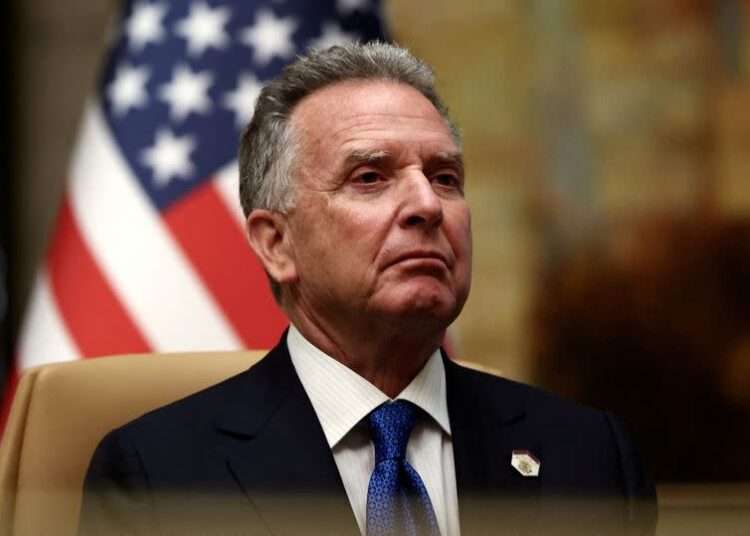
US special envoy Steve Witkoff said in a post on X that mediators had moved between the two delegations throughout the day on Tuesday as the two sides sought to explore a possible path towards an agreement.
“Today, on the sidelines of the United Nations General Assembly, we engaged in lengthy talks with the Iranian delegation through the mediators, who shuttled between the two sides throughout the day.
“They successfully completed a round of discussions that we hope will prove constructive and promising. The mediators will continue their work.”
Steve Witkoff
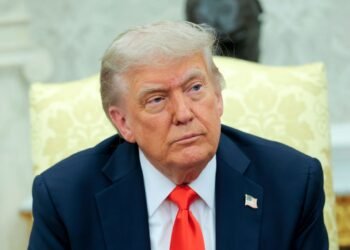
US President Donald Trump offered a more direct account of the engagement, saying that Witkoff and Jared Kushner had held a three-hour meeting with Iranian officials.
Trump told reporters at the UN, “They had a very good meeting, a very productive meeting,” adding that he believed there was “a lot of momentum” towards an agreement.
Trump later said that the Iranian representatives were “not the highest level, but it’s something,” while indicating that discussions were continuing.
The US President also said that he believed a settlement would eventually be reached, despite continued tensions between Washington and Tehran and the ongoing military conflict.
The engagement comes after months of US-Iran communications weakened following the collapse of a short-lived ceasefire brokered in June. US and Iranian negotiators subsequently held separate meetings with Qatari and Pakistani mediators in Doha in early July as part of efforts to maintain indirect diplomatic channels.
The latest talks also follow Trump’s address to the UN General Assembly, where he defended his decision to launch military action against Iran while simultaneously leaving open the possibility of a negotiated settlement.
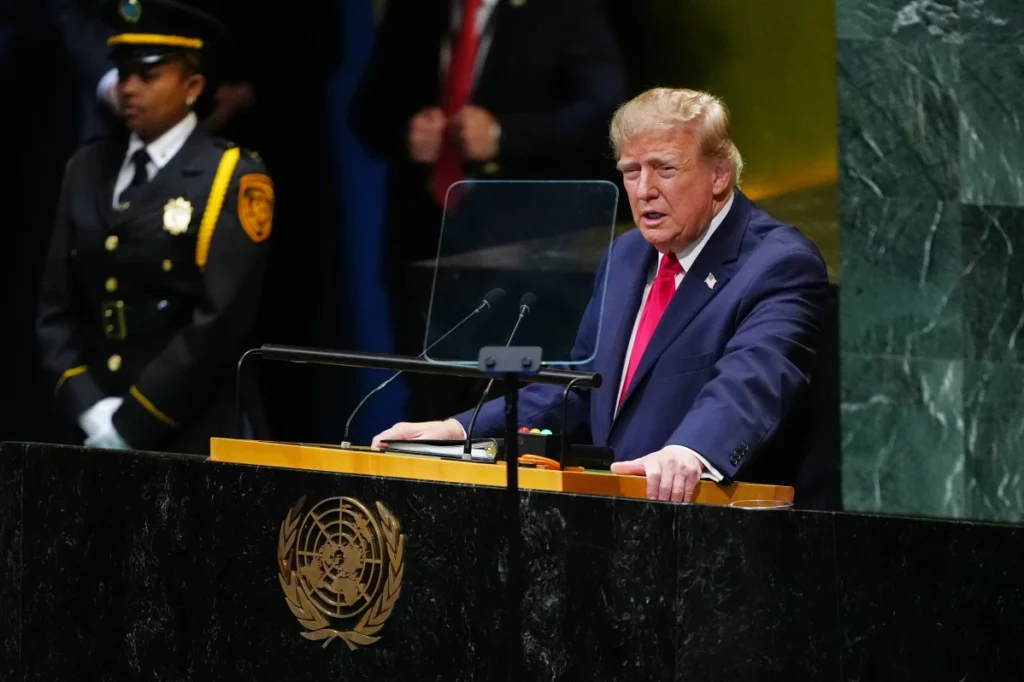
Trump said he faced what he described as a “big decision” between reaching an agreement that would allow Iran to rebuild and taking further military action aimed at preventing Tehran from posing what Washington considers a continuing threat.
In his previous UN address, Trump claimed that US military action had “demolished” Iran’s nuclear capabilities after he ordered the June 2025 bombardment of three key Iranian facilities.
He returned to the General Assembly as the latest conflict approached its seventh month, maintaining that military action was necessary to address the nuclear threat posed by Iran.
The prolonged conflict has also affected regional security and energy markets, with oil prices remaining elevated amid continuing uncertainty.
The diplomatic engagement at the UN therefore represents another attempt to create a channel between Washington and Tehran while military and economic pressures continue.
The talks were accompanied by broader diplomatic efforts involving Gulf states and other regional countries seeking to reduce tensions and establish conditions for further dialogue.
Trump Meets Gulf Leaders Over Iran War
Trump also met with leaders and senior officials from Gulf Cooperation Council countries and Jordan to discuss the conflict and possible steps towards addressing the wider regional crisis.
The GCC countries; Bahrain, Kuwait, Oman, Qatar, Saudi Arabia and the United Arab Emirates, have a direct interest in the security implications of the conflict, particularly because of the strategic importance of the Gulf and the Strait of Hormuz.

Qatar’s Prime Minister and Foreign Minister Sheikh Mohammed bin Abdulrahman bin Jassim Al Thani also held talks with Iranian Foreign Minister Abbas Araghchi in New York.
Qatar’s Ministry of Foreign Affairs said that the discussions focused on developments in the region, efforts to de-escalate tensions and ways of creating conditions for dialogue.
The Qatari government said that it was working with Pakistan to reduce tensions between Washington and Tehran, safeguard freedom of navigation through the Strait of Hormuz and promote regional stability.
The parallel diplomatic efforts reflect the wider regional dimension of the US-Iran conflict, with Gulf and other regional governments seeking to prevent further escalation while supporting diplomatic channels between the two sides.
With this, the indirect talks between US and Iranian officials at the UN have provided a new opportunity for the two countries to explore a potential settlement, although significant differences remain.
Witkoff said that mediators would continue their work following the latest round of discussions, while Trump indicated that Washington remained open to a negotiated outcome.