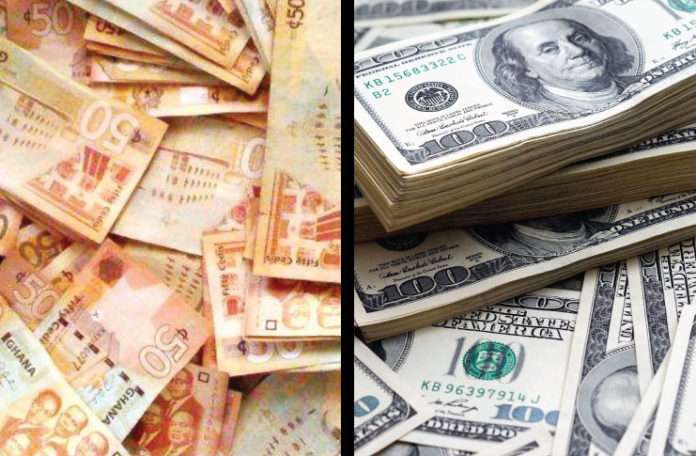
The Ghana cedi is facing fresh turbulence, with economic analysts warning that the local currency could come under sustained pressure throughout June 2026 as rising foreign exchange demand and elevated global energy prices continue to weigh heavily on the market.
A new assessment by IC Insights, a leading economic research firm, paints a challenging picture for the cedi despite recent efforts by the Bank of Ghana (BoG) to stabilize the foreign exchange market.
According to the report, the currency’s sharp depreciation in May signals that underlying pressures remain strong, raising concerns among businesses, investors and consumers.
The cedi lost 4.6 percent of its value against the United States dollar in May 2026, marking one of the most significant monthly declines this year. The depreciation comes at a time when companies are scrambling for foreign currency to meet import obligations while investors seek dollars amid global economic uncertainty.
Forex Demand Overwhelms Available Supply
One of the most striking revelations from the report is the enormous gap between foreign exchange demand and supply.
Data from the Bank of Ghana’s weekly foreign exchange auctions showed that total demand reached an astonishing US$3.83 billion. This figure was nearly four times higher than the amount of liquidity made available by the central bank.
The imbalance left a substantial portion of demand unmet, forcing many market participants to turn to alternative channels to secure foreign currency. Analysts believe this situation significantly intensified pressure on the cedi and contributed to the rapid depreciation witnessed in May.
The report noted that demand from corporate institutions and portfolio investors was particularly strong, creating a situation where available dollar supply struggled to keep pace with market needs.
As demand continued to outstrip supply, the local currency found itself under mounting strain, pushing exchange rates higher across both the retail and interbank markets.
Dollar Climbs to GH¢12.30 in Retail Market
The impact of the cedi’s weakness is already being felt across the economy.
At forex bureaus and retail foreign exchange outlets, one US dollar is now selling for approximately GH¢12.30. In the interbank market, the currency is trading around GH¢11.74 to the dollar.

The widening gap between demand and supply has fueled concerns among importers, manufacturers and businesses that rely heavily on foreign currency transactions. Many fear that further depreciation could translate into higher operational costs, increased prices of imported goods and renewed inflationary pressures.
Consumers are also keeping a close eye on exchange rate developments, as fluctuations in the value of the cedi often have a direct impact on the prices of fuel, food and other essential commodities.
Rising Energy Prices Add to the Burden
According to IC Insights, one of the key drivers behind the expected pressure on the cedi is the continued rise in global energy prices.
Higher energy costs increase Ghana’s import bill, leading to greater demand for foreign exchange. As companies seek additional dollars to finance energy-related imports, the pressure on the local currency intensifies.
The research firm believes this trend is likely to persist in the near term, keeping demand for foreign currency elevated throughout June.
With global energy markets remaining volatile, analysts warn that Ghana’s foreign exchange market could continue to experience significant stress unless additional sources of foreign currency inflows emerge.
Hope for a Late-Year Recovery
Despite the gloomy near-term outlook, IC Insights sees room for optimism later in the year.
The firm argues that the rapid pace of depreciation witnessed in recent weeks may create conditions for a correction in the second half of 2026. Such corrections often occur when market pressures ease, investor confidence improves or foreign exchange inflows strengthen.
“We foresee continued pressure on the cedi as elevated energy prices sustain FX demand. The rapid pace of depreciation, however, leaves room for late-year correction,” IC Insights stated.
This assessment suggests that while businesses and consumers may need to brace for further volatility in the coming weeks, the currency’s current weakness may not necessarily persist indefinitely.
Market Watches BoG’s Next Move
Attention is now turning to the Bank of Ghana and the measures it may adopt to support currency stability.
The central bank has already been supplying foreign exchange through its weekly auctions, but the overwhelming level of demand indicates that additional interventions may be required to calm market sentiment.
Financial market observers believe the coming weeks will be crucial in determining whether the cedi can regain some stability or whether the current depreciation trend will continue.
With the dollar trading at GH¢12.30 in the retail market and foreign exchange demand showing little sign of easing, the cedi’s battle appears far from over.
READ ALSO: Ecobank Approves $40m Dividend After Three-Year Pause