

Ghana is accelerating efforts to attract fresh upstream investment, with the Petroleum Commission targeting at least five new petroleum agreements by the end of 2027 as declining production from mature fields increases the urgency of exploration.
The planned agreements form part of a broader attempt to replenish Ghana’s petroleum resource base and create a new pipeline of discoveries capable of sustaining production beyond the current generation of producing fields.
Petroleum Commission Chief Executive Officer Emeafa Hardcastle said discussions with prospective investors and existing industry participants are already underway, with the regulator expecting several agreements to advance over the coming period.
“It is anticipated, and with the support of our minister, that at least five new petroleum agreements will be signed between this year and next year.”
Emeafa Hardcastle, Chief Executive Officer, Petroleum Commission
The target is significant because Ghana’s upstream industry is no longer operating from the relatively favourable position that followed the start of commercial production from the Jubilee Field in 2010.
The country’s producing assets have matured, while replacement discoveries have not entered production quickly enough to offset declining output.
Exploration Becomes A Production Imperative
The central issue is timing.
Signing a petroleum agreement does not immediately produce additional barrels.
Exploration companies must undertake geological and seismic work, drill exploratory wells and establish whether any discovery contains commercially recoverable resources.
A successful discovery then requires appraisal, financing, development and infrastructure before production can begin.

That means exploration undertaken today is effectively an investment in Ghana’s production several years into the future.
The five-agreement target should therefore be judged less by the number of contracts eventually signed and more by what those agreements cause investors to do afterwards.
Capital committed to seismic acquisition, exploratory drilling and appraisal will provide a stronger indication of whether Ghana is genuinely rebuilding its upstream pipeline.
The urgency is reinforced by the country’s production trajectory.
As existing fields mature, every year without sufficient exploration increases the risk of a sharper decline before new resources are ready to replace lost production.
For Ghana, the issue is not simply maintaining an oil industry.
Petroleum revenues contribute to public finances and foreign-exchange earnings, while associated gas remains important to the country’s electricity system.
Keta Basin Opens A New Front
The exploration strategy also has a local-content dimension.
Hardcastle disclosed that the Frontier Offshore Keta Basin would be opened to Ghanaian operators, creating an opportunity for indigenous companies to move beyond their traditional concentration in petroleum support services and participate directly in exploration and production.
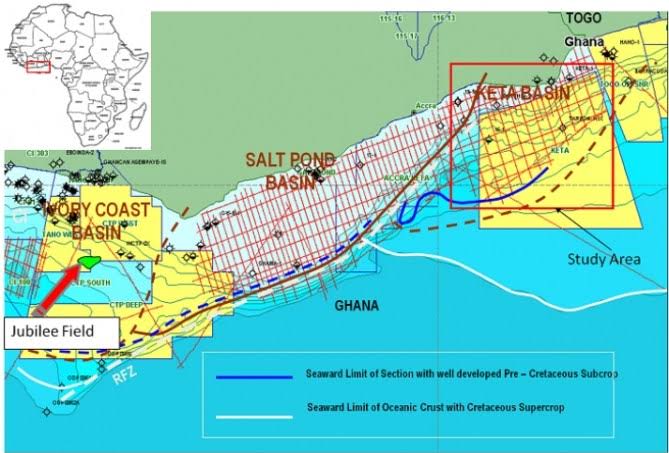
“We are particularly excited to announce that the Frontier Offshore Keta Basin will now be open for exploration by Ghanaian operators.”
Emeafa Hardcastle, Chief Executive Officer, Petroleum Commission
That could become one of the more consequential developments in Ghana’s local-content agenda if indigenous firms can secure the financing and technical partnerships required to undertake frontier exploration.
Upstream exploration is fundamentally different from many petroleum services.
The financial exposure is considerably higher, the geological risks are substantial and returns may take years to materialise.
Opening acreage to Ghanaian operators therefore creates opportunity, but opportunity alone will not translate into discoveries.
Indigenous companies will need access to long-term capital, technical expertise, technology and credible partners capable of supporting high-risk exploration programmes.
Investment Terms Will Matter
Ghana is simultaneously trying to attract international capital at a time when upstream investors are becoming more selective.
The country is competing with other petroleum provinces for exploration dollars, while the global energy transition has changed how investors assess long-term hydrocarbon projects.
This places considerable importance on the fiscal and regulatory environment surrounding the new agreements.

Ghana needs terms that protect national interests without making exploration commercially unattractive.
Excessively burdensome arrangements could discourage capital, while weak terms could undermine the value Ghana ultimately captures from successful discoveries.
Regulatory efficiency is therefore likely to become as important as the acreage itself.
Hardcastle has indicated that the Petroleum Commission’s scrutiny of upstream development plans has already generated significant savings for the state, including approximately US$2 billion through reviews of Plans of Development.
The challenge now is to ensure that such cost discipline works alongside predictable approvals and investment conditions.
Protecting Ghana’s interests and attracting capital are not contradictory objectives, but achieving both requires a regulatory system that investors can understand and plan around.
Oil Decline Raises Gas Concerns
The production challenge also extends into Ghana’s gas outlook.
The country’s thermal power generation depends significantly on natural gas, making upstream investment relevant not only to crude oil exports but also to electricity security.
This explains the government’s emphasis on a gas-to-power strategy alongside petroleum exploration.
Energy and Green Transition Minister John Abdulai Jinapor has argued that Ghana’s petroleum resources remain important to development even as the country expands renewable energy.
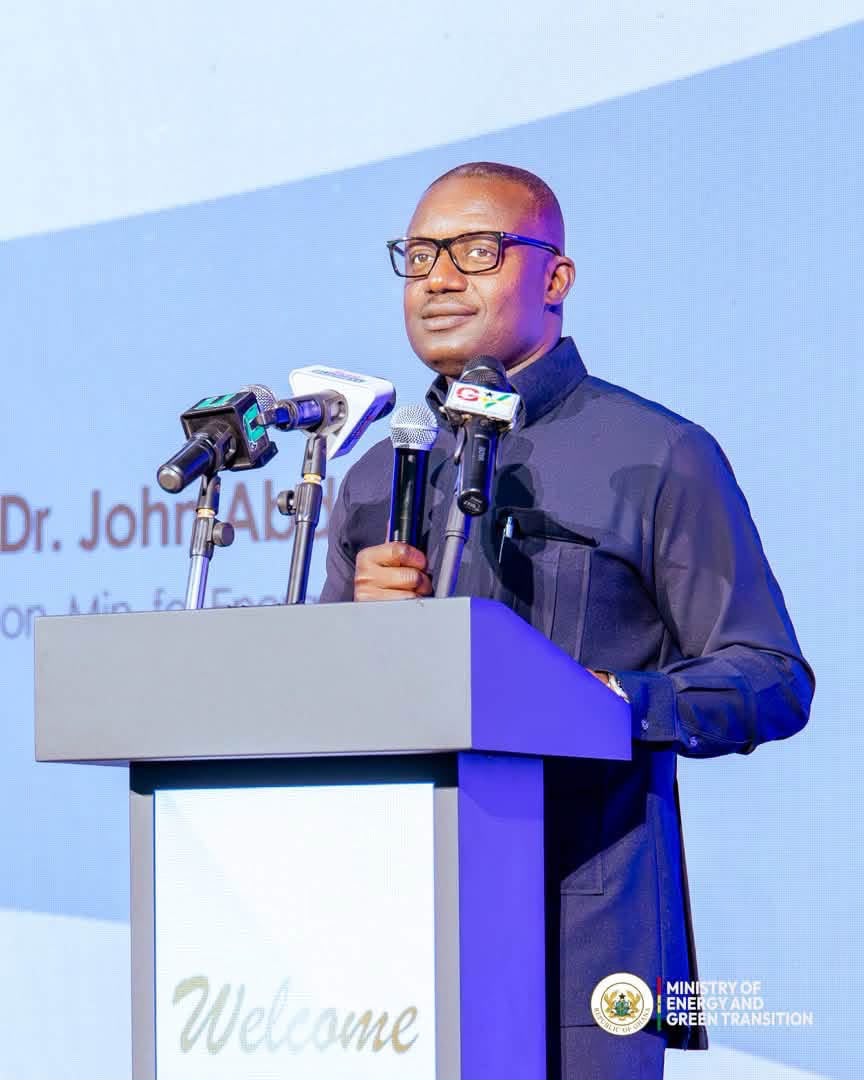
“We will not abandon resources that can support our development, neither will we ignore the fundamental changes taking place in the global energy landscape.”
John Abdulai Jinapor, Minister for Energy and Green Transition
The Minister has said Ghana intends to maximise its petroleum resources while simultaneously promoting renewable energy, reflecting a policy approach that treats hydrocarbons and the energy transition as overlapping parts of the country’s development strategy.
For Ghana, the logic is straightforward: a decline in domestic petroleum production without adequate replacement resources could affect both fiscal receipts and the availability of associated gas needed by the power sector.
Five Deals Will Not Be Enough
The proposed agreements should therefore be viewed as the beginning of an exploration programme rather than an achievement in themselves.
A contract can create the legal basis for exploration, but only sustained investment can convert acreage into reserves and reserves into production.
The critical questions will be whether the agreements generate meaningful exploration expenditure, how quickly seismic programmes commence, whether exploratory wells are drilled and whether commercially viable discoveries emerge.
Ghana also needs to avoid repeating a cycle in which promising resources remain undeveloped for extended periods.
New discoveries have economic value only when financing, infrastructure, commercial arrangements and regulatory approvals allow them to reach production.
The five-agreement target consequently represents a test of Ghana’s ability to rebuild confidence in its upstream sector at a particularly important moment.
The immediate objective is to attract exploration capital.
The longer-term objective is to replace declining production, strengthen domestic gas availability, sustain petroleum revenues and give Ghana a viable upstream industry for the next phase of its development.
The real measure of success will not be five signatures. It will be whether those signatures produce wells, discoveries, investment and eventually new barrels and gas for Ghana.
READ ALSO: Roads Minister Demands Day And Night Work On Tema Project