The Peasant Farmers Association of Ghana is calling on government to allocate at least 10.00% of national expenditure to agriculture in the 2027 Budget and to establish a dedicated agricultural development fund, warning that chronic underinvestment is undermining farmer incomes and food security despite improving macroeconomic conditions.
Presenting the association’s proposals at the CSOs 2027 Budget Inputs Engagement, Executive Director Bismark Owusu Nortey said Ghana’s recent stabilization gains must now translate into targeted investment that addresses structural constraints in food production and shields small holder farmers from market, climate and input-cost shocks.
PFAG argued that agriculture remains significantly underfunded relative to its contribution to employment, rural livelihoods and food security. The association estimates that agriculture received about 2.00% of national expenditure in 2025 and 2.18% in 2026. That is far below the 10.00% benchmark under Ghana’s commitments to the Comprehensive Africa Agriculture Development Programme. “Allocate at least 10% of national investment to the agricultural sector and increase allocation for effective implementation of the Feed Ghana Program,” PFAG stated
The demand presents a fiscal trade-off for government, which must expand productive investment while maintaining the discipline needed to consolidate recent macroeconomic gains. PFAG’s position, however, is that agriculture should be treated less as recurrent social spending and more as productive investment capable of reducing food imports, strengthening rural incomes, creating jobs and easing future pressure on food inflation.
The financing challenge is underscored by the scale of the Feed Ghana Programme. PFAG estimates the programme requires about GH¢302 billion over four years. Of that, government is expected to provide GH¢176.7 billion, private investors GH¢42.4 billion and development partners GH¢83.1 billion. For 2026 alone, effective implementation required approximately GH¢66.7 billion, compared with an allocation of less than GH¢2 billion. The gap, PFAG said, raises questions about the programme’s delivery. The concern extends beyond headline allocations to actual fund releases.
The association states that delayed commitment authorisations from the Ministry of Finance have slowed the delivery of inputs and capital intensive interventions. PFAG estimates that only about GH¢200 million of almost GH¢2 billion earmarked for capital expenditure had received procurement approval as of June.
“This is unacceptable and the Ministry of Finance must commit to fast-track the timely release of funds to the Ministry of Food and Agriculture in the second half of the year to ensure timely execution of interventions for the benefit of smallholders across the country.”
PFAG
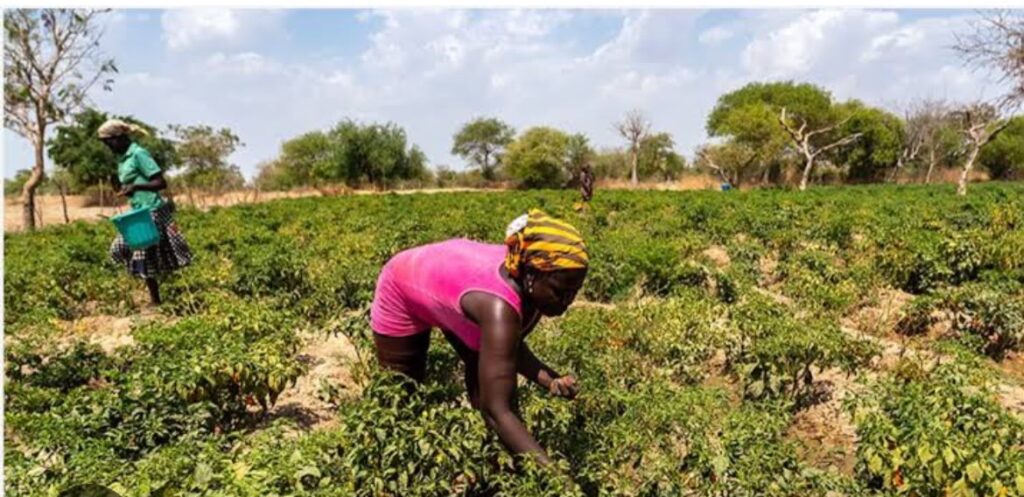
Also, they noted that timing is critical in agriculture because expenditure is tied to planting, fertiliser application and harvesting windows that cannot be postponed. PFAG warned that late budget releases reduce the economic value of allocations even if funds eventually arrive.
To address this, the association wants releases to commence ahead of the farming season and a larger share of agricultural spending directed to capital investment rather than recurrent items. To provide predictability, PFAG’s most structural proposal is the creation of a dedicated agricultural development fund modelled on the Ghana Agricultural Trust Fund. A ring-fenced mechanism, it argued, would guarantee financing for agricultural infrastructure and allow faster intervention during droughts, floods, input-price shocks and severe market disruptions.
Fix Market Access and Protect Farmers with Guaranteed Procurement
Market access emerged as the second major concern in PFAG’s submission. The association’s 2026 monitoring shows that more than 60% of farmers struggled to sell their produce. Post-harvest losses reached between 30% and 40% in some areas due to seasonal gluts, inadequate storage and weak market linkages. Producers of rice, maize, soya bean, cowpea, yam and cassava have been particularly exposed. Unsold produce has remained in warehouses and on farms, or has been lost entirely. PFAG warned that farmers who cannot recover production costs from one harvest may be unable or unwilling to finance the next season, potentially turning today’s glut into tomorrow’s supply shortage.
To address this, the association is calling for Commodity Aggregation Centres in all 16 regions. These centres, PFAG said, should be linked to digital platforms that connect farmers directly with buyers while providing market information and access to finance, insurance and extension services. The group is also pushing for a “Farmers First” public procurement framework. Under the proposal, institutions such as the school feeding programme, hospitals, prisons and the national buffer stock system would be required to source directly from registered farmer groups at guaranteed minimum prices announced before planting.
PFAG is additionally urging the immediate implementation of the rice import quota regime alongside investment in processing, warehouses and cold storage. The association acknowledged the policy tension involved: lower food prices help consumers and reduce inflation, but prolonged weakness in farm-gate prices erodes producer incomes and ultimately undermines domestic production. Without deliberate market interventions, PFAG argued, increased production under Feed Ghana could simply lead to more losses rather than higher incomes. Invest in Infrastructure, Irrigation and Farmer Service Centres and Infrastructure forms the third pillar of PFAG’s proposals.
The association wants accelerated completion of Farmer Service Centres under the Feed Ghana Programme. Twelve centres are currently under construction, but delays risk leaving producers without affordable access to tractors, planters, threshers, inputs, storage and extension services at critical stages of the farming cycle. Feeder roads and irrigation were also highlighted as urgent priorities. Poor road networks increase transport costs and can leave perishable produce stranded in farming communities.
PFAG Wants at Least 50% of Resources Under the Big Push
Meanwhile, Ghana’s continued dependence on rain-fed agriculture leaves production exposed to drought, changing rainfall patterns and flooding. PFAG wants at least 50% of resources under the Big Push programme dedicated to the Irrigation for Wealth initiative. It also called for accelerated work on the Pwalugu Multipurpose Dam, rehabilitation of existing dams, and greater investment in mechanised boreholes and solar-powered pumping systems.
The association said irrigation expansion is essential to de-risk agriculture, extend growing seasons, and reduce the sector’s vulnerability to climate shocks. Combined with mechanization support from Farmer Service Centres, it could significantly raise productivity and reduce post-harvest losses. For government, the 2027 Budget will test whether agriculture can move from being repeatedly identified as a strategic growth sector to receiving the scale, predictability and composition of investment required to perform that role.
PFAG’s message is that macroeconomic stability will mean considerably less to rural households unless it translates into functioning markets, irrigation, storage, timely public financing and sustainable farmer incomes.
“Government must see agriculture as the foundation for jobs, food security and import substitution, without 10% allocation and a dedicated fund, we will keep talking about agriculture’s potential while farmers continue to struggle.”
PFAG
While the Ministry of Finance prepares the 2027 Budget Statement, PFAG said it will continue to engage policymakers to ensure agriculture receives the priority reflected in national policy documents. For millions of smallholder farmers, the association added, the budget is not just a fiscal document but a decision on whether they can farm profitably and feed the nation.
READ ALSO: Peasant Farmers Urge Mahama to Prioritize Agriculture with Dynamic Leadership