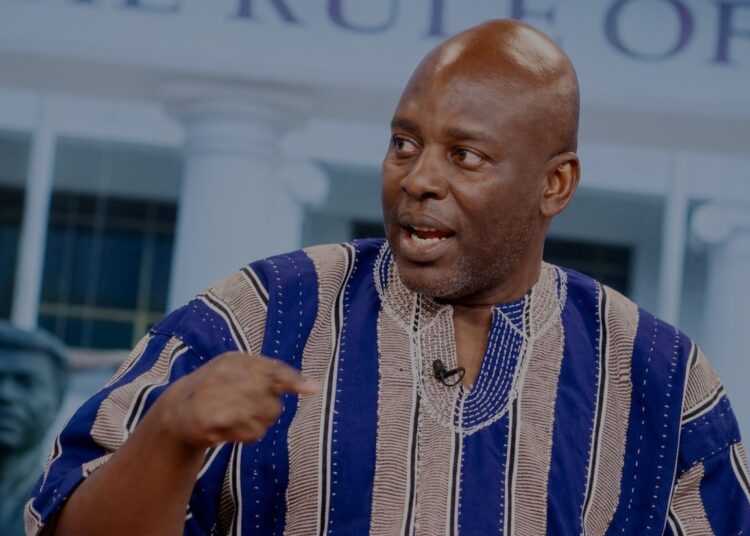
Author: Dr. John Osae-Kwapong, Democracy and Development Fellow, CDD-Ghana, and Project Director, the Democracy Project
Three years ago, I wrote an article in the African Journal of Public Administration and Management titled “What Do Ghanaian Citizens Want? Are They Getting It? And the Consequences for the Political Transition to Democracy.” It was a contribution to a special edition under the theme “Democratic Governance in Africa: Threats, Challenges, and Opportunities.”
In that piece, using data from the Afrobarometer survey, I highlighted the key things Ghanaians noted as important public problems for the government to address. I then proceeded to show the extent to which, as per their evaluation in Afrobarometer, they indicated satisfaction or otherwise with government efforts.
My argument in focusing on the delivery of key public goods – jobs, education, health, etc. – was very simple. I believe democracy is a means (political and policy choices) to an end (addressing the material needs of citizens). That is not the only thing democracy delivers, but it must be an essential part of it.
Our two main political parties – National Democratic Congress (NDC) and New Patriotic Party (NPP) consist of citizens first. As institutions, they represent the aggregated interests and needs of citizens. In that respect, I sincerely believe they want the same public goods just like the rest of society.
As institutions that regularly compete for political power, I believe the motivation is to use political power to deliver, through public policy and programs, the public goods that citizens, including themselves, demand.
Lately, though, when I observe interparty discourse, whether on the floor of parliament, on news programs, social media, and other public spaces, I find myself asking, “What do our two main political parties want for our democracy?” And if I may ask a secondary question, what do they see as the role of political parties in getting what they want from our democracy?
What Democracy Offers Us
Democracy provides citizens with a wealth of fundamental rights, including freedom of speech, the right to association, and due process, among others. Compared to our historic past, I have no doubt that citizens, including our two main political parties, appreciate the opportunity to enjoy these rights as part of our current democratic dispensation.
These rights not only give us an opportunity to participate in governance, but they also offer protection against the improper exercise of state power. Democracy also fosters transparent and accountable governance. Transparency empowers citizens to know, with reasonable confidence, what their government is doing, when it is doing it, and on whose behalf.
Accountability, in turn, enables citizens to recognize who deserves credit when things go right and who bears responsibility when they go wrong. It is the reason why access to government information matters because that is an important way of ensuring transparency and accountability.
Democracy, however, is more than just rights and transparent, accountable governance. As I previously argued, democracy is only a means to an end. The difference between democracies and non-democracies is that citizens have a say in deciding what those ends are and whether they are satisfied with the level of provision they are getting.
These are but some of the core things democracy offers us. As to whether we are getting them fully or not is a debate for another day. The question I am wrestling with now is whether the nature of our duopoly politics – NDC vs NPP – wants these same things for Ghana’s democracy?
NDC-NPP politics, and the next phase of Ghana’s Democracy
I shudder to think that our two main political parties do not want the rights for citizens to be protected. Or that they are opposed to transparent and accountable governance. Or that they do not want a democracy that delivers key public goods for citizens.
I will argue that they do want these things. But from what I am observing lately, and how these core things are framed, in our heated political discourses, tells me that we are at the crossroads facing this simple question: what do our two main political parties want for Ghana’s democracy?
Before proceeding, let me offer a brief disclaimer. In a multiparty democracy anchored by two strong and dominant parties, robust debate over consequential matters is not only expected but necessary. It is through such debate that consensus is forged on issues that matter most to citizens, and it is through this same process that strong, durable democracies are built.”
That is why the answer to the question – what do our two main political parties want for Ghana’s democracy matters. The answer to this question will have profound consequences for the next phase of Ghana’s democracy.
It will determine whether party politics continues to be driven by narrow self-interest and the quest for power, or whether it is guided by the public good and an urgent commitment to addressing Ghana’s pressing challenges, including those of governance.
READ ALSO: Vice President Marks June 4 Uprising with Strong Call for Accountability