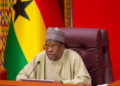

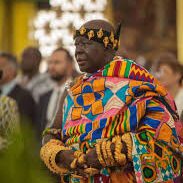
In a powerful call for national industrial sovereignty, the Asantehene, Otumfuo Osei Tutu II, has challenged the state to move beyond rhetoric and implement a “buy Ghana” procurement policy that treats the textile, garment, and apparel industry as a primary engine of economic growth.
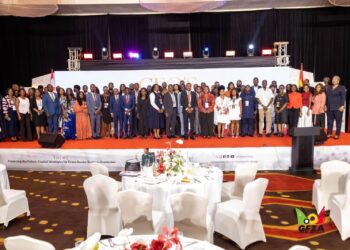
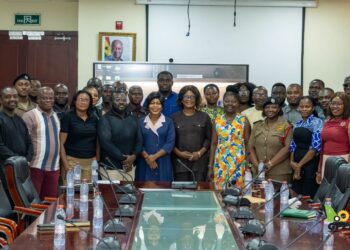
Speaking at a National Dialogue organized by the Association of Ghana Apparel Manufacturers (AGAM) in Kumasi, the Asantehene – represented by Nana Addae Gyamera I, Feyiasehene – asserted that Ghana’s rich cultural heritage must be transformed into a strategic economic asset.
This was a demand for a fundamental shift in the nation’s procurement logic, positioning locally manufactured goods as “emblems of national excellence” rather than substitutes of necessity.
“A nation cannot aspire to industrial greatness while neglecting industries that possess the power to employ its people, preserve its heritage, and stimulate domestic production. We must stop viewing locally manufactured products as substitutes of necessity and begin recognising them as emblems of national excellence and economic patriotism”
Asantehene, Otumfuo Osei Tutu II
For the Asantehene, despite the nation’s status as a beacon of artistic sophistication and textile excellence, the continuous importation of apparel that could be produced locally is viewed as a direct contradiction to industrial greatness.
The call for the enforcement of the Public Procurement Act and the Ghana Industrial Transformation Agenda was a direct charge for policymakers to use the state’s massive purchasing power to create an unbreakable demand floor for local manufacturers.

The goal is to strengthen local manufacturing capacity, reduce a crippling dependence on imports, and stabilize the national identity through economic patriotism, especially since the economic significance of the apparel sector lies in its immense capacity for vertical integration and labor absorption.
The textile and apparel value chain is unique in its ability to empower thousands of skilled and semi-skilled citizens simultaneously. From the cotton farmers in the fields to the weavers, designers, factory workers, and exporters, a single garment factory can act as a catalyst for hundreds of direct and indirect jobs.
In an era where unemployment remains a critical challenge, the Asantehene’s vision for “culture-driven industrialisation” offers a sustainable pathway for empowering women and supporting a new generation of entrepreneurs. However, this industrial transformation requires more than just procurement; it requires a fortified environment.
The Asantehene called for a multi-front assault on the barriers currently stifling local producers, including counterfeit imports and unfair trade practices, demanding stronger enforcement against these illicit activities to sanitize the market for legitimate producers.
AfCFTA and the Continental Ambition
The direction of this industrial push is not limited to domestic consumption; it is aimed at continental dominance through the African Continental Free Trade Area (AfCFTA). The Asantehene highlighted the AfCFTA as a critical opportunity for Ghanaian businesses, including small-scale garment producers, to access larger markets across Africa and beyond.
For Ghana to transition from a consumer of global textiles to a major exporter, local producers must meet global standards and quality expectations. This requires a deliberate investment in industrial infrastructure and skills development – turning the “strong artisanal base” of Kumasi and beyond into a sophisticated manufacturing force.
This continental ambition is anchored in the belief that culture in Asanteman and wider Ghana is a strategic economic asset. Kumasi, described as a stronghold of heritage, is positioned as the logical epicenter for this textile revival.
The Asantehene’s call for journalists and advocacy institutions to champion the buy Ghana agenda reflects a need for a total societal mobilization. Industrialization, in this context, is not just a government project; it is a cultural movement that seeks to restore national pride by ensuring that the clothes Ghanaians wear are products of their own labor and ingenuity.
“For decades, Ghana has stood as a beacon of textile excellence and artistic sophistication. Our cultural identity can become a powerful tool for economic prosperity if properly harnessed. No country has achieved industrial transformation by continuously importing products it had the capacity to produce locally”
Asantehene, Otumfuo Osei Tutu II
The Asantehene’s speech served as a firm reminder to stakeholders that the frameworks for this transformation – the Public Procurement Act and the Ghana Industrial Transformation Agenda – already exist. The failure, therefore, is one of enforcement and intentionality.
He demanded an end to the era of performative support for local industry, urging policymakers to “move beyond rhetoric.” The National Dialogue held in Kumasi must result in concrete implementation strategies that prioritize local manufacturers in every state contract for garments and textiles.
The goal is a self-reliant economy in which the textile industry serves as a major driver of prosperity, harnessing the “identity, philosophy, prestige and national pride” embedded in Ghanaian fabrics to build a globally competitive industry that reduces unemployment and strengthens the local manufacturing sector.

The Asantehene’s commitment to culture-driven industrialization provides a clear roadmap for sustainable economic transformation: protect the domestic market, empower the local value chain, and export Ghanaian excellence to the world.
READ ALSO: Access Bank Strengthens Ashanti With Strategic Investment