Chamber of Oil Marketing Companies (COMAC) is championing a technology-driven overhaul of Ghana’s petroleum downstream sector to eliminate product illicit activities and ensure the integrity of the fuel supply chain.
Leading this charge, Riverson Oppong, PhD., the CEO of COMAC, has underscored the urgent necessity of integrating advanced digital monitoring systems specifically the Automatic Tank Gauging (ATG) initiative and inline marking technology to provide real-time product traceability.
By advocating for these sophisticated tools at the depot level, the Chamber aims to dismantle the networks responsible for fuel adulteration, thereby safeguarding the quality of petroleum products delivered to the final consumer and bolstering public confidence in the industry’s regulatory framework.
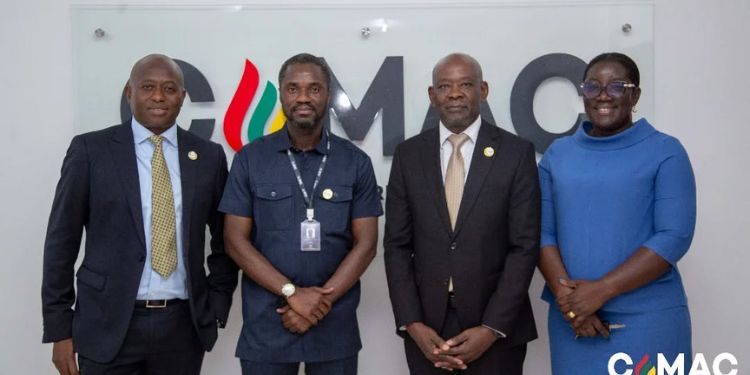
“He ( Riverson Oppong )called for the strengthening of the ATG initiative and the consideration of inline marking technology at the depot level to improve product traceability, combat adulteration, and enhance confidence in petroleum products in Ghana. He also emphasized the need to protect petroleum infrastructure through a balanced approach that combines manned security systems with technologies such as CCTV surveillance and remote sensors to support operational efficiency and national security.”
Chamber of Oil Marketing Companies (COMAC)
This push for technological integration serves as a foundational pillar for the newly launched 24-Hour Economy Pilot Programme, an ambitious initiative designed to transition the downstream sector into a round-the-clock operational model.
Covering 268 fuel stations across the Greater Accra, Ashanti, Western, and Northern regions, as well as critical hubs like the Tema Oil Refinery (TOR) and Sentuo Oil Refinery, the program seeks to maximize economic output and service accessibility.
However, Dr. Oppong maintains that the success of such an expansion is inextricably linked to the industry’s ability to monitor its assets remotely and accurately.
Without the implementation of remote sensors and CCTV surveillance to protect infrastructure, the risks of theft and contamination could undermine the strategic vision of transformative economic growth envisioned for the sector.
The Imperative for Digital Infrastructure in the 24-Hour Economy
The transition to a 24-hour operational cycle necessitates a departure from traditional, manual oversight toward a “digital-first” downstream infrastructure.
As operations scale to run through the night, the physical presence of supervisors alone cannot mitigate the complexities of modern fuel fraud.
Investment in technology is no longer an optional luxury but a core requirement for survival in a competitive energy market. By utilizing inline marking a process where a unique molecular marker is injected into the fuel authorities can instantly detect if a product has been diluted or diverted.
Furthermore, the expansion of the Automatic Tank Gauging (ATG) systems allows for the precise, real-time measurement of fuel levels and temperature within storage tanks.

This technology identifies “invisible losses” that often point to sophisticated siphoning schemes or leakage.
For the 268 stations and eight depots involved in the pilot phase, these tools act as a “digital shield,” ensuring that the increased pace of commerce does not result in a corresponding increase in criminal exploitation.
The integration of these systems creates a transparent data trail that simplifies auditing and ensures that every drop of fuel is accounted for from the refinery gates to the vehicle’s tank.
Strengthening National Security through Petroleum Infrastructure Protection
Beyond product quality, the physical security of Ghana’s energy assets remains a paramount concern for COMAC.
The downstream sector involves a vast network of pipelines, depots, and retail outlets that are vulnerable to vandalism and unauthorized access, particularly during nocturnal hours.
Dr. Oppong’s call for a “balanced approach” highlights the synergy between human intelligence and automated surveillance. By deploying remote sensors along pipelines and high-definition CCTV at refineries like TOR and Sentuo, the industry can achieve a state of “constant vigilance.”
These technological investments serve a dual purpose: they protect the private investments of Oil Marketing Companies (OMCs) while simultaneously securing the state’s energy supply.

In an era where energy security is synonymous with national stability, the ability to respond to breaches via remote monitoring reduces the response time of security agencies. This proactive security posture is essential for the “efficient, safe, and sustainable transition” of the pilot program.
It ensures that the 24-hour economy does not just move faster, but moves more securely, providing a blueprint for other sectors of the Ghanaian economy to follow.
Economic Dividends of Technological Investment in Energy
The long-term economic benefits of investing in downstream technology far outweigh the initial capital expenditure. When fuel adulteration is curtailed, the government sees an immediate rise in tax revenue, as products are no longer diverted into the “black market” where they escape statutory levies.

For the consumer, the assurance of high-quality fuel leads to lower vehicle maintenance costs and improved engine performance, creating a ripple effect of efficiency throughout the transport and manufacturing sectors.
As COMAC and stakeholders like the National Petroleum Authority (NPA) move forward with this pilot, the focus remains on refining these systems to support a “transformative economic growth” trajectory.
The 24-hour economy is a bold experiment in productivity, but its heartbeat is the technology that keeps it honest and safe.
By prioritizing digital traceability and automated security, Ghana is positioning its petroleum downstream industry as a modernized, transparent, and world-class sector capable of driving the nation’s industrial aspirations well into the future.
READ ALSO: OccupyJulorbiHouse Victims Win Landmark Case Against Police