
A delegation from the Ghana Free Zones Authority (GFZA), led by Chief Executive Officer Dr. Mary Awusi, has executed a high-level monitoring and stakeholder engagement mission to the Eastern Region, marking a significant milestone for the nation’s industrial landscape.
The working visit by senior GFZA executives and officials from the Ghana Revenue Authority (Customs Division) served as a formal validation of the massive, 360-acre industrial enclave site for the Philbro Group Limited’s new integrated refinery project in Kyekyewere to redefine the operations of Free Zones enterprises.
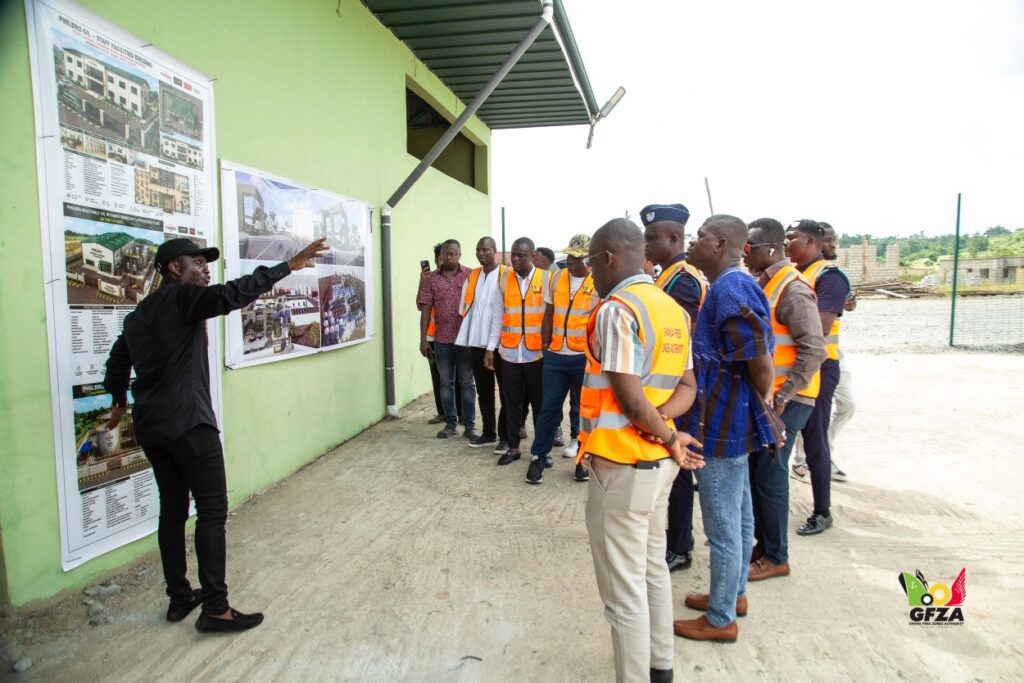
Through a model of total integration, self-sufficiency, and localized production capacity, the project is a departure from traditional, siloed manufacturing. During the site tour, Philip Brobbey, CEO and Chairman of Philbro Group Limited, presented a vision for a multi-functional industrial ecosystem.
“The facility, currently under construction, is expected to house a modern processing plant, water treatment facility, staff accommodation units, a canteen, clinic, and daycare centre, all designed to support efficient operations and staff welfare. By-products generated from the refinery process would be converted into soap and other value-added products”
Ghana Free Zones Authority
According to the Authority, the refinery is a self-contained hub to manage its own infrastructure and logistics.
From the production of its own construction blocks to the internal management of by-products, the Philbro Group demonstrates a level of industrial autonomy that reduces dependency on external supply chains and enhances the long-term viability of the enterprise within the Free Zones framework.
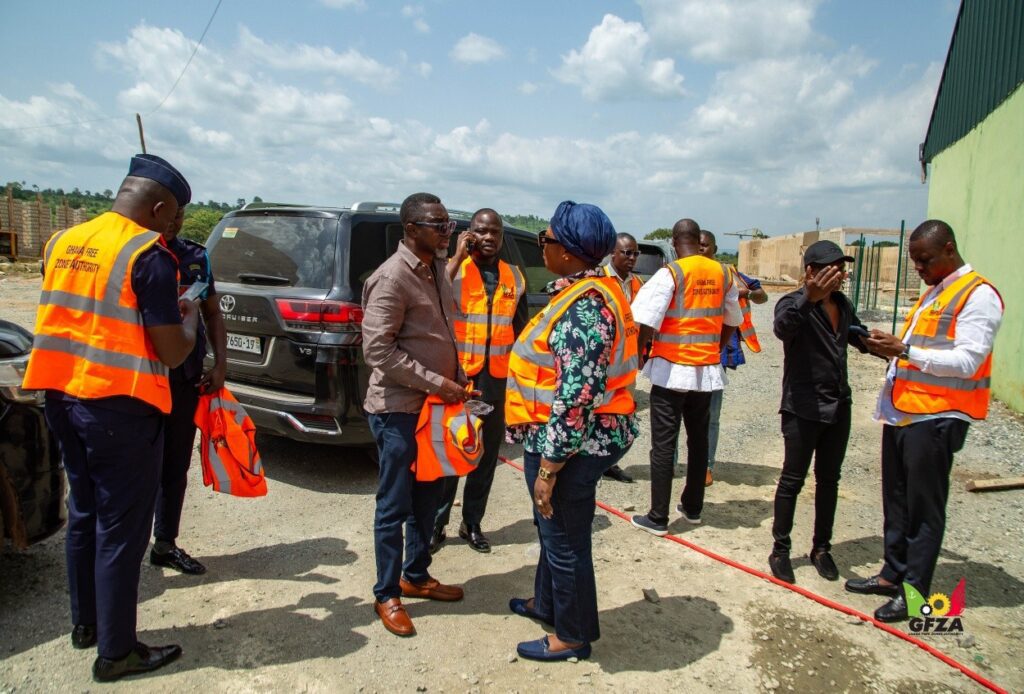
A critical aspect of the Philbro Group’s strategy, which drew significant attention from the GFZA delegation, was the company’s commitment to internalizing its development costs, producing its own construction blocks on-site for the ongoing expansion to accelerate construction timelines and ensure that its physical infrastructure is built with immediate oversight of quality and cost.
This focus on self-sufficiency addresses the challenges that often plague large-scale industrial projects. In the Kyekyewere enclave, the integrated refinery project is as much about the physical construction of the site as it is about the eventual refining of oil. The company’s plan to convert refinery by-products into soap and other value-added goods represents a sophisticated approach to circular production.
In a standard refinery model, by-products are often treated as waste or exported for minimal gain. Philbro’s model ensures that the maximum economic value is extracted from every unit of raw material processed.
This diversification of the product line – moving from refined oil to consumer goods like soap – provides the company with multiple revenue streams and strengthens its position as a high-impact Free Zones enterprise.
“Dr. Mary Awusi expressed satisfaction with the scale of work being undertaken at the site and commended the company for its forward-looking approach to industrial development”
Ghana Free Zones Authority
Facilitation and Compliance
For an integrated refinery on this scale to function, the regulatory environment must be as efficient as the industrial hardware, and the visit highlighted the crucial synergy between the GFZA and the GRA Customs Division.
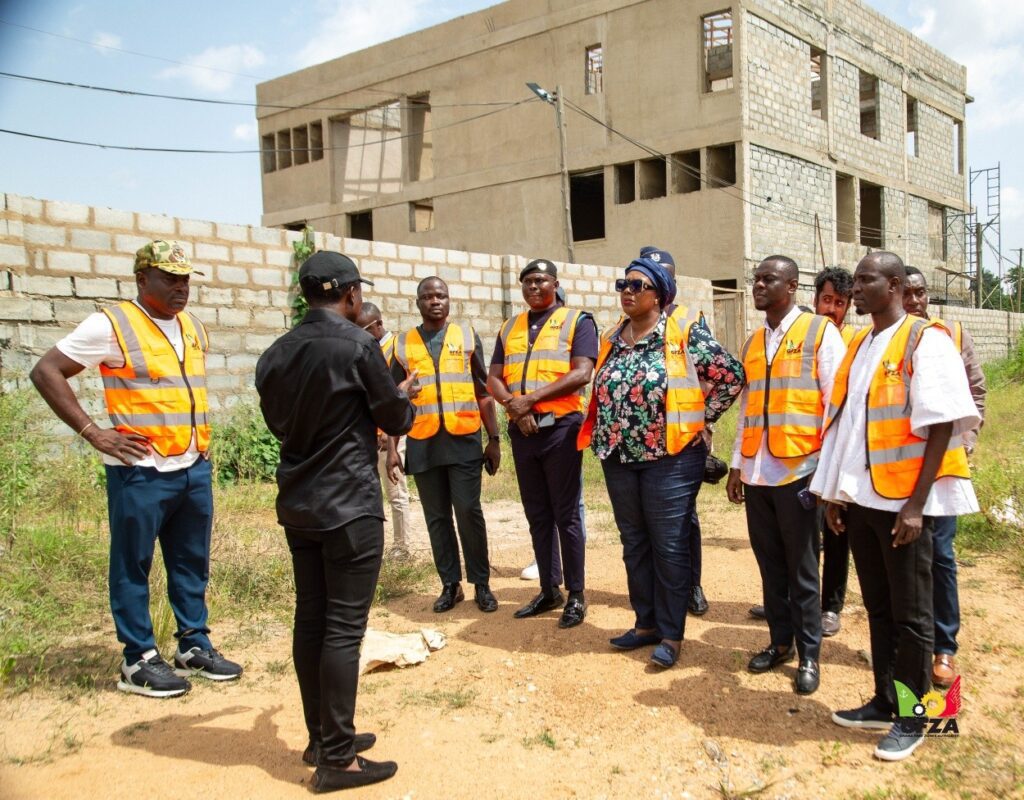
Dr. Mary Awusi’s delegation included the Deputy CEO in charge of Finance and Administration, Mr. Musah Sibiri Hamidu, and the Deputy CEO in charge of Operations, Mr. Lateef Apau Wiredu, bringing the full weight of the Authority’s administrative and operational expertise to support the project.
The involvement of the Head of Compliance, Mr. Michael Larbi, further emphasized that while the Authority is a facilitator, it remains a rigorous monitor of Free Zones standards. Officials of the Customs Division also utilized the visit to reinforce the importance of cooperation in maintaining trade facilitation standards.
The GRA’s role is to provide the legal infrastructure necessary for the refinery to export its products effectively and participate in the broader regional economy, ensuring that the Philbro Group remains compliant with national and international trade regulations.
“Officials highlighted the importance of continued cooperation in facilitating efficient trade processes and maintaining regulatory standards within the Free Zones enclave. The Authority’s ongoing stakeholder engagement and monitoring activities are aimed at supporting the growth and development of Free Zones enterprises across the country”
Ghana Free Zones Authority
The GFZA noted that a unique element of the Kyekyewere project is its focus on staff welfare as a driver of industrial productivity. As the facility nears completion, its impact on the Eastern Region and the national economy will be measured not just by its refining capacity, but by its ability to generate secondary industries in soap and construction.
The GFZA’s visit to Kyekyewere underscored the Authority’s move toward a model of active facilitation, where it works hand-in-hand with developers to ensure that large-scale investments are supported by both regulatory clarity and institutional advocacy.
The Kyekyewere integrated refinery project stands as a testament to what is possible when private entrepreneurial ambition is matched by strategic state facilitation.
READ ALSO: COMAC Calls for Enhanced Technology to Combat Fuel Adulteration